|
|
|
|
|

|
Zählwerk Enigma G31
- wanted item
The Enigma G was developed in 1931 as one of the successors to the
earlier Zählwerk Enigma (model A28) of 1928.
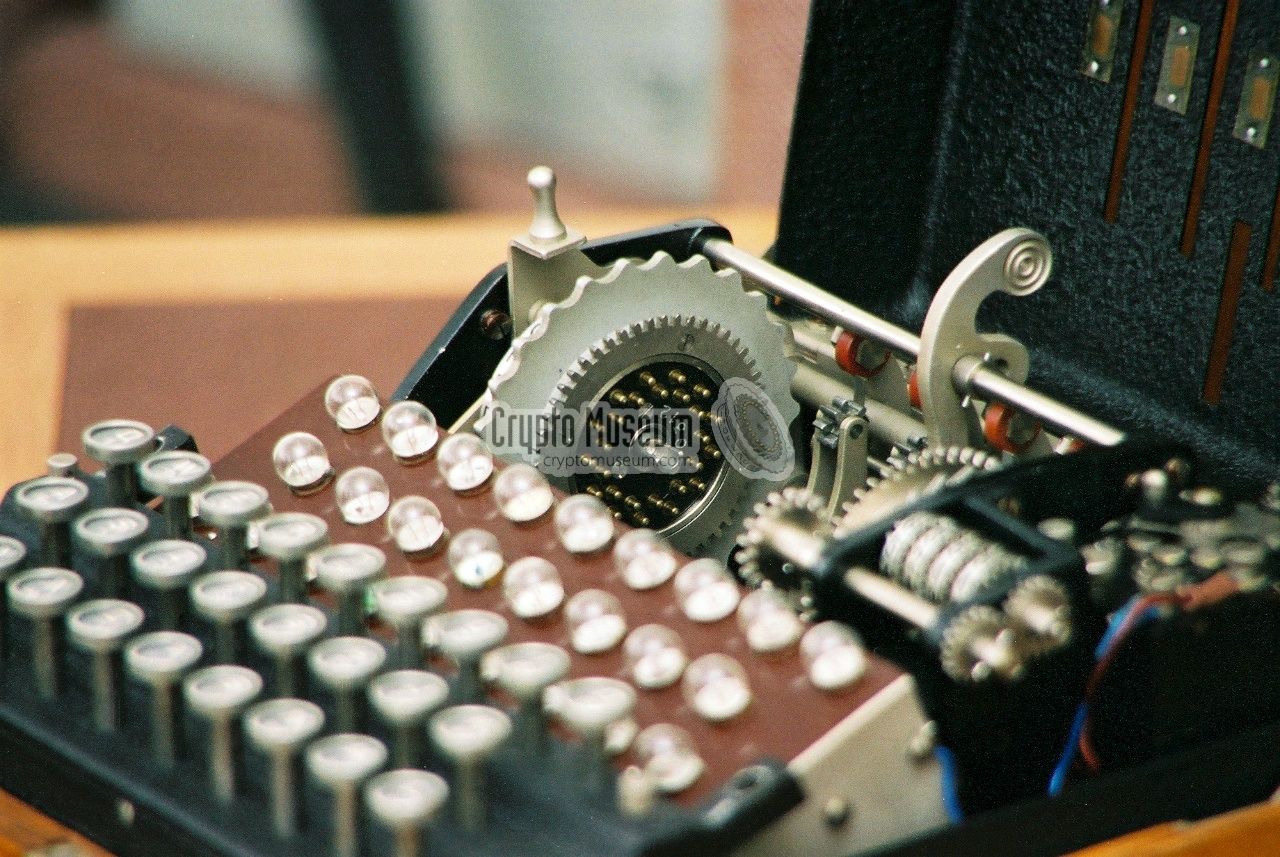
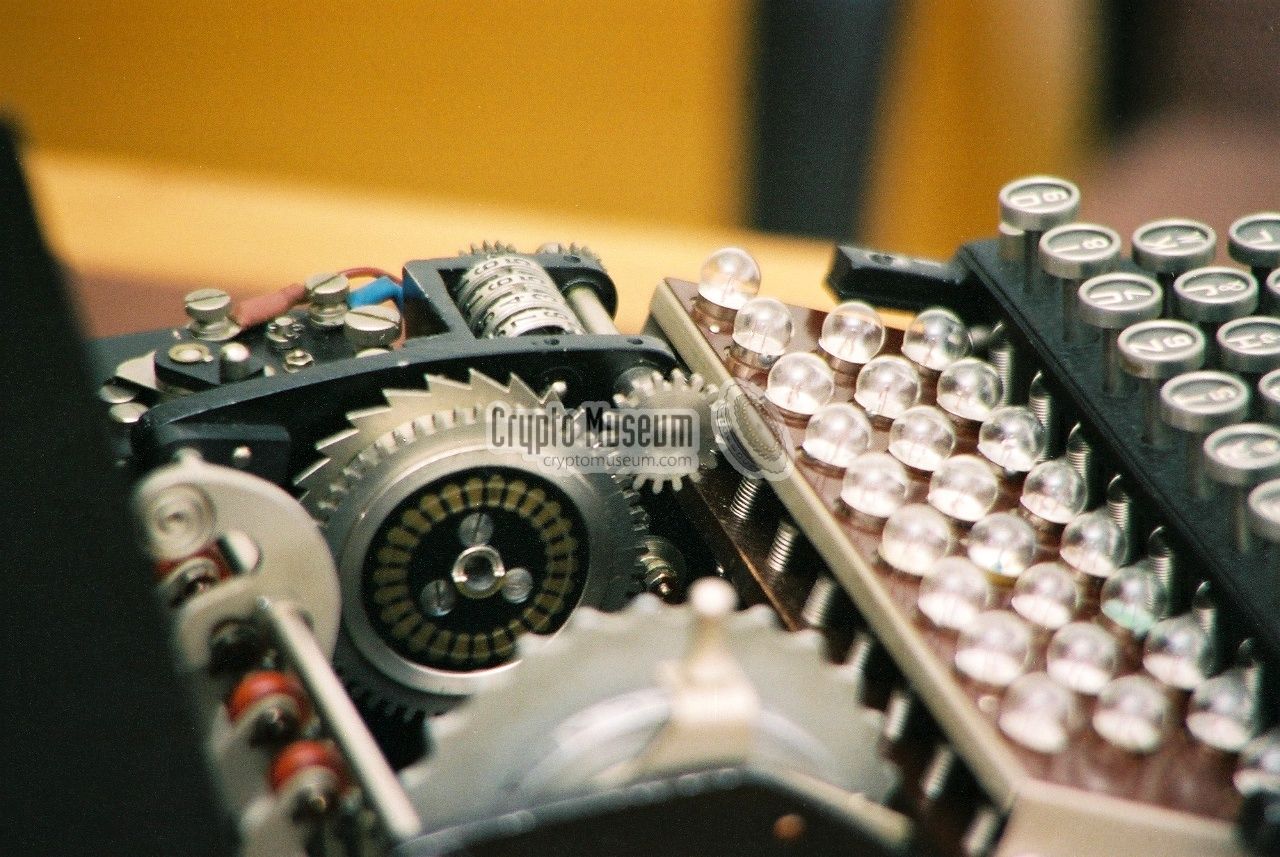
It features a cog-wheel driven wheel mechanism with irregular stepping
and a crank to wind it back and forth. The official model number of
the machine was G31 but it is commonly referred to as the
Enigma G, as the serial numbers start with the letter 'G'.
The official designator is Ch.15a, whilst the codebreakers of
Bletchley Park
called it the 11-15-17 machine (after the number
of notches on each wheel). It is also known as the
Abwehr Enigma (see below).
|
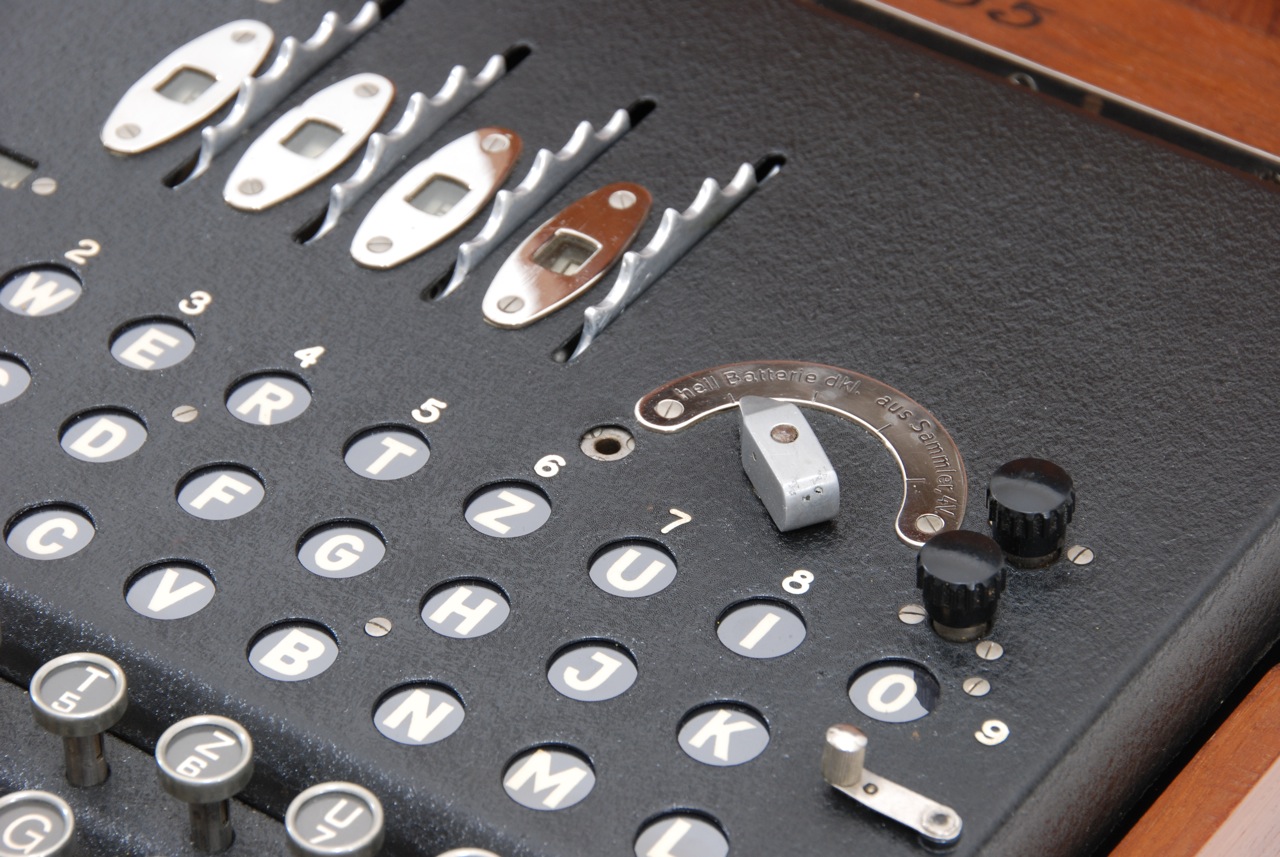
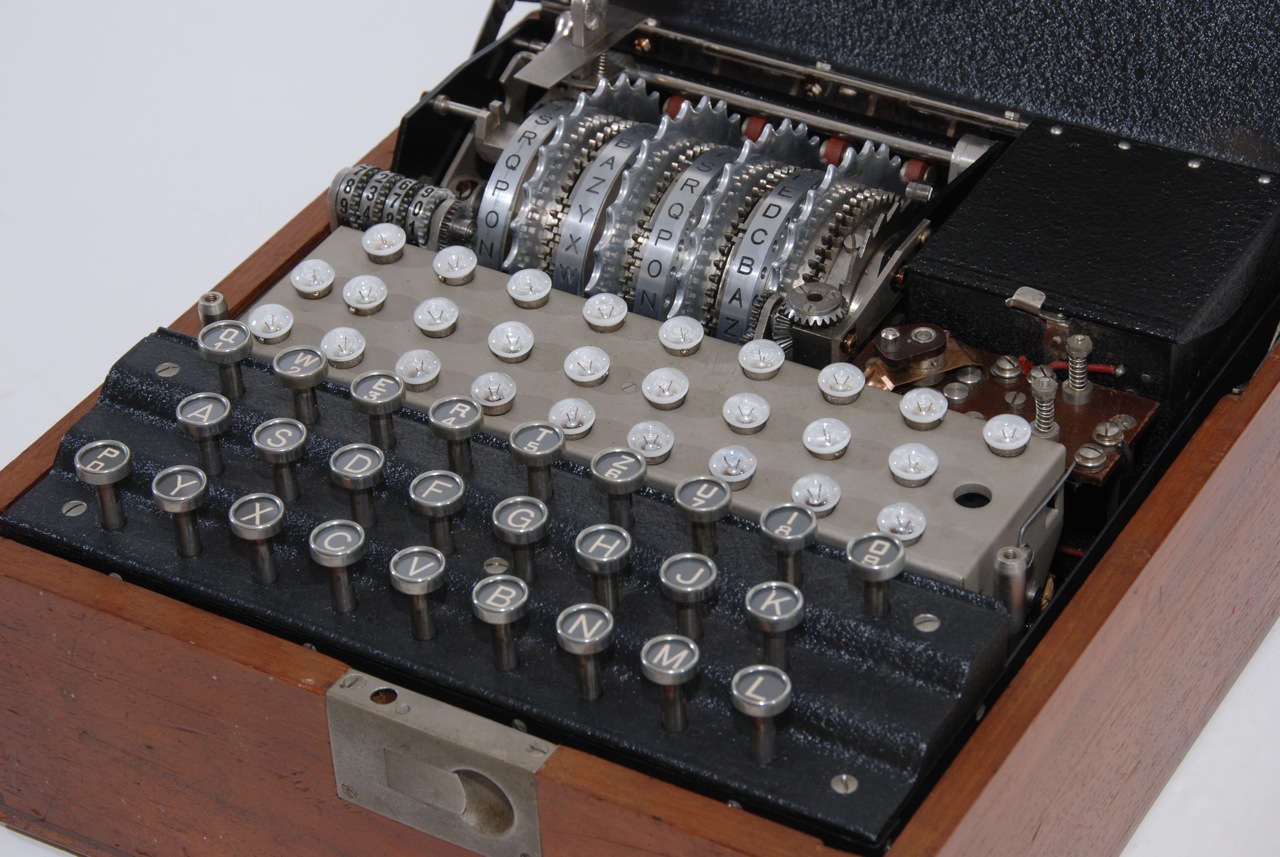
The machine is different from all other Enigma models, not only
because of the cog-wheel driven mechanism, but also because of its
smaller size, its smaller wheels, and its sloped lamp panel with a
large lever sticking out at the top centre, just above the cipher wheels.
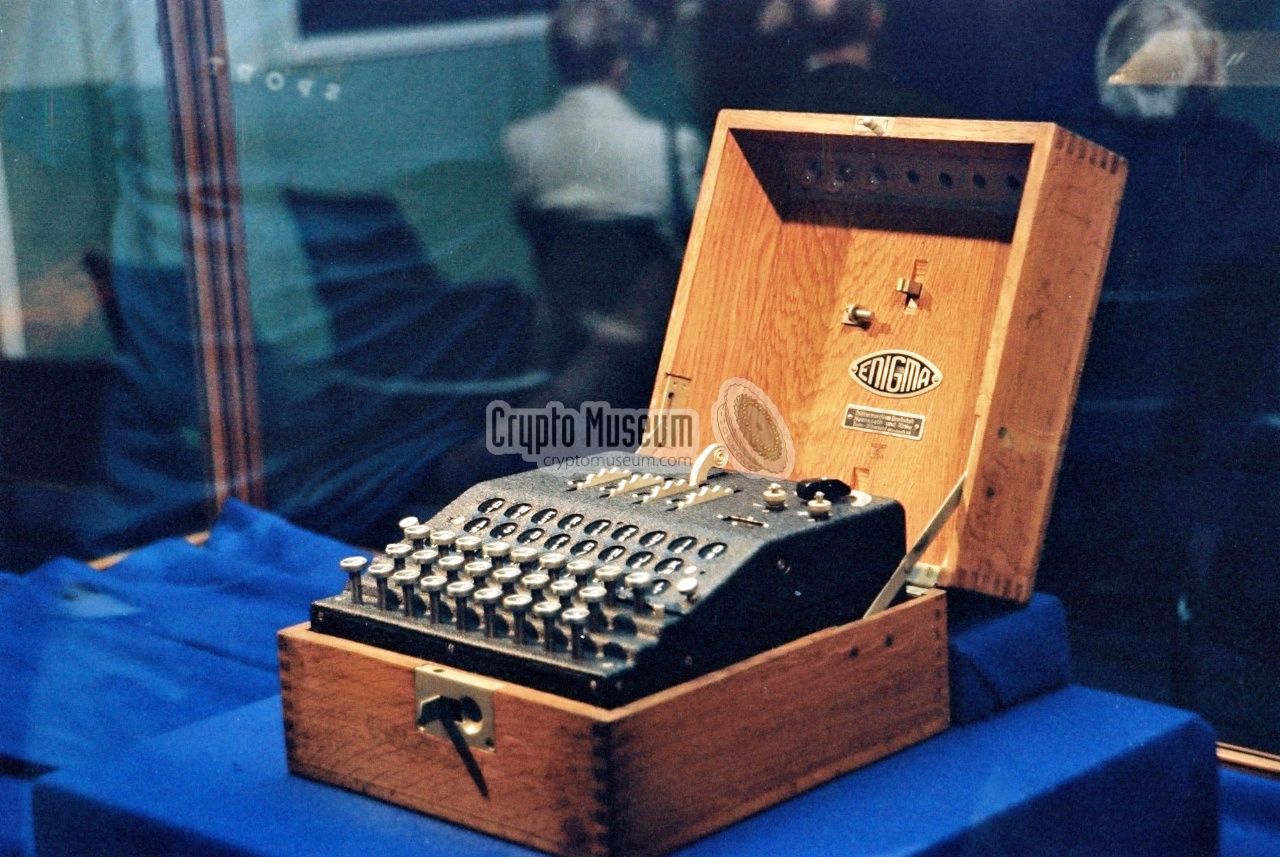
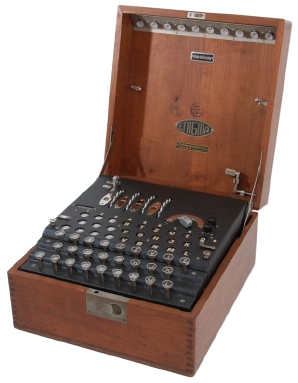
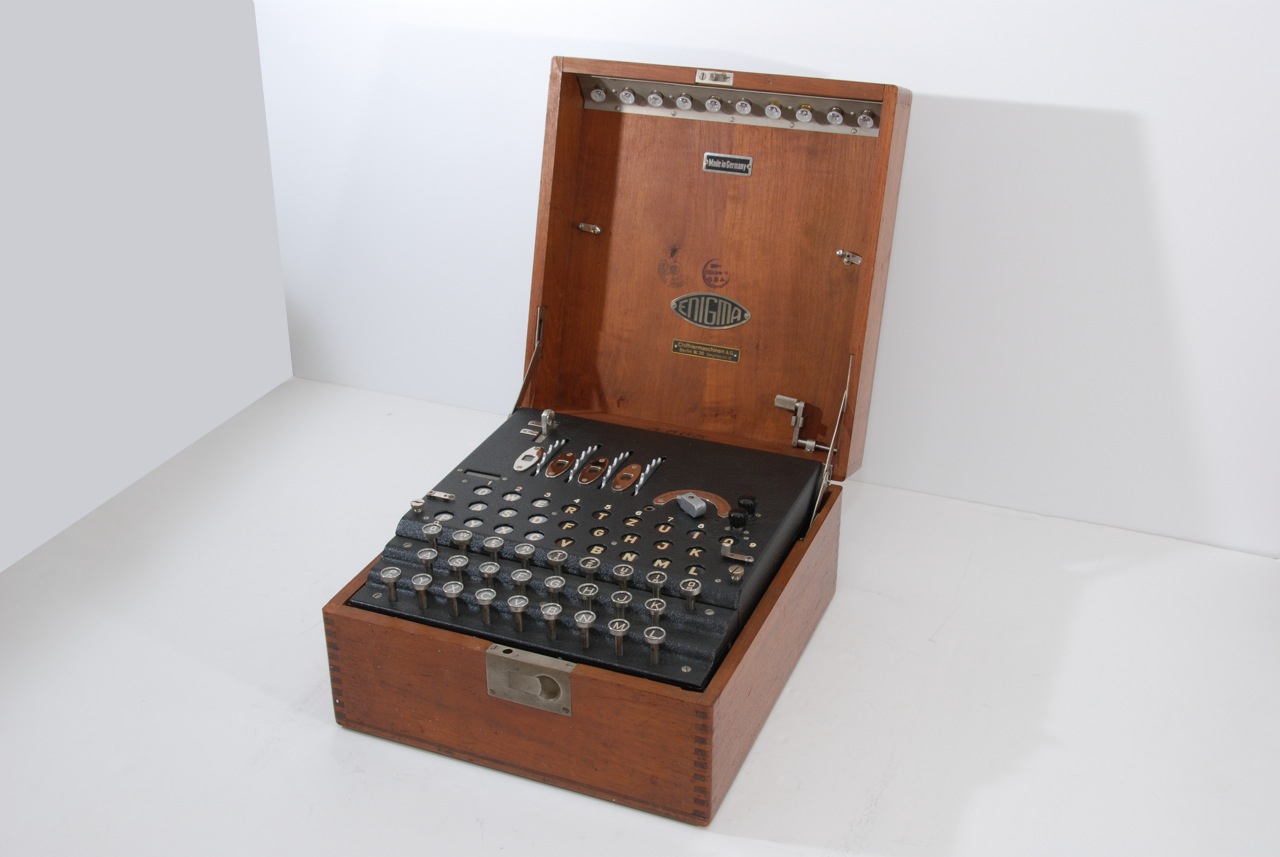
The image on the right shows the Enigma G with serial number G-312
that is part of the Bletchley Park collection. The machine was stolen
from the museum in 2000 but has since been returned and is now on public
display again [1].
It was photographed by Crypto Museum in 2002 [2]. 1
|
|
|
The Enigma G was probably an attempt to make a smaller - more portable -
version of the Zählwerk Enigma. The wooden transport case is smaller
that any of the earlier ones and even the cipher wheels are smaller,
making them mechanically incompatible with any other version of the
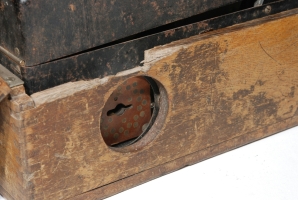
machine. As there was no space left inside the machine for a battery,
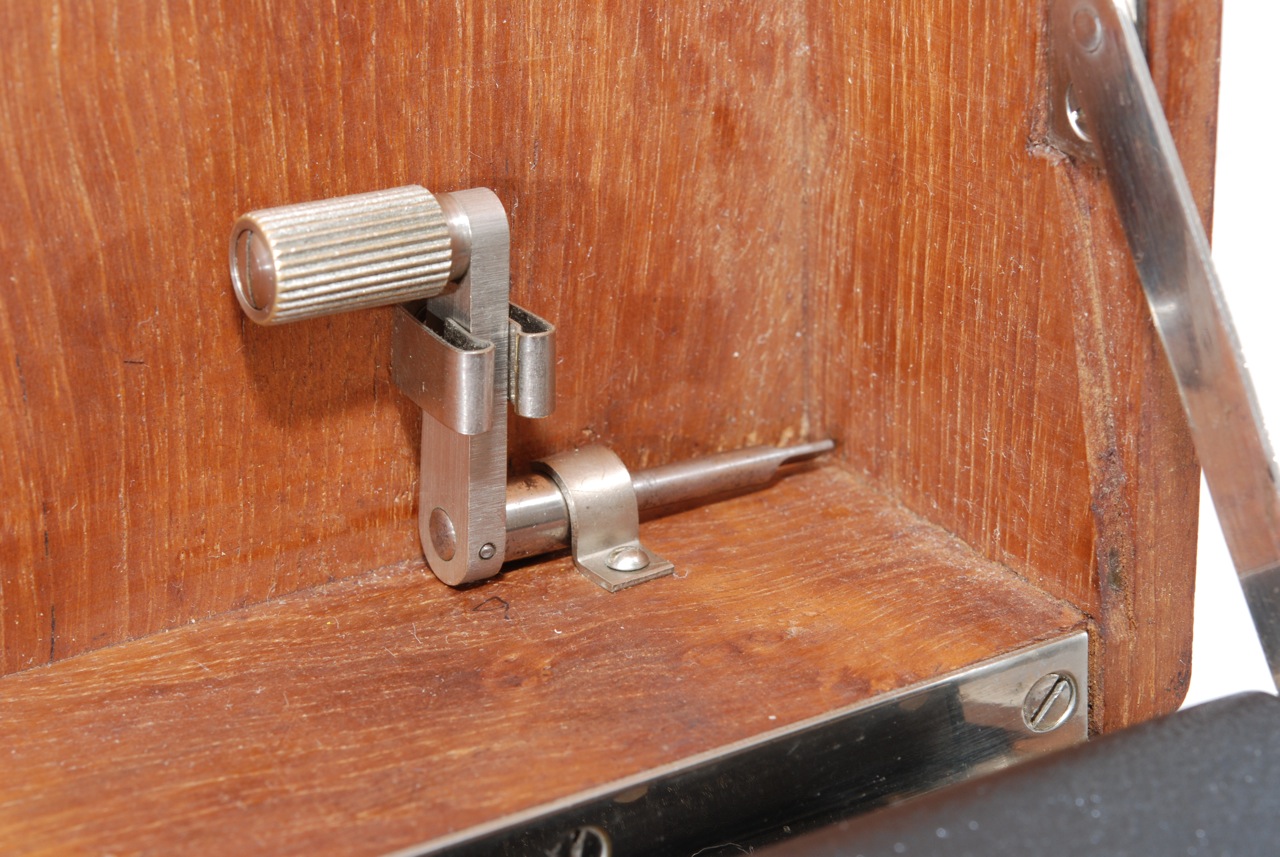
it has to be powered by an external 4V source. A crank, that is
stored inside the top lid of the wooden case, can be inserted into
a hole at the right side of the machine, in order to wind the mechanism
back or forth.
Three different versions of the Enigma G31 were made.
The most common one was Ch.15a, the standard version that
was supplied, for example, to the German Abwehr and the Dutch Navy.
The Ch.15b had a printer socket on its left hand side and the Ch.15c
was a special version with an alternative Steckerbrett (plug board).
So far, the Ch.15c has never been rediscovered.
We are indebted to Frode Weierud [10] for his tireless support
in recovering the history of Enigma G.
|
 |
-
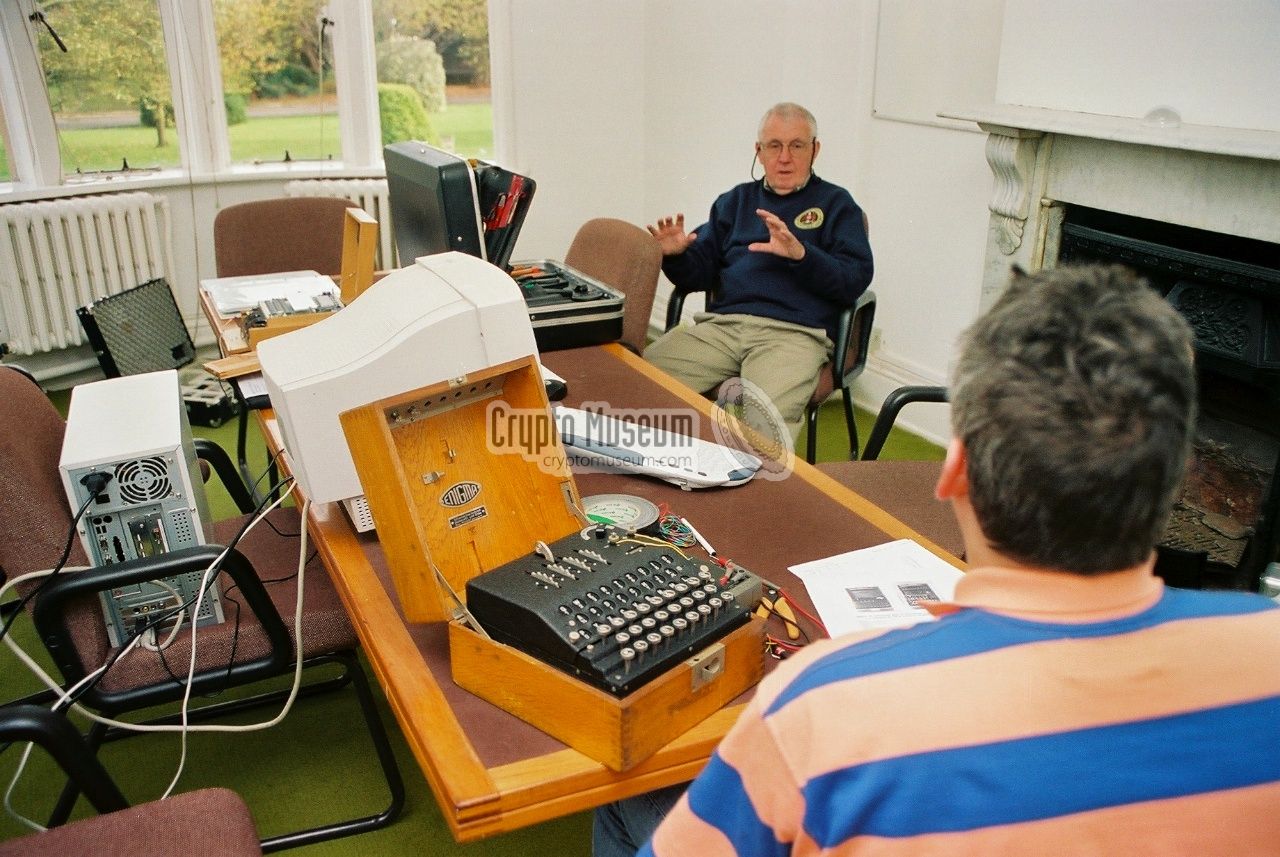
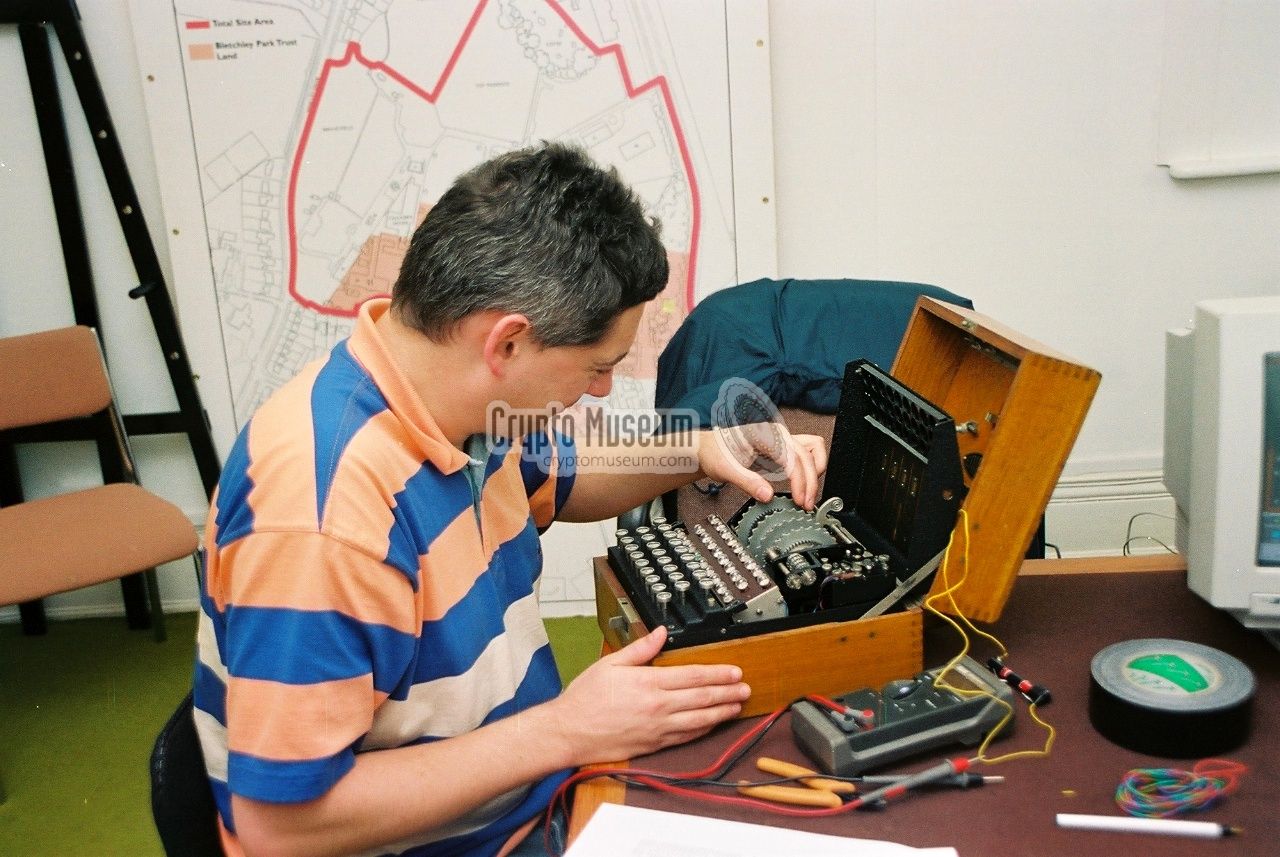
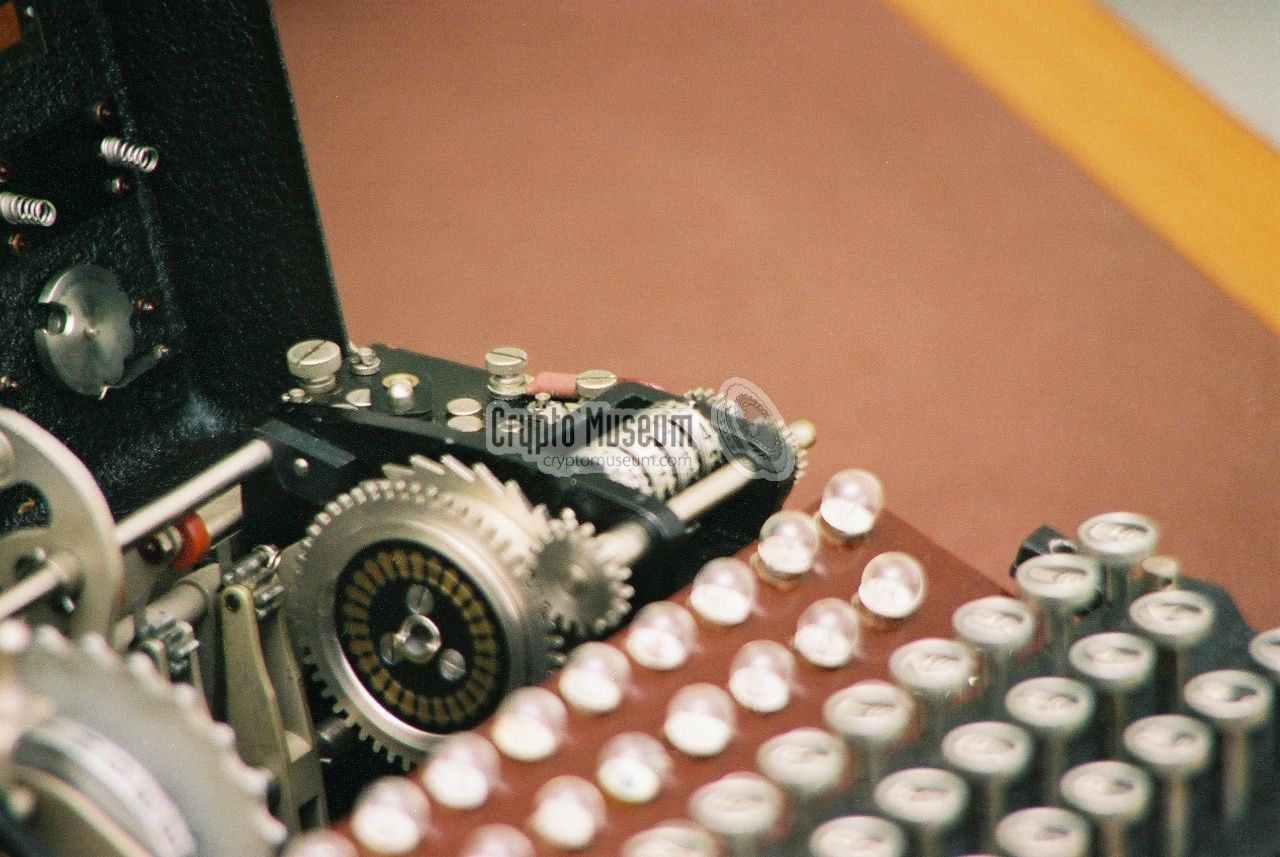
The quality of the photographs of the Enigma G-312 is somewhat
sub-standard as they have been scanned from analogue negatives.
At the time we didn't have a digital camera.
|
|
|
|
|
|
|
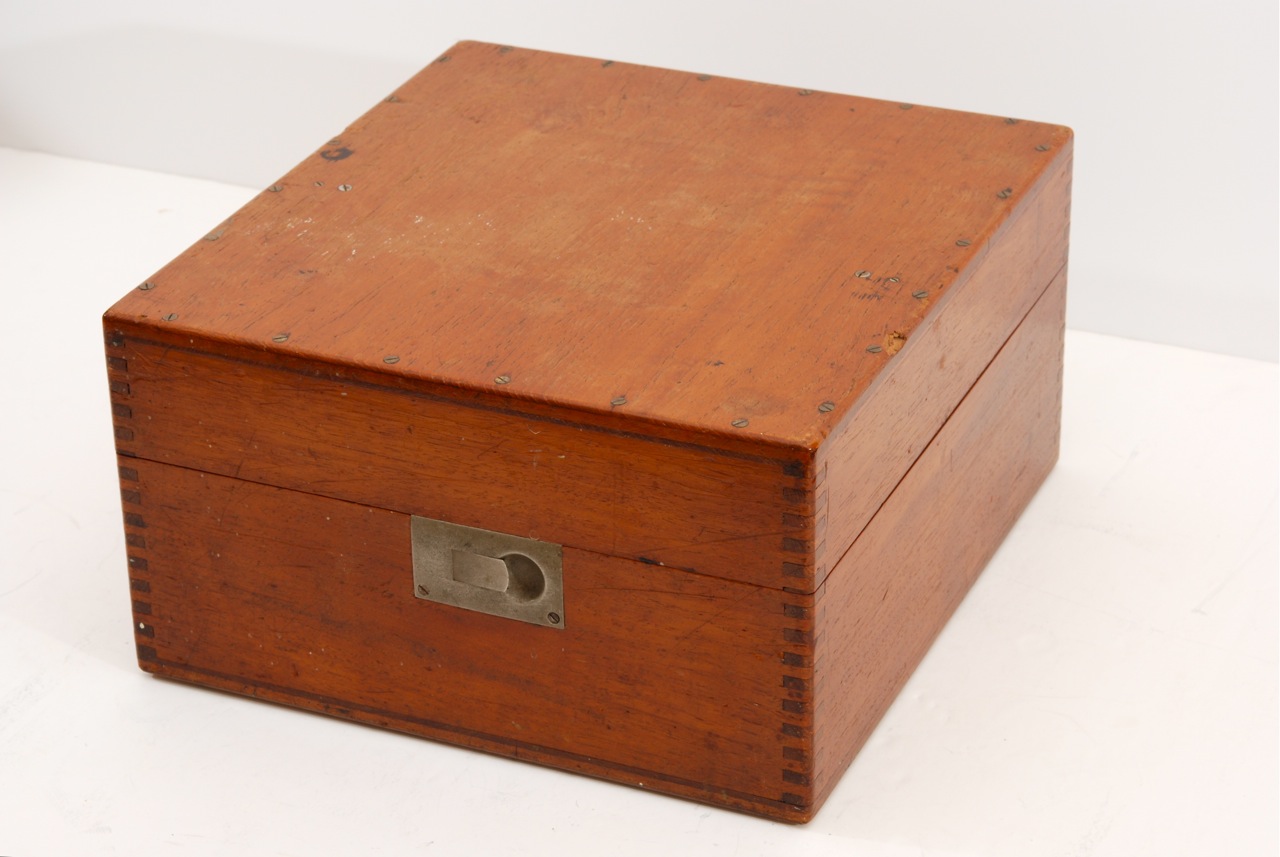
The case, and hence the wooden box, of the G31 are somewhat smaller
that the case of an Enigma D
or an Enigma I.
This was probably done to make the machine more portable.
The outer dimensions of the wooden box are 25x27x16.5 cm.
As the case is smaller, there is no room for a battery pack and the
machine therefore has to rely on an external power source.
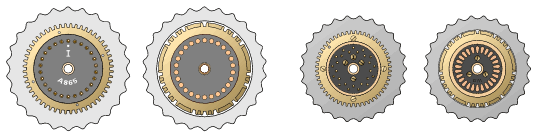
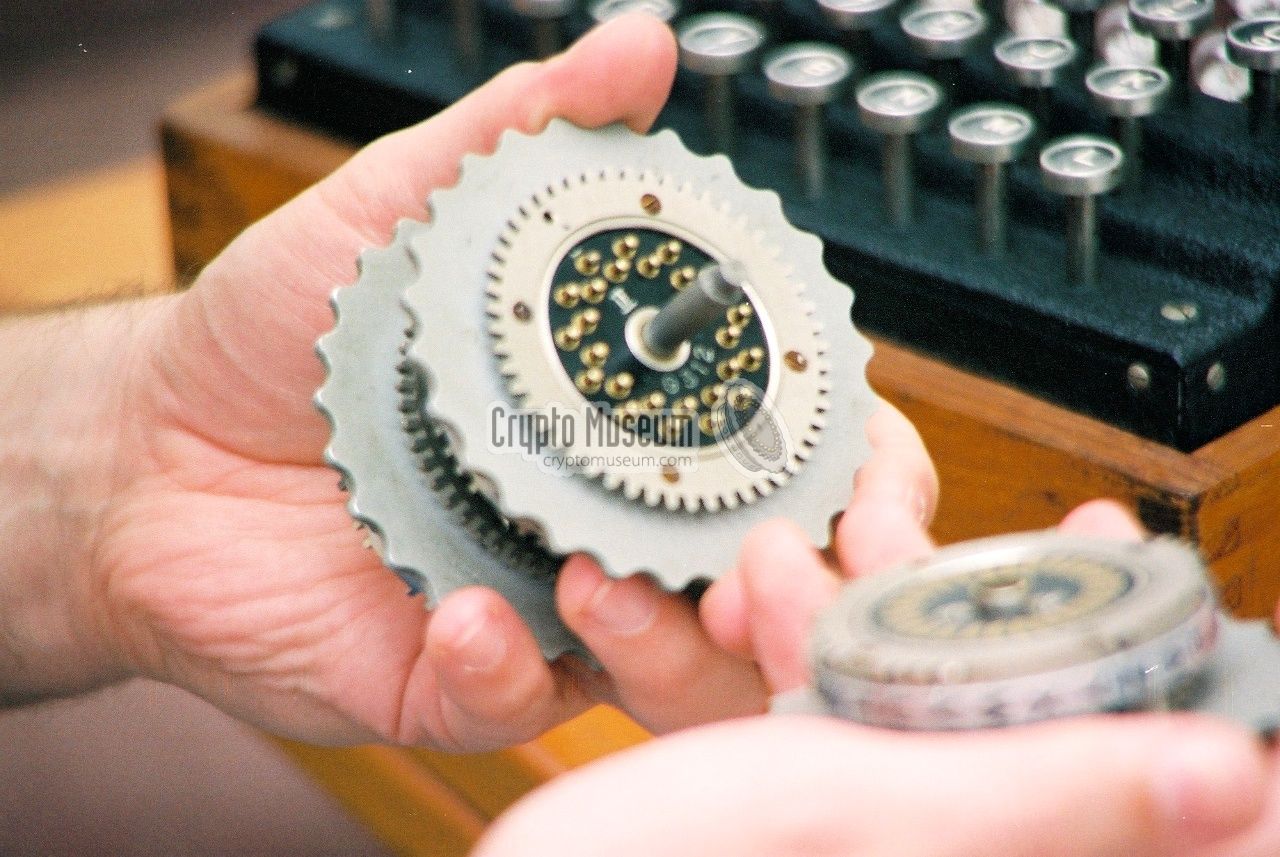
The wheels of the Enigma model G31 are also smaller than those of
all other Enigma machines. The largest diameter is approx. 85 mm (3.5 inches),
whereas the normal wheels are 100 mm (4 inches). In order to accomodate
the 26 spring loaded contacts, they are arranged in a zig-zag pattern.
The contact pads at the other side of the wheel have the shape of
a tear-drop.
| |
|
The wheels of the initial Zählwerk machine (left) and the Enigma model G31 (right)
|
The Abwehr used different wiring than the other customers of this machine.
In order to keep the wiring secret, they ordered unwired wheels
from the manufacturer. Furthermore, different departments of the Abwehr
used differently wired wheels, and it seems likely that, during the course
of the war, the wiring was changed several times.
|
Around 1927, Chiffriermaschinen AG, the Enigma manufacturer,
started the development of a series of new machines, all derived
from the commercial Enigma D.
For the Reichswehr (the predecessor of the Wehrmacht),
they developed the Enigma I and for various
other customers (both civil and military) the
Enigma K family was introduced.
|
At the same time, development was started on an improved
- mechanically more advanced - machine that was described
to customers [3] as:
Glühlampen-Chiffriermaschine "ENIGMA"
mit Zählwerk
und zwangläufiger
Kupplung der Chiffrierwalzen.
Translated: Lamp-Enigma with counter and coupled cipher wheels.
It has a cog-wheel driven wheel-turnover mechanism that features
irregular stepping, making it cryptographically stronger than
the regularly stepping Enigma D.
Several models were based on this new concept.
After the first prototypes in 1927,
the first machine to be released in 1928 with this mechanism was the
Zählwerk Enigma A28, shown in the image on the right.
It was followed a few years later,
in 193, by the Enigma Z (Z30, Mk.II)
and finally in 1931, by the Enigma G.
The Enigma G is in fact a special version of the Zählwerk Enigma.
Only a relatively small number of these machines were ever built.
|
|
|
Three versions of the Enigma G were released, but finally
the Zählwerk branch of the Enigma Family Tree died off
and no further models based on this principle were developed.
It is thought that the Zählwerk Enigma machines were too expensive
to manufacture, hence the reason for the relatively small number of
machines that were built.
 More about the Zählwerk Enigma More about the Zählwerk Enigma
|
The table below shows the default wiring of the Enigma G, which is
identical to the wiring of the commercial Enigma D.
The only difference is the number of notches on each wheel.
The wiring and the position of the notches is identical to that of
the Zählwerk Enigma A28.
Please note that many (military) users later changed
the wiring of the cipher wheels and that the German Abwehr even ordered
wheels without wiring. In most cases the wiring of the UKW was not changed.
|
|
Wheel
|
ABCDEFGHIJKLMNOPQRSTUVWXYZ
|
Notch
|
Turnover
|
#
|
|
|
|
ETW
|
QWERTZUIOASDFGHJKPYXCVBNML
|
|
|
|
|
I
|
LPGSZMHAEOQKVXRFYBUTNICJDW
|
ACDEHIJKMNOQSTWXY
|
SUVWZABCEFGIKLOPQ
|
17
|
|
II
|
SLVGBTFXJQOHEWIRZYAMKPCNDU
|
ABDGHIKLNOPSUVY
|
STVYZACDFGHKMNQ
|
15
|
|
III
|
CJGDPSHKTURAWZXFMYNQOBVLIE
|
CEFIMNPSUVZ
|
UWXAEFHKMNR
|
11
|
|
UKW
|
IMETCGFRAYSQBZXWLHKDVUPOJN
|
|
|
|
|
- Ch.15a - standard version
This is the standard version of the machine.
Most Enigma G machines that have survived, are of this type.
A good example is the Enigma G-312 that is part of the Bletchley Park
collection, and the G-260 that was found in Argentina towards the
end of World War II.
- Ch.15b - with printer socket
This version is functionally identical to the standard model (Ch.15a)
except for the fact that it has a circular socket at the left, allowing
another machine (such as the Enigma H)
to be used as a printer attachment.
A good example is the Enigma G-111 (see below).
- Ch.15c - with plug board
According to the personal notes of Enigma-developer Willy Korn,
this version had a plug board that was different from the
plug board of the Enigma-I, as the latter was used exclusively for
the German Army. There are no known surviving examples of this version.
|
The machine is sometimes called the Abwehr Enigma as it was
used to some degree by the German Secret Service, the Abwehr,
during WWII. It should be noted however that this was not the only
cipher machine used by the Abwehr, and that the machine was also used
by civil and military customers in several other countries, including
Hungary and The Netherlands. Furthermore, the machine was also used
during WWII by the Sicherheitsdienst (SD), the German
Security Service.
Some good examples of such Enigma G machines are the G-312 that was
used by the Abwehr, and the G-260 that was most likely used by
the Sicherheitsdienst (SD).
In practice, the machine was mostly called Zählwerk Enigma
(Counter Enigma) or Zählwerksmaschine, after
the Enigma A28 on which is was based.
|
A good example of a standard version of the Enigma G
(designator Ch.15a) is the machine with serial number G-312
which is on public display at the
Bletchley Park museum in the UK.
It is in fact a true Abwehr Enigma, as it was used by the
German Seret Service the Abwehr during WWII.
|
Machines of this type are extremely rare and Bletchley Park is
one of the very few places in the world where a surviving machine can
be seen. Unfortunately, the G-312 was stolen from the museum
in broad daylight on 1 April 2000.
Luckily, Enigma historian David Hamer had just completed a
detailed description of the machine,
which was quickly spread on the internet [4].
As a result, the machine could not be traded easily and was returned
several months later to BBC reporter Jeremy Paxman (photo on the right) [5].
|
|
|
Before that time, the machine was considered lost for several months,
until the police received letters from a man who claimed to be acting
on behalf of someone who had bought the machine. In the letters he
demanded GBP 25,000 for safe return of the machine. Although the museum
had agreed to pay the ransom, the 6 October deadline wasn't met and
no money was payed [1].
Two weeks later the machine it was sent to BBC reporter Jeremy Paxman,
who received the parcel in his office at the London Television Centre.
The machine appreared to be undamaged, but the three cipher wheels were
missing. These wheels were also returned safely at a later date.
In November 2000, the British Police arrested 50-year-old Dennis Yates,
an antiques dealer from Derbyshire. He admitted sending the letters to
the police and returning the machine to Jeremy Paxman, but persisted that
he was acting on behalf of someone else. He refused to reveal
the name of the person(s) involved, claiming that he had received
death threats [1]. Somehow the situation had run out of his control.
He was subsequently jailed for 10 months.
Christine Large, then the director of the Bletchley Park Museum,
later wrote a book about the theft [6].
|
The table below shows the wiring of the G-312. Although the machine is
believed to have been used by the German Abwehr, it is the only
one every found with this wiring. Different wirings were used for different
sections of the Abwehr, and also for different radio nets. It is also
possible that some machines were rewired a number of times
during their lifetime.
|
|
Wheel
|
ABCDEFGHIJKLMNOPQRSTUVWXYZ
|
Notch
|
Turnover
|
#
|
|
|
|
ETW
|
QWERTZUIOASDFGHJKPYXCVBNML
|
|
|
|
|
I
|
DMTWSILRUYQNKFEJCAZBPGXOHV
|
ACDEHIJKMNOQSTWXY
|
SUVWZABCEFGIKLOPQ
|
17
|
|
II
|
HQZGPJTMOBLNCIFDYAWVEUSRKX
|
ABDGHIKLNOPSUVY
|
STVYZACDFGHKMNQ
|
15
|
|
III
|
UQNTLSZFMREHDPXKIBVYGJCWOA
|
CEFIMNPSUVZ
|
UWXAEFHKMNR
|
11
|
|
UKW
|
RULQMZJSYGOCETKWDAHNBXPVIF
|
|
|
|
|
This machine is currently on public display in the museum
at Bletchley Park.
|
In March 1945, just before the end of WWII, the Argentine police arrested the
German spy Johann Siegfried Becker. In his posession was an Enigma model G31
with serial number G-260. Two months later, the machine was handed over to the
Americans [7].
Although Becker was believed to work for the German Secret Service,
the Abwehr, the G-260 was most likely used by the
Sicherheidsdienst (SD), the German Security Service.
The SD had its own network in Argentina which was
called Red by the Allies. Their Enigma G31 machines were wired differently from
the machines that the Abwehr used in Argentina (known to the Allies as Green) [11].
|
|
Wheel
|
ABCDEFGHIJKLMNOPQRSTUVWXYZ
|
Notch
|
Turnover
|
#
|
|
|
|
ETW
|
QWERTZUIOASDFGHJKPYXCVBNML
|
|
|
|
|
I
|
RCSPBLKQAUMHWYTIFZVGOJNEXD
|
ACDEHIJKMNOQSTWXY
|
SUVWZABCEFGIKLOPQ
|
17
|
|
II
|
WCMIBVPJXAROSGNDLZKEYHUFQT
|
ABDGHIKLNOPSUVY
|
STVYZACDFGHKMNQ
|
15
|
|
III
|
FVDHZELSQMAXOKYIWPGCBUJTNR
|
CEFIMNPSUVZ
|
UWXAEFHKMNR
|
11
|
|
UKW
|
IMETCGFRAYSQBZXWLHKDVUPOJN
|
|
|
|
|
The current whereabouts of this machine are unknown.
|
|
|
The strange case of Enigma G-111
Ch.15b
|
 |
|
|
In May 2009, a very rare variant of the Zählwerk Enigma model G31 turned
up at auction house Hermann Historica in Munich (Germany). The machine
with serial number G111 would be up for auction in October 2009.
It is a very rare example of the Ch.15b variant of the Enigma G.
|
It appeared to be a G31 model from the first production batch (the numbers
started with G101) that had a hitherto unseen connector at its left side.
In July 2009, we were given the opportunity to research this machine in
detail.
Crypto Museum has since written and published a paper about this rare machine,
which is available from our special G-111 page.
More information
|
|
|
The Zählwerk Enigma is clearly based on the design of the
Enigma D,
albeit with some additional features and improvements. Most of these
features are described in the two German patents
DE534947
[8]
and DE579555
[9].
The most striking difference with the other Enigma models is the way
in which the wheels are moved. In the earlier Enigma D (and also in
the later Enigma I that was used by the German Army),
the wheels are moved by means of pawls, rachets and notches.
As a result, the wheel-stepping mechanism of these machines can only
move forward.
In the Zählwerk Enigma, however, the wheels are moved by a cog-wheel
based gearbox. The number of notches on each
wheel has been increased drastically, and is different for each wheel.
The longest cipher period is obtained when different prime numbers
(relative to 26) are used for the number of notches on each wheel.
And this is exactly what is done in this machine.
Another difference with the Enigma D is that the UKW (reflector)
can not only be set to any of 26 positions,
it is also moved during encipherment.
The three coding wheels are mounted on a spindle,
just like in most other Enigma machines,
whilst the UKW is fitted permanently.
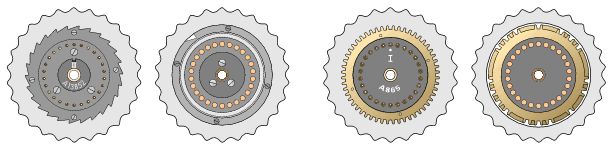
Each cipher wheel has a full cog-wheel with 52 teeth attached to its
right side. On the left of the wheel is another cog wheel with the same
spacing, but with a number of teeth missing.
The presence of a pair of teeth
is equivalent to a gap on an ordinary wheel.
When the wheels are engaged, they are coupled by means of 4 small cogwheels
with teeth of alternating length.
| |
|
Ordinary Enigma wheels (left) and the wheels of a Zählwerk Enigma (right)
|
As a result, the entire mechanism can be stepped forward and backward,
without losing the relation between the position of the wheels. A crank
can be inserted into a hole in the body of the machine, allowing the
mechanism to be wound back to the desired position.
This was used to correct mistakes,
but could also act as part of the crypographic key procedure.
The wheels of the standard Zählwerk machine have the same diameter
as the wheels of other Enigma machines, such as the
Enigma D.
With the later G31 model however,
smaller wheels were supplied as illustrated in the drawing below.
In order to accomodate the spring-loaded contacts,
they are arranged in a zig-zag pattern and the contact pads at the other
side have an oval shape.
|
| |
|
The wheels of the initial Zählwerk machine (left) and the Enigma model G31 (right)
|
Most machines were supplied with just 3 wheels that could be mounted on
the spindle in 6 different orders (3 x 2 x 1).
These wheels (I, II and III) had 17, 15 and 11 notches respectively.
The positions of these notches are
identical for all recovered machines, regardless of their wiring and
regardless of the customer.
It is known that some machines were supplied with more that three wheels.
The Hungarian Army, for example had Enigma G31
machines with five wheels.
It is very likely that the Zählwerk Enigma was originally intended for
commercial use, as the wiring of the UKW and the coding wheels of some
recovered machines is identical to the wiring of the commercial
Enigma D.
In some cases, the wheels were rewired by the customer, but in many
cases the wiring of the UKW was left unchanged.
The Abwehr ordered unwired wheels [6].
|
- BBC, 2000: Wartime coding machine stolen
1 April 2005. Retrieved February 2013.
- Crypto Museum, Photographs of Enigma G-312
Bletchley Park, August 2002, November 2004.
- Chiffriermaschinen Aktiengesellschaft, Herrn Direktor Walter Edström
Offering for Schreibende Enigma and Glühlampenmaschine mit Zählwerk (German).
16 September 1929. Crypto Museum #300304. 1
- David Hamer, G-312: An Abwehr Enigma
Cryptologia, January 2000, Volume XXIV, Number 1.
- BBC, Photograph of Jeremy Paxman with Enigma G-312
Copyright BBC News, 2000. Retrieved November 2005.
- Christine Large, Hijacking Enigma
31 May 2004. ISBN 978-0470863473.
- US Military Attaché in Argentina, Intelligence Report about G-260
US Navy Intelligence Division. 30 May 1945.
NARA CBKI 13, Box 5395, nr. 1574 1
- German Patent DE534947 (9 November 1928)
Patent for the cog-wheel driven wheel-turnover mechanism and the Ringstellung.
- German Patent DE579555 (17 November 1928)
Patent covering multiple notches on the wheels fixed to the index ring.
- Frode Weierud, Personal correspondence
Crypto Museum, May 2009.
- Phil Marks, Personal correspondence
Crypto Museum, May 2013.
|
|
|
-
Documents kindly supplied by Frode Weierud [10].
|
|
|
|
Any links shown in red are currently unavailable.
If you like this website, why not make a donation?
© Copyright 2009-2013, Paul Reuvers & Marc Simons. Last changed: Sunday, 09 February 2014 - 08:36 CET
|
|

|
|





![BBC presenter Jeremy Paxman with the returned Enigma G-312. Photo courtesy BBC News 2000 [5].](img/paxman.jpg "BBC presenter Jeremy Paxman with the returned Enigma G-312. Photo courtesy BBC News 2000 [5].")