|
|
|
|
|

|
Advanced pin-and-lug cipher machine
The C-52 and the later CX-52 were small mechanical cipher machines,
developed by Hagelin around 1952 as a replacement for
the C-446 and the
earlier M-209.
It is probably Hagelin's most successful mechanical cipher machine,
both commercially and technically, as it is difficult to break,
even by today's standards.
It is crypto-compatible with the truely portable CD-57.
|
The C-52 is a so-called pin-and-lug machine, just like the earlier
M-209
and C-446,
but is cryptographically far more advanced and secure.
It comes in many flavours, sometimes with customized 'specials',
many of which are not compatible with each other. Civil versions were
generally painted grey, while the military variant was mostly green.
They were otherwise identical.
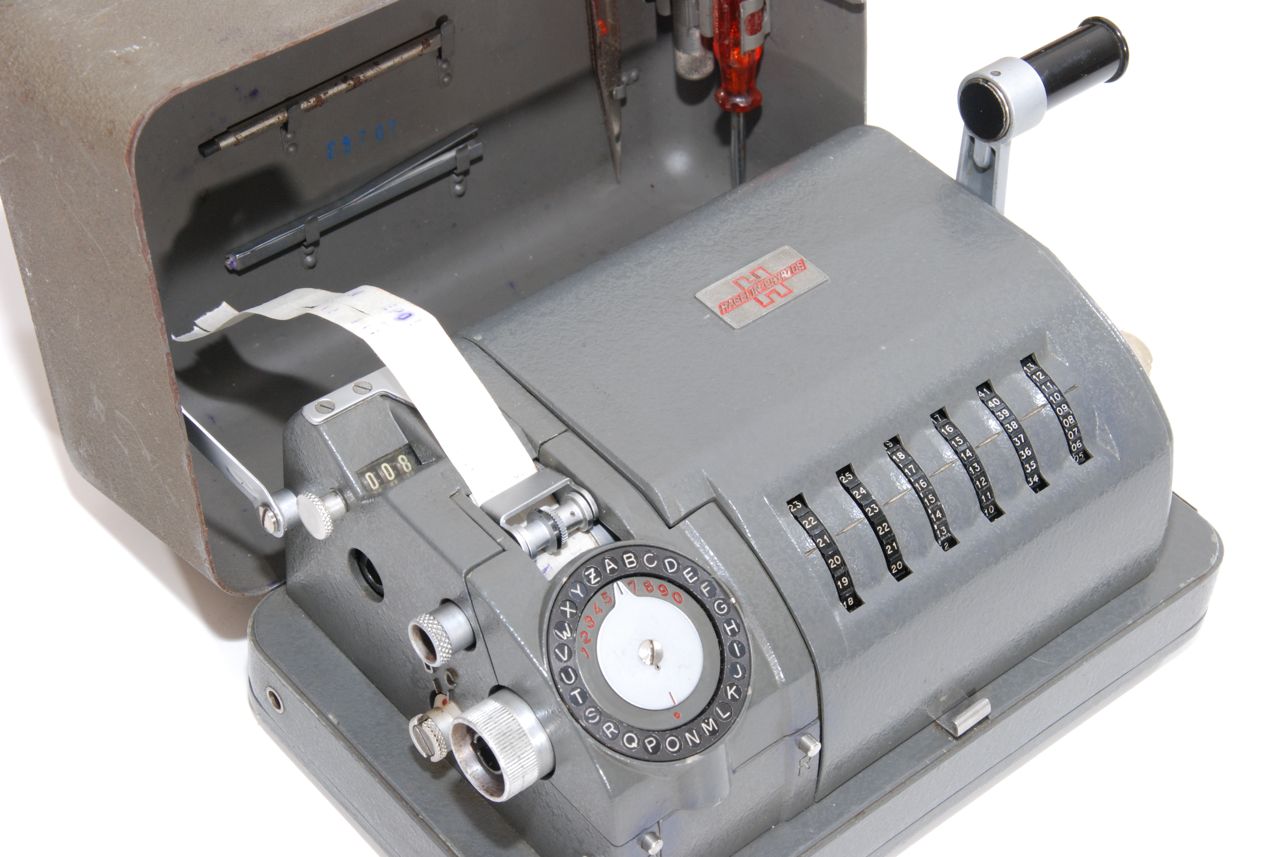
The image on the right shows a typical (civil) CX-52 machine with
numbered wheels. The machine was also available in an
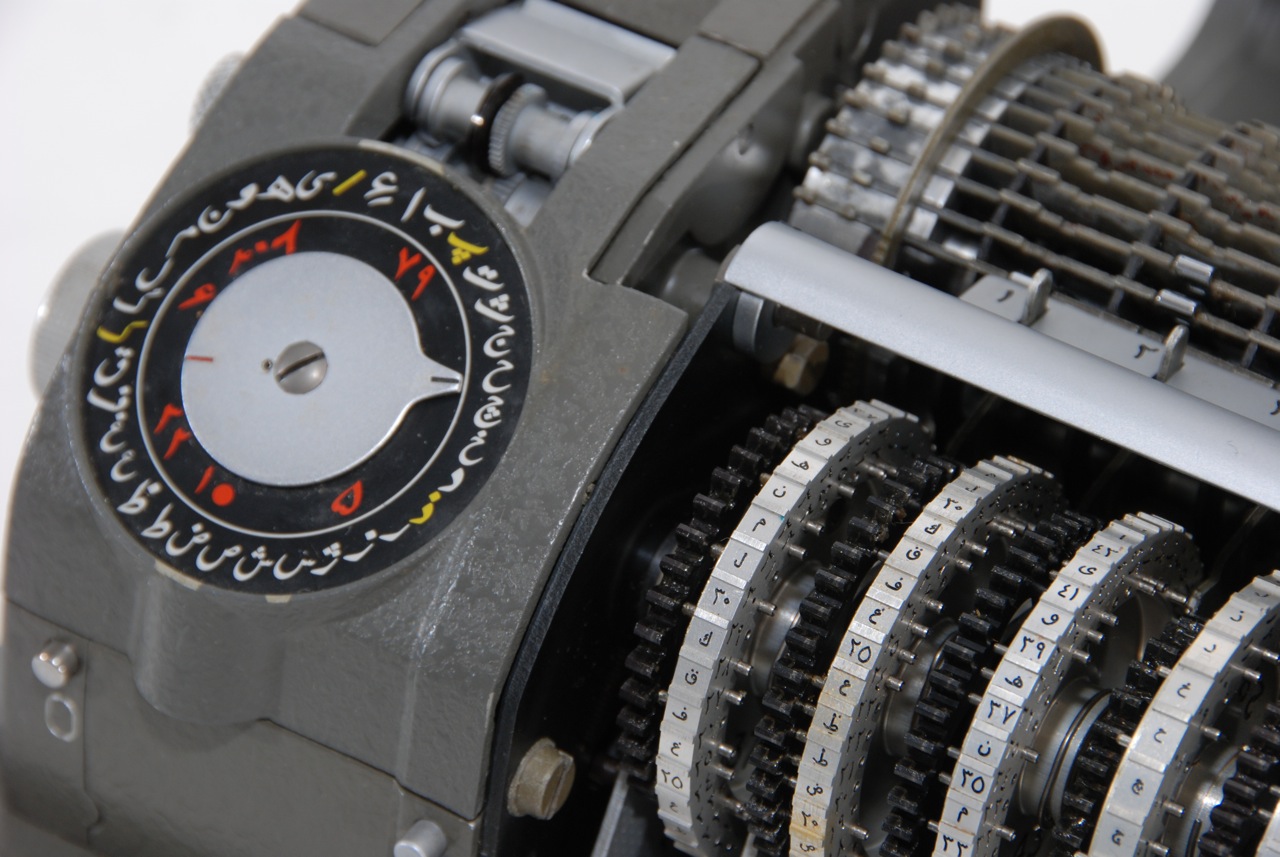
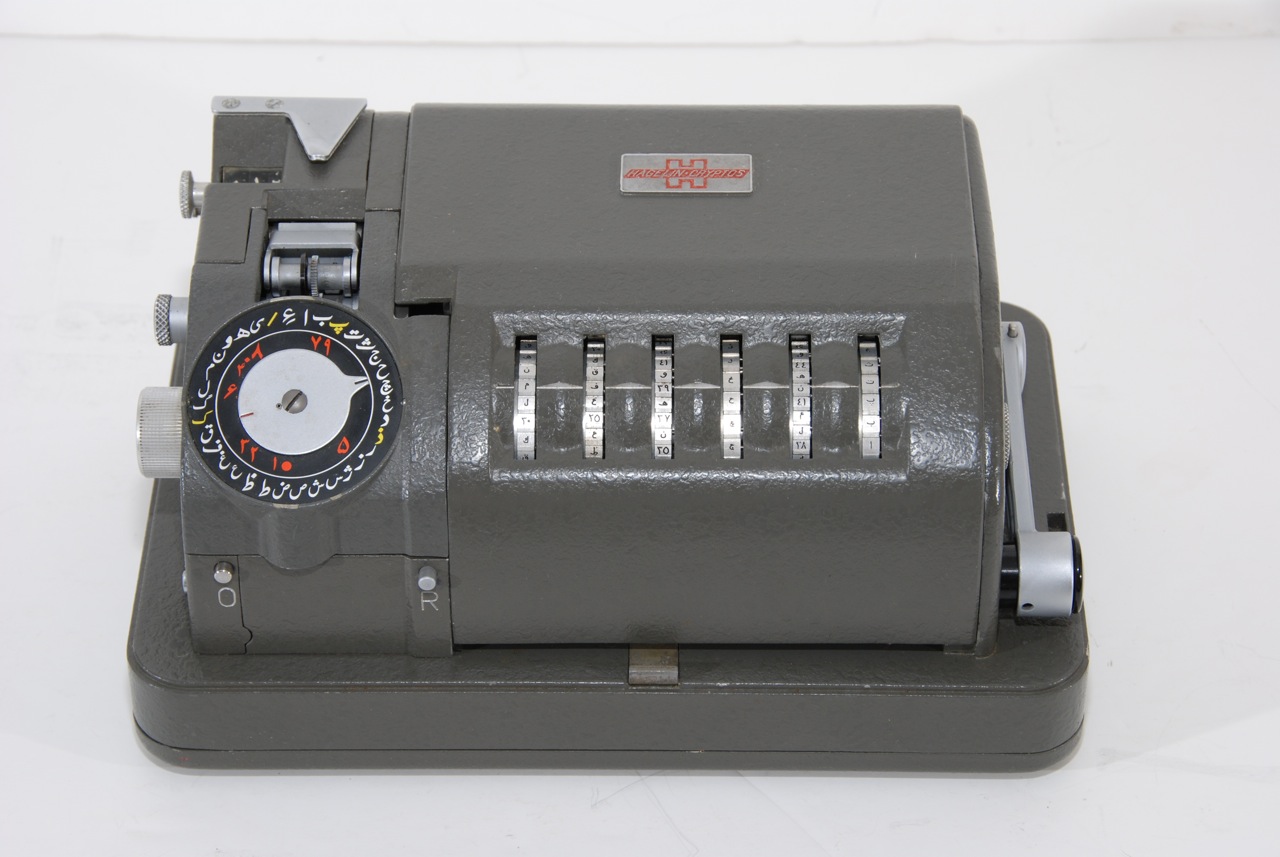
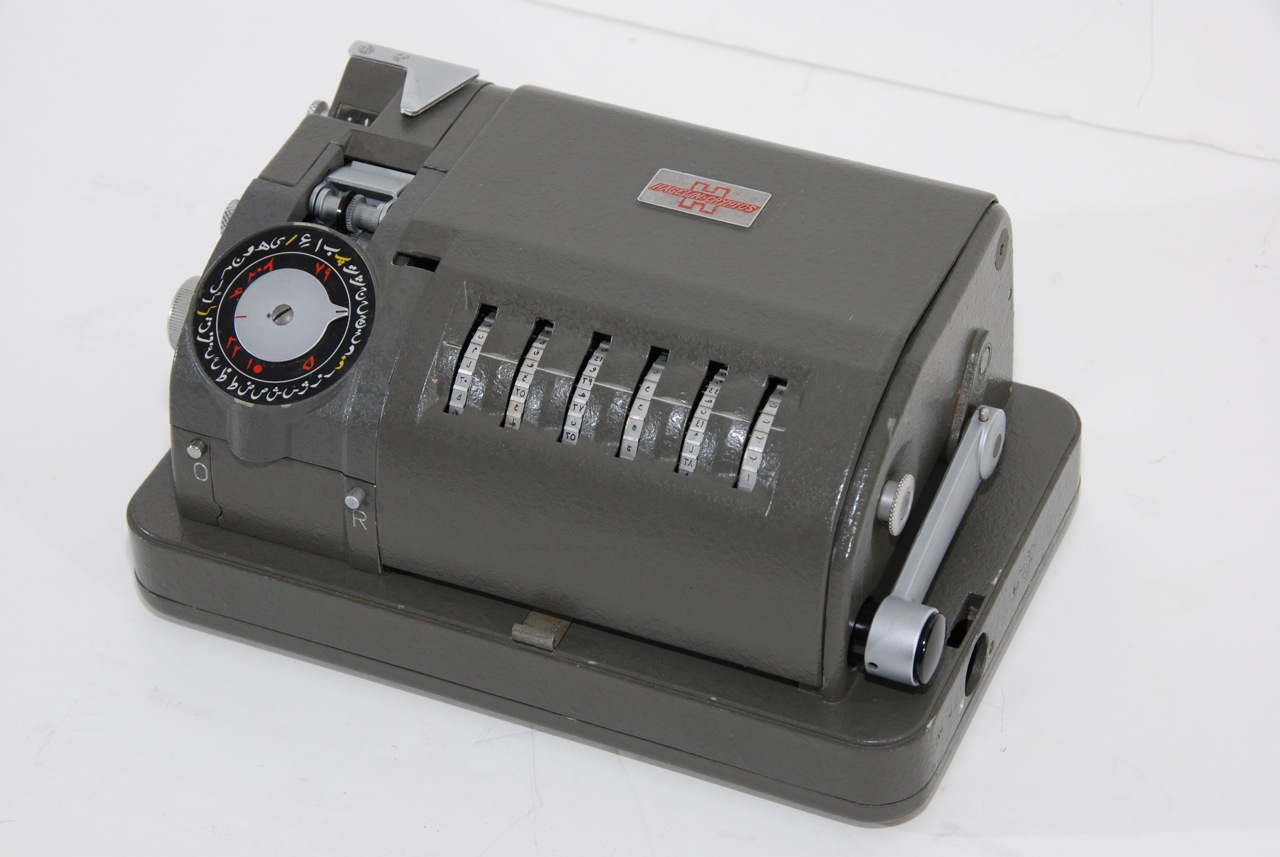
Arabic version
and with One-Time Tape
(the so-called RT/CX
or CX/RT).
|
|
|
The machine could also by expanded with a
motorized keyboard, such
as the B-52 or the B-62.
The combination of a C-52 plus the B-52
or B-62 keyboard was known as: BC-52.
By the mid-1950s, the C-52 was already in use in about 50 countries [3].
Although the Hagelin pin-wheel machines were succeeded in the late 1960s
by the electro-mechanical H-4605 and later by the
fully-electronic HC-500 CRYPTOMATIC series,
many CX-52 machines were kept as backup during the Cold War until the
1980s. In some countries, such as Belgium, even well into the 1990s.
|
|
|
|
When the C-52 was introduced, it caused ripples throughout the
cryptanalytic community [2].
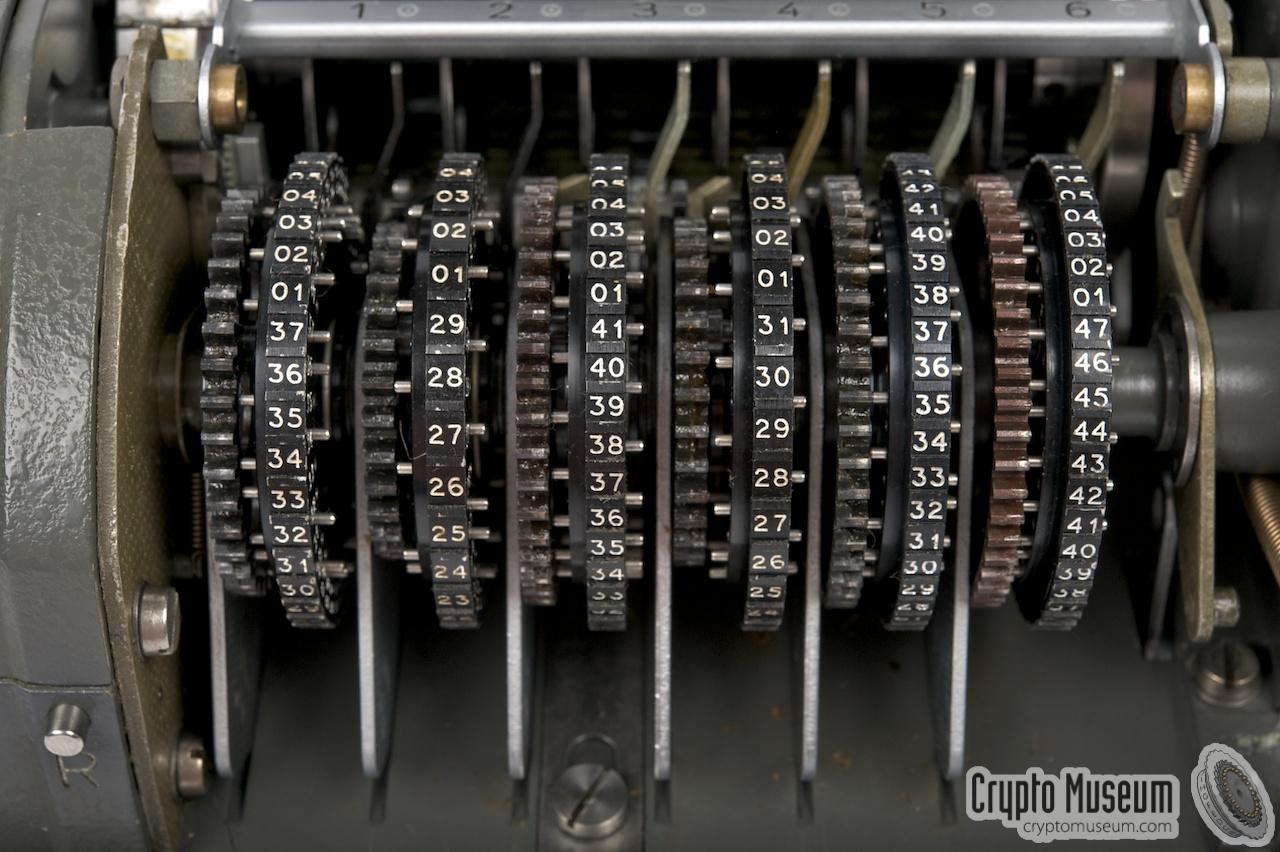
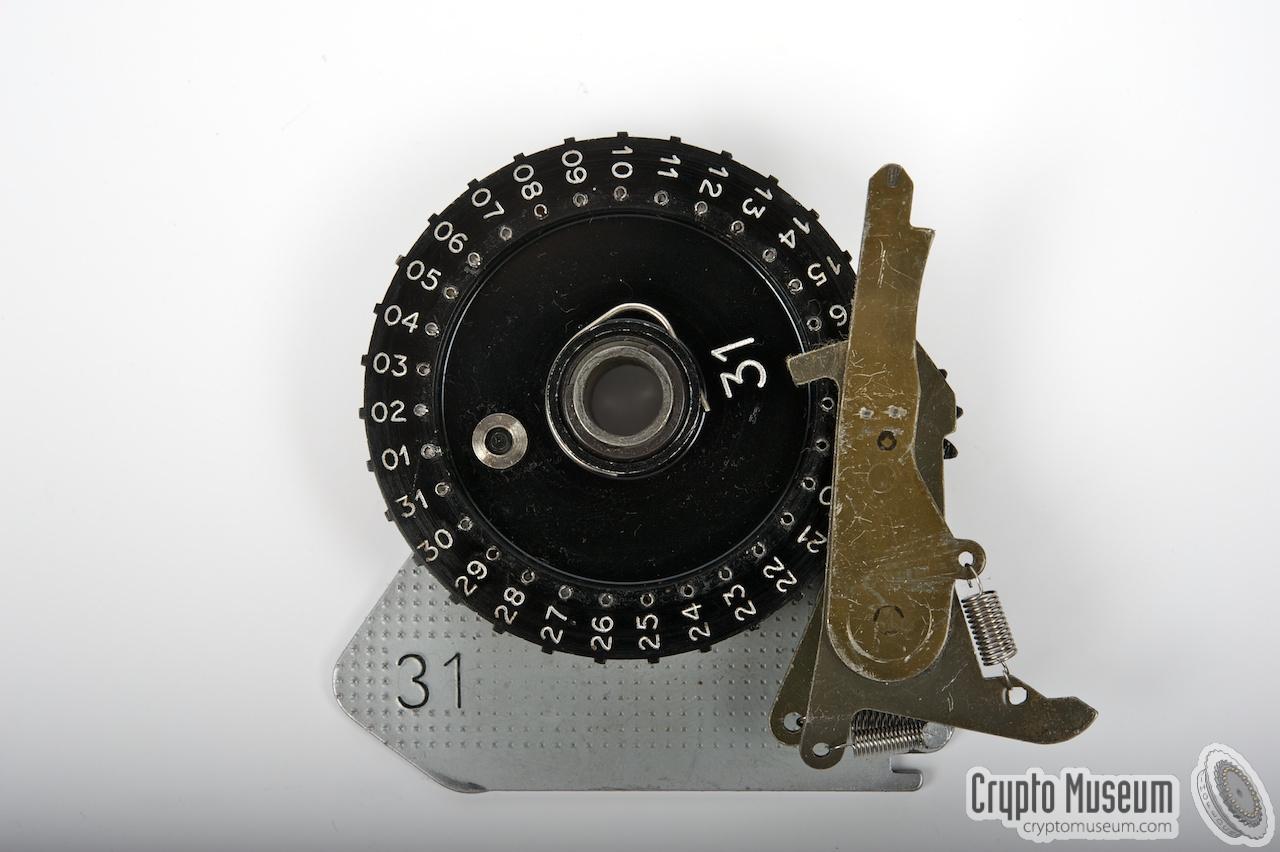
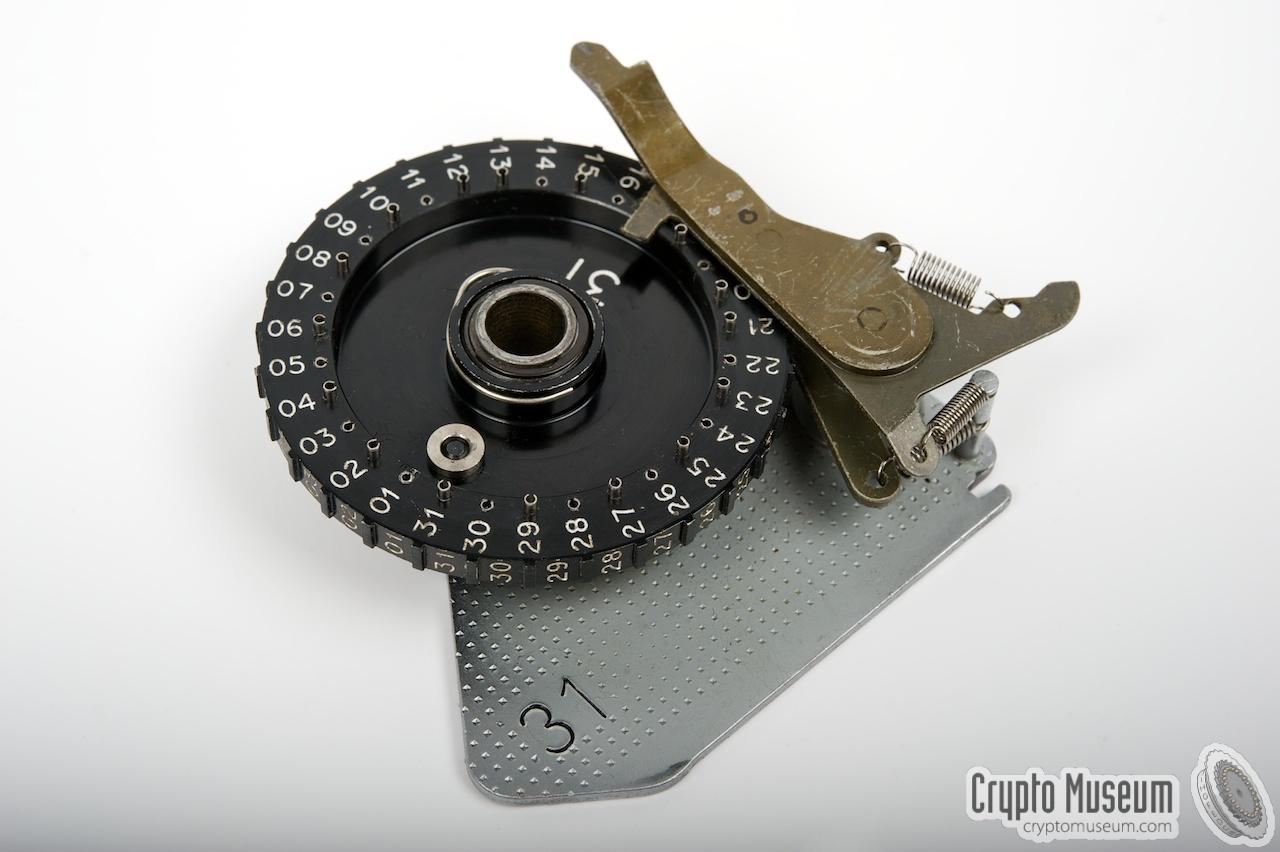
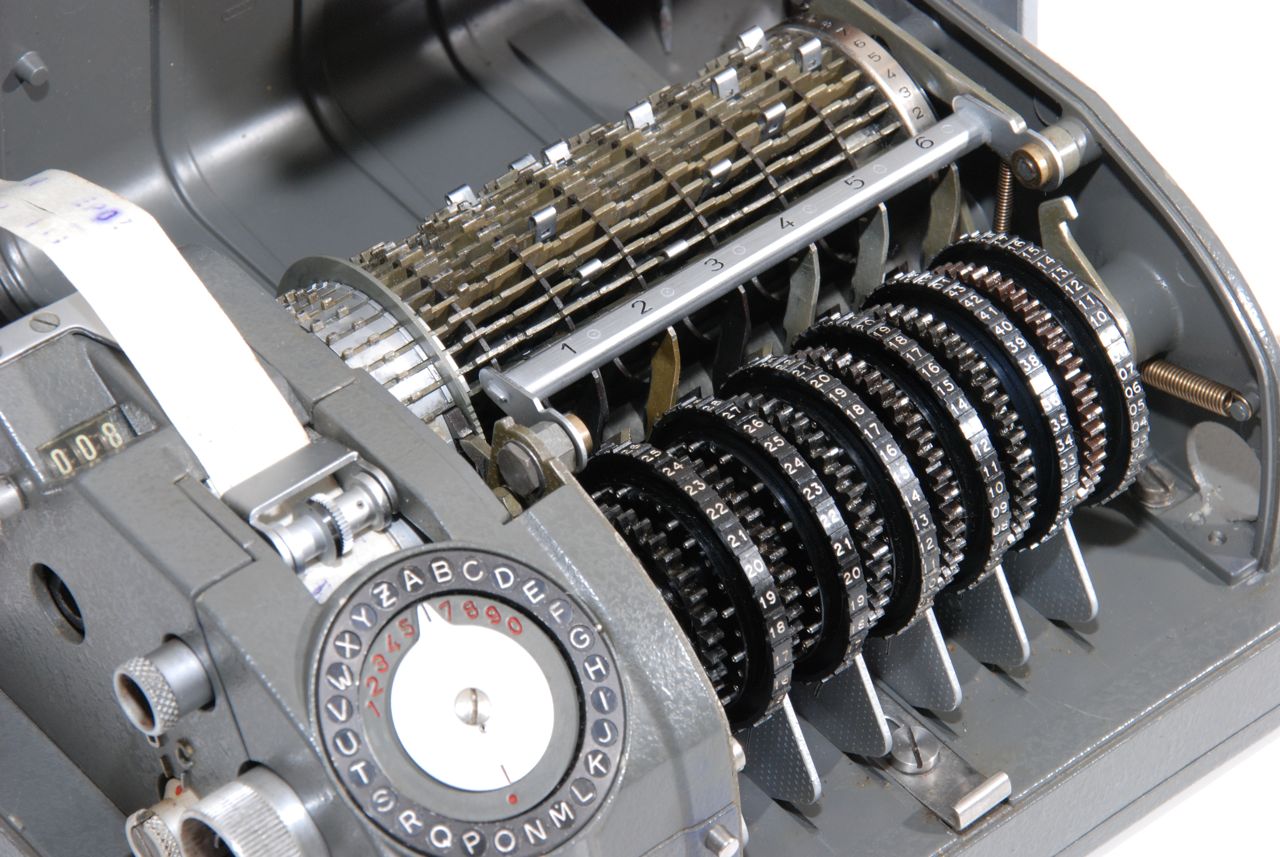
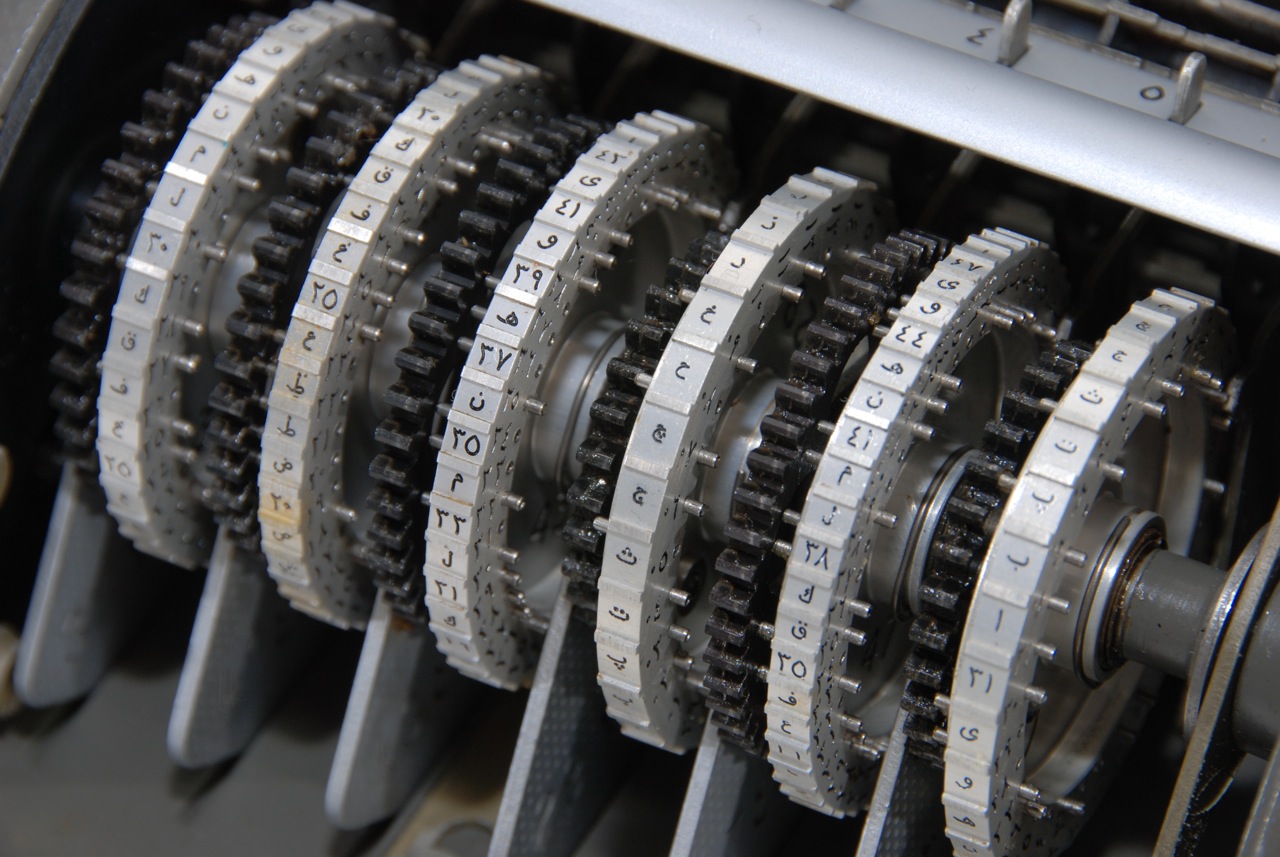
Basically, the C-52 has 6 pin-wheels, chosen from a set of 12 different
wheels. Each wheel has a different number of steps (and hence pins)
to complete a full revolution, all of which are relative prime numbers
in order to achieve the maximum possible cryptographic period.
The wheels carried a number that corresponded to the number of steps:
25 26 29 31 34 37 38 41 42 43 46 47
The 6 wheels are removable, making it easier to swap them and to
configure the pin-settings. The higher number of steps on each wheel
increased the cipher period drastically, reducing the probability
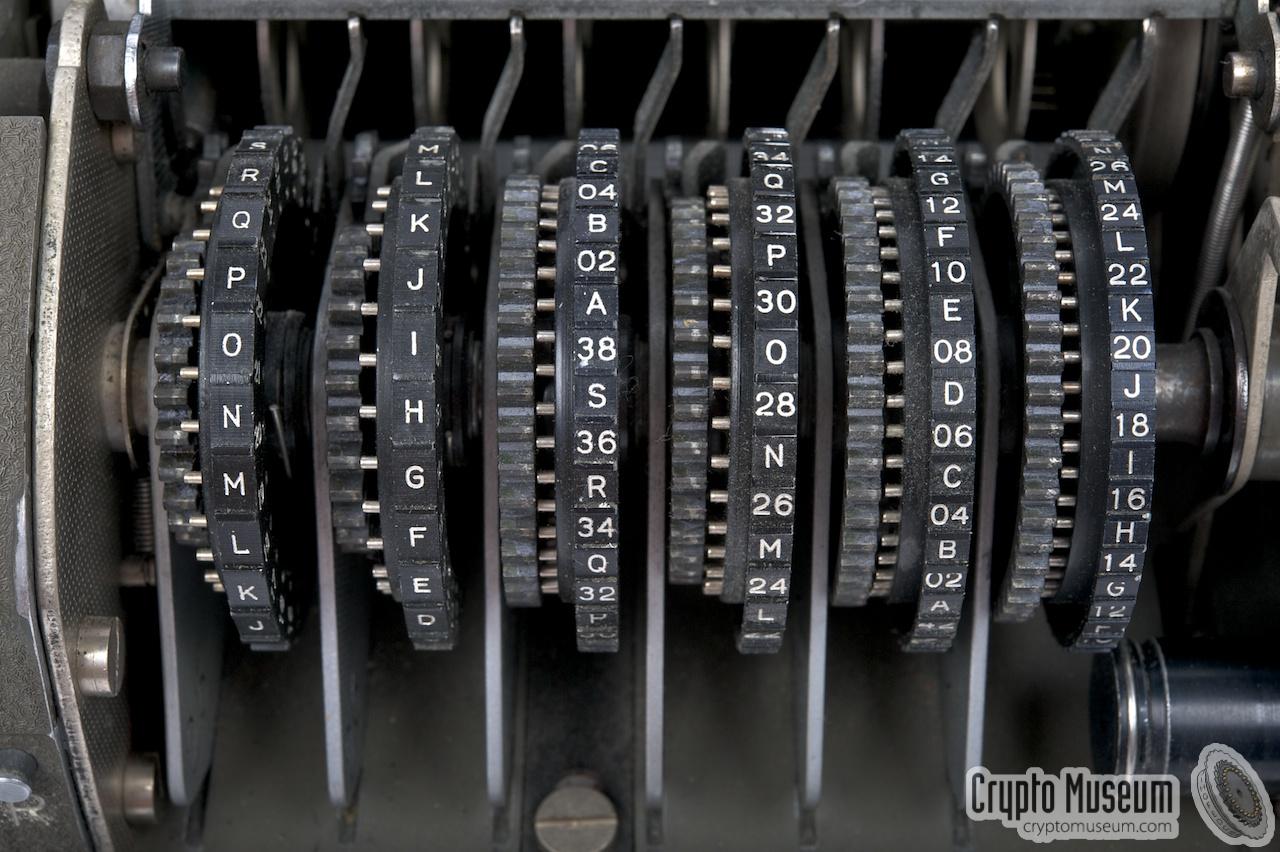
of key sequence overlap. The wheels were numbered from 01 to the number
of steps, e.g. 47, but there were also wheels with interleaved letters
and numbers (A-02-B-04-C-06 etc.).
|
In addition, the cage of the C-52 has 32 bars whereas the M-209/C-38
only has 27 bars. The extra five bars (1-5) control the irregular
stepping of the rightmost five wheels. The downside of this design is
that the rightmost wheel either moves continuously or is hardly ever moved
at all during encipherment.
This problem was more or less solved in two further variants,
the CX-52 and in the CX-52M, which had an improved stepping mechanism.
The CX-52 was in fact so strong that agencies had to
develop new methods of attack.
|
|
|
An extra feature of the machine was the possibility to scramble the
final output alphabet by swapping the individual letters on the selector (the
large rotating knob on the left) into any possible order.
This improved cipher security and posed an extra challenge for cryptanalists.
|
Although the C-52 was far more advanced and less predictable that the
M-209 (C-38), it was still possible to make it
backwards compatible. For this, one would use the following wheels:
C-52: 34 38 42 46 25 26
C-38: 17 19 21 23 25 26
Note that the first 4 wheels of the C-52 have twice the number of steps
of the C-38 wheels. With carefully chosen pin-settings it was therefore
possible to make the two models interoperable.
In this mode, the first five bars of the cage (1-5) were not used,
so that the remaining 27 bars could act like the 27 bars of the
M-209/C-38.
|
This is the standard version of the CX-52. It's a 6-wheel cipher machine of
the 'pin-and-lug' type that is very difficult to break, even today. This is
mainly because of the very high number of configurable options,
such as the removable configurable wheels.
Click any of the images below for a hi-res view.
|
|
|
|
|
|
Random Tape version (CX/RT)
|
 |
|
|
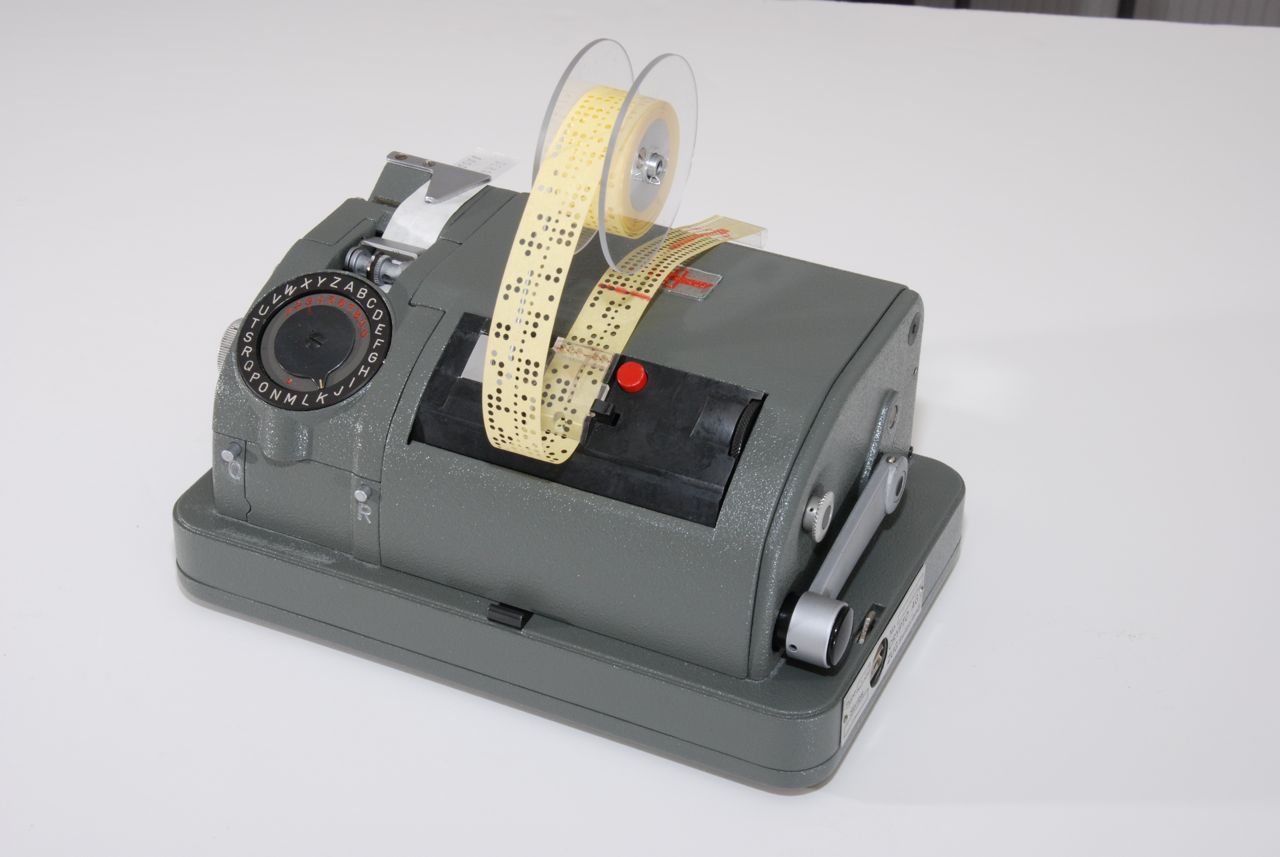
This is a more secure version of the CX-52, in which the wheels
have been replaced by a 5-level punched-tape reader. The tape contains
random characters that are 'added' to the clear text and 'subtracted'
at the other end. They were often used by embassies for diplomatic traffic.
|
When the key tape contains truely random characters, the system
is in fact a One-Time Pad (OTP) (sometimes
called One-Time Tape
or OTT) and the machine is known as
a Mixer.
The image on the right shows a typical CX/RT machine with its
key tape loaded and ready for use.
When used correctly, OTP/OTT machines are unbreakable.
For this to work, the characters on the key tape had to be truely random.
In practice, however, the tape was often created with a pseudo-random
number generator (PRN) with makes it more vulnerable to attacks.
|
|
|
The same princple was used in the OTP-version of the earlier
C-446,
the so-called C-446-RT.
It was also used in the contempory and later electro-mechanical Hagelin
machines, such as the online/offline
TC-52,
the TC-55
and the ULES-64.
|
This version is identical to the standard CX-52 shown at the
top of this page, except for the fact that the standard alphabet
is replaced by Arabic characters. This is visible on the print wheel
as well as on the six cipher wheels.
Machines like this were sold to the Arab countries such as
Saudi-Arabia and Iran.
|
|
|
|
|
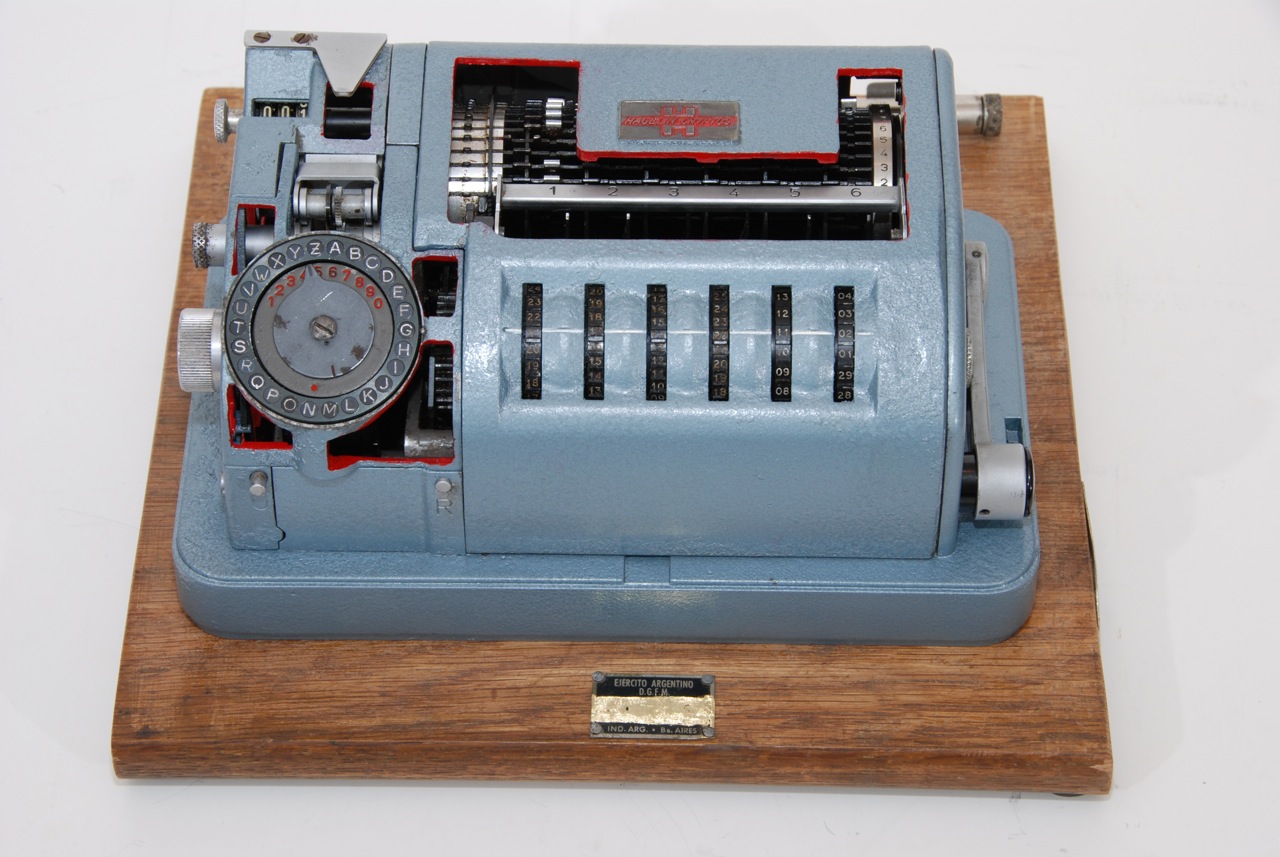
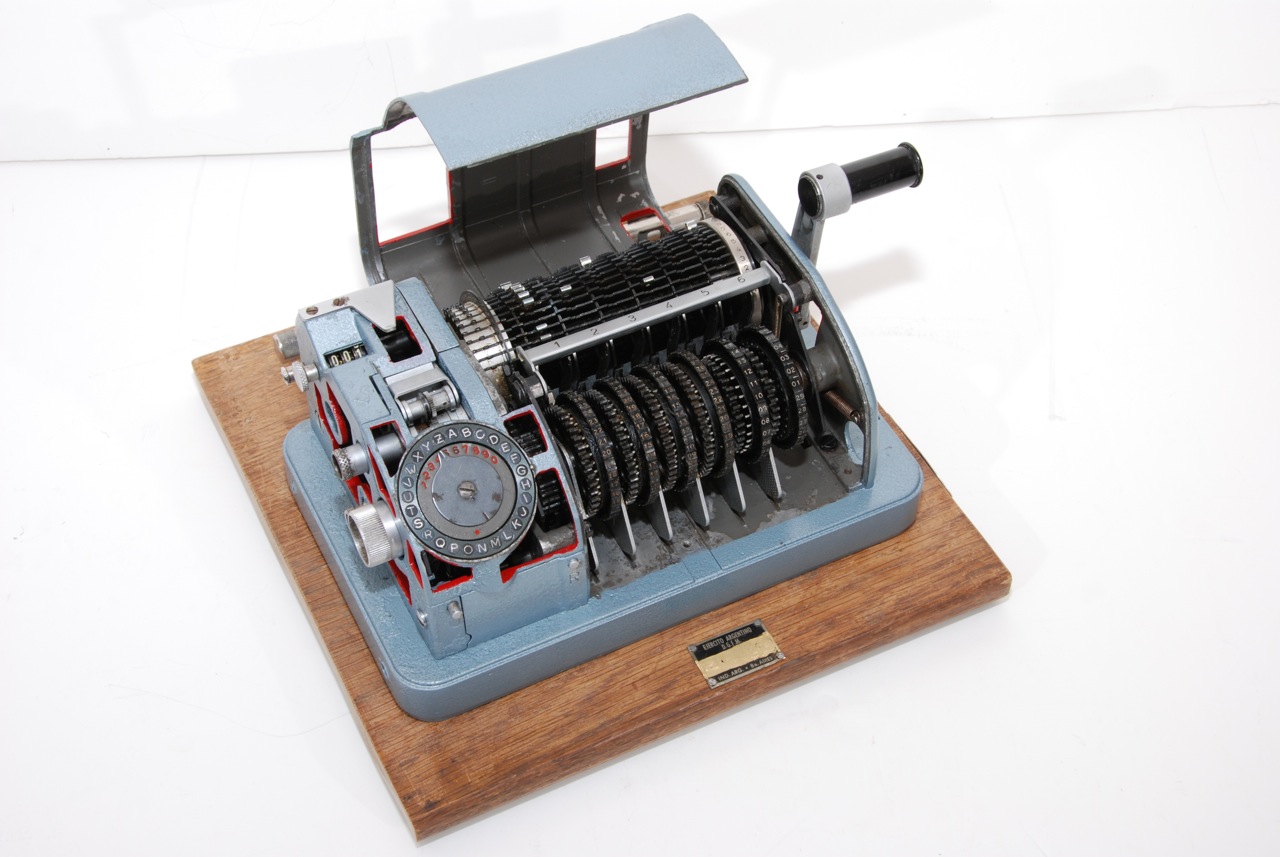
This machine was probably used for instruction and training of technical staff.
Various parts of the outer body of the machine have been cut-away so that the
interior becomes visible. The machine is fully functional and has been painted
hamerite blue. The cut-out parts have been highlighted with red paint.
|
|
|
|
The C-52 and CX-52 could be converted into a fully automatic fast
electro-mechanical cipher machine, by adding an optional motorized keyboard.
The first version was developed at the same time as the C-52 and was known
as B-52. It was later replaced by the fully transistorized B-62.
|
By adding the keyboard to the CX-52, messages could be enciphered
and deciphered much faster than before, whilst the output was printed
immediately on the cipher machine's printer. It was particularly
popular in command centres.
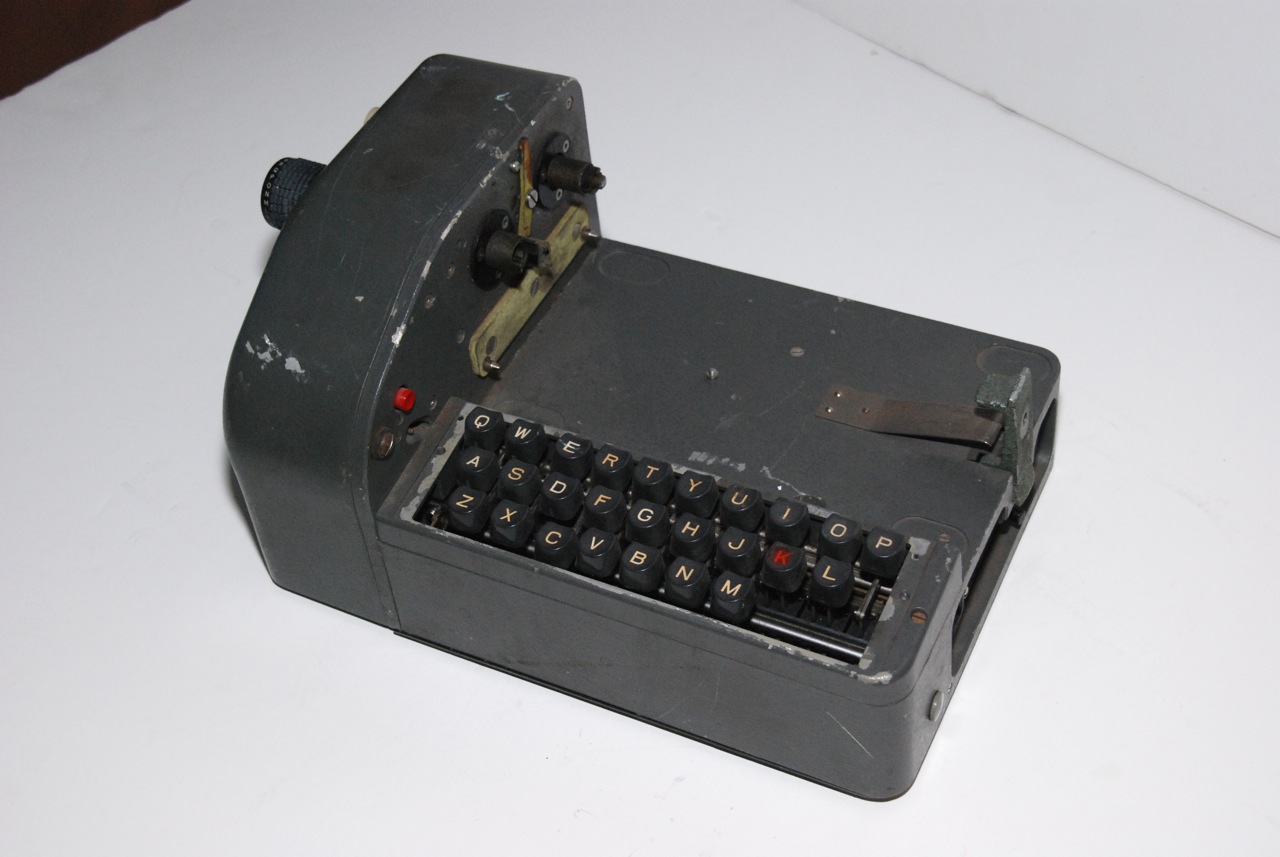
The B-62 was introduced around 1962 and had the same form-factor as
the B-52. It consisted of a large metal base with a keyboard at the front
and the bay for the CX-52 behind the keyboard. The cipher machine would be
installed in such a way that it could be drived by the mechanical
axles of the B-62 at the left.
|
|
|
The image above shows a typical B-62 keyboard. Hagelin experienced a lot of
trouble with the design. There were many problems
with the letter-encoder at the left and with synchronization of the
mechanical parts. Trying to drive a blocked CX-52 machine, could easily
cause permanent damage to either the machine or the keyboard.
As a result, Hagelin made many different revisions of the B-62 keyboard,
often identified by a extra digit in the model number.
The B-62 variant shown here is known as the B-621.
The B-62 keyboard was also manufactured by
HELL in Kiel (Germany), for use
with the HELL H-54
cipher machine (a copy of the Hagelin CX-52). HELL
improved the design in a number of ways, both electronically and
mechanically.
|
|
|
BC-52 Simulator for Windows
|
|
|
|
Dirk Rijmenants in Belgium has once again created a very realistic
simulation of the BC-52 that runs under Windows. The BC-52 is
actually a C-52 that is seated on a B-52 keyboard, hence the name BC-52.
The software allows you to select between C-52 and CX-52 simulation,
and customize the machine in various ways. Full instructions are included
with the program.
The image on the right shows a screenshot of the BC-52 simulator
running on Windows. It can also be used on Linux (WINE) and Mac (Parallels).
 Download (off-site) Download (off-site)
|
|
|
|
- Crypto AG, The Hagelin Cryptographer, Type CX-52
User Manual in English, French and German.
36-page booklet. 1 January 1962.
- Crypto AG, The Hagelin Cryptographer, Type CX-52 (Photographs
Photographs belonging to the above manual. 4 pages. 16 January 1951.
- Crypto AG, Instructions for the tape controlled cryptographer CX/RT
User Manual for the CX-52 with random tape (RT) in English. 7 pages. June 1968.
- Crypto AG, Spare parts catalogue CX-52 (No 21101 etc)
Spare parts list with instructions in English, French and German.
35 pages. 1 January 1962.
- Crypto AG, RT/CX One Time Tape auxiliary device
CX-52/RT sales brochure (English). 3 pages. December 1958.
- Crypto AG, Appareillage pour Chiffrement à Bandes Perforées
French instructions for CX-52/RT (RT/CX), B-621 (keyboard) and PEB-61.
5 pages. February 1969.
|
-
This story was later translated by Boris Hagelin into English. It can be downloaded here.
|
|
|
|
Any links shown in red are currently unavailable.
If you like this website, why not make a donation?
© Copyright 2009-2013, Paul Reuvers & Marc Simons. Last changed: Wednesday, 01 January 2014 - 18:11 CET
|
 |

|
|