|
|
|
|
|

|
Narrow-band radio voice encryptor
The TX-1020C and the TX-1020C Mk. III were voice encryption devices for
narrow-band FM radio links, developed by Telsy in Turin (Italy)
in the late 1980s.
The devices were used most commonly in combination with simplex radios,
such as the ones used by the police.
|
Many different versions of the TX-1020C exist.
In fact, there was a variant for a wide variety of
mobile radio brands and models. As each model may
have different audio levels, impedances and channel characteristics, the
circuitry of the TX-1020 had to be tailored for that. The unit was usually
connected instead of the mike/speaker.
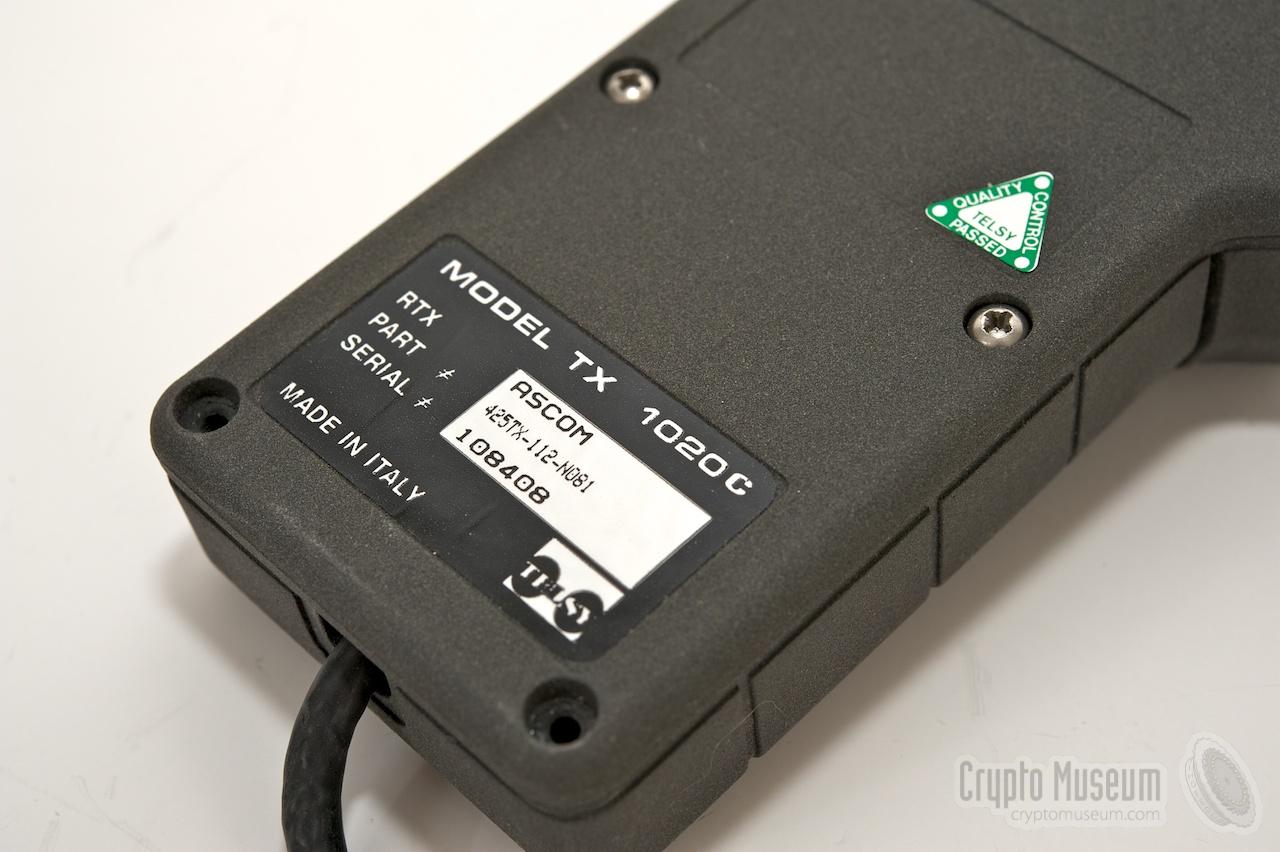
The image on the right shows a version that was made especially for
ASCOM radios used with the Dutch Police, as indicated by the
designator at the back.
This unit was built inside another case (see below), together with a
small amplifier PCB.
|
|
|
When used unmodified, the TX-1020C was connected to the radio instead of the
normal microphone (or handset). The TX-1020 effectively took over the function
of the microphone and had a Push-To-Talk switch
(PTT) at the left.
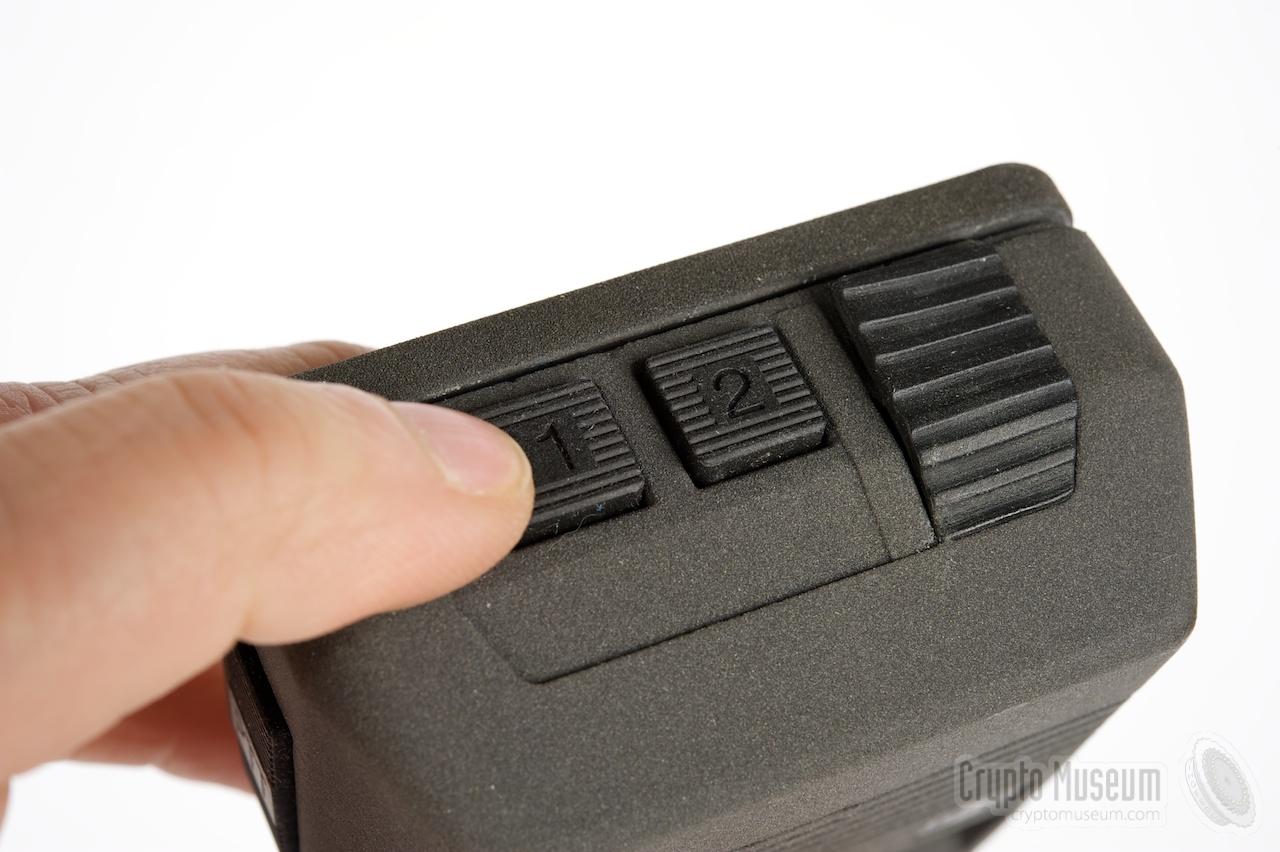
On top of the unit are two buttons, marked 1 and 2, for selection of the
appropriate (pre-defined) cryptographic key. To the right of these buttons
is a socket for the connection of an external key-filler.
When used outside Italy, encryption devices like the TX-1020C required
an export licence during the 1980s and 90s. For most devices this would
usually take one month, but in case of the TX-1020C Mk. III it could take
up to 90 days [2].
Around the same time as Telsy developed the TX-1020,
Philips Usfa (Netherlands) developed a device that
showed great similarity. It was called ORTHROS,
and was also intended as an add-on for existing radios, but was never released.
|
|
|
|
|
|
|
The TX-1020C and the later TX-2020C could be used
in combination with a wide variety of mobile radios, such as Motorola,
Philips, BBC and ASCOM. Is some cases, the TX-1020 could be used without
modification, simply by using the appropriate cable, but in some cases
an additonal modification inside the radio was required.
The latter mainly involved power and squelch wiring.
|
The image on the right shows a Telsy TX-1020C built inside a custom case,
together with some additional electronics. The top lid of the case contains
a number of spring-loaded buttons that indirectly operated the buttons on
the Telsy device below them. The SPEAKER-button was omitted.
The LCD display was visible through a window in the case, just above the
buttons.
An additional PCB is mounted inside the case to the left of the Telsy TX-1020C.
It is marked ASC9126A1 COMP., indicating that it was probably developed by
ASCOM in June 1991.
|
|
|
The short cable from the TX-1020 is connected at various places on the board,
and the board is connected to the outside by means of a male DB15 connector
at the front left. A metal frame on top of the outer case was probably used
as a mounting bracket inside a (police) car.
|
The TX-1020C is easily opened by removing 6 bolts at the rear. The rear
panel comes off and the interior becomes visible.
The interior consists of two PCBs: the main PCB that contains all electronic
circuits, and a small daughter card that acts as the cable assembly.
|
The cable assembly is held in place by 4 screws and is connected to the
main PCB by means of a so-called zebra-connector. The image on the right
shows the cable assembly separated from the main PCB. The gold-plated
zebra-connector is visible at the center of
the main PCB.
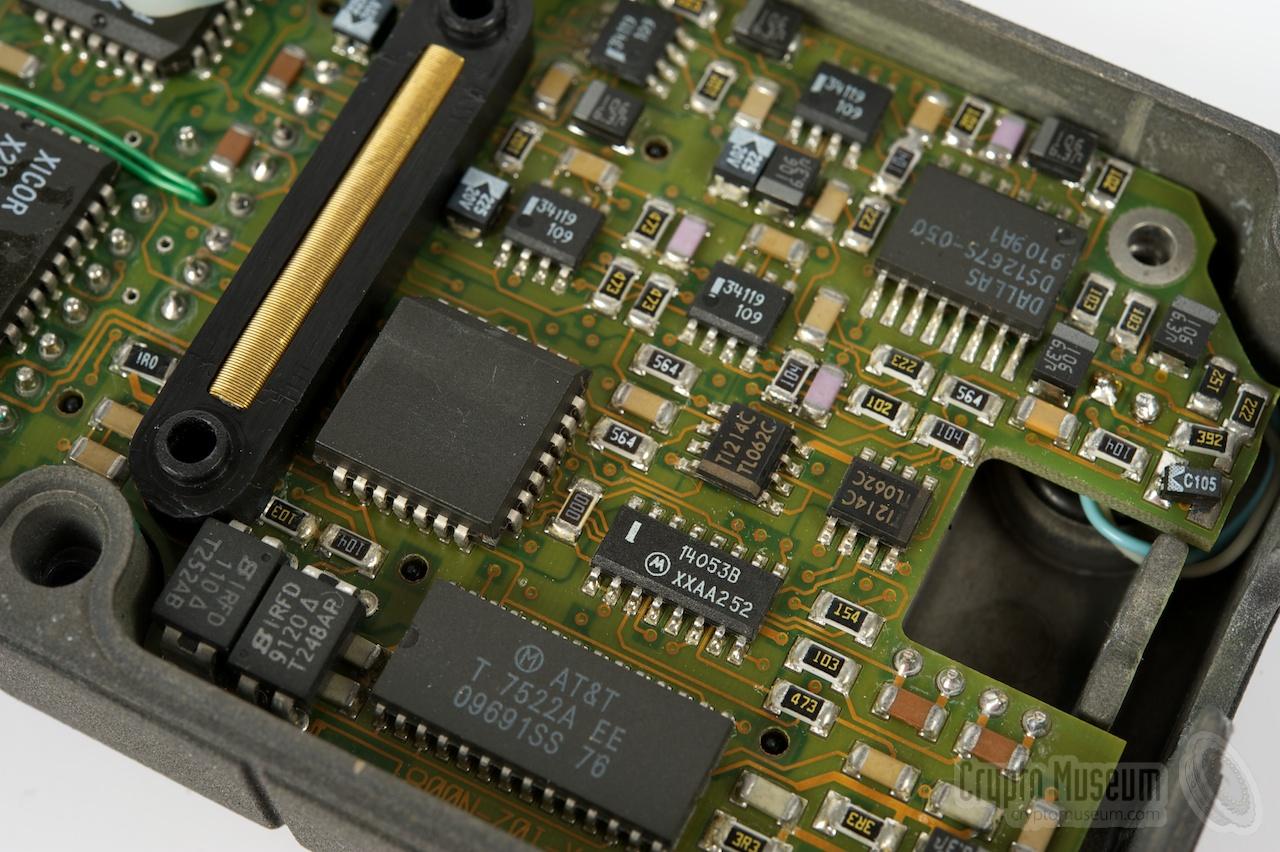
The TX-1020C is built around a
TMS-320 DSP controller by Texas Instruments,
the same one as used in the earlier TX-900, albeit
in a square package. It is partly covered by an orange flex-PCB.
The TMS-320 is driven by a 20MHz crystal.
More detailed images below. Click to enlarge.
|
|
|
The small daugther card that was used as the cable assembly, was designed
in such a way that it could easily be modified for a particular radio.
Many different versions of this PCB existed, complete with a matching
cable (see below).
The one shown here has an extra two wires that are connected to the
orange flex PCB inside the unit.
|
As stated before, the TX-1020C MkIII was usually supplied to the
customer ready for connection to a specific radio. In such cases
the appropriate cable assembly was already installed in the unit.
The list below shows which radios were supported. The radios that needed
a small modification, are marked with a tick in the column 'Modify'.
|
|
Manufacturer
|
Radio model
|
Telsy cable assembly
|
Modify
|
HF
|
INT800
|
|
|
|
Alcatel
|
9220HT
|
425TX-202-N321
|
-
|
-
|
-
|
|
Ascom
|
SE140
|
425TX-202-N201
|
-
|
-
|
-
|
|
Autophon
|
SE20
|
425TX-202-N061
|
-
|
-
|
-
|
|
Autophon
|
SE120
|
425TX-202-N021
|
-
|
-
|
-
|
|
Autophon
|
SE156
|
425TX-202-N041
|
-
|
-
|
 |
|
BBC
|
Veriport 1400
|
425TX-202-N181
|
|
-
|
-
|
|
BBC
|
Veriport 1900
|
425TX-202-N031
|
-
|
-
|
-
|
|
BBC
|
Veriphon RT61
|
425TX-202-N021
|
-
|
-
|
|
|
Elmer
|
RH4/178
|
425TX-202-N281
|
|
|
-
|
|
Elmer
|
RT-633
|
425TX-202-N421
|
-
|
-
|
-
|
|
GE
|
PE
|
425TX-202-N221
|
|
-
|
-
|
|
Harris
|
RF230
|
425TX-202-N071
|
-
|
|
|
|
ICOM
|
IC-U200T
|
425TX-202-N301
|
|
-
|
-
|
|
Italtel
|
MB70
|
425TX-202-N101
|
-
|
-
|
|
|
Italtel
|
MB70-D5
|
425TX-202-N331
|
-
|
-
|
-
|
|
Italtel
|
MB70-D5
|
425TX-202-N121
|
-
|
-
|
|
|
Johnson
|
FM5852
|
425TX-202-N241
|
|
-
|
-
|
|
Johnson
|
7151
|
425TX-202-N251
|
|
-
|
-
|
|
Kenwood
|
TS50
|
425TX-202-N451
|
|
|
-
|
|
Midland
|
70-440
|
425TX-202-N041
|
|
-
|
-
|
|
Motorola
|
MX300
|
425TX-202-N171
|
|
-
|
-
|
|
Motorola
|
MX1000
|
425TX-202-N231
|
-
|
-
|
-
|
|
Motorola
|
MX2000
|
425TX-202-N194
|
-
|
-
|
-
|
|
Motorola
|
Radius P210
|
425TX-202-N351
|
|
-
|
-
|
|
Motorola
|
MC-MICRO
|
425TX-202-N291
|
-
|
-
|
-
|
|
Motorola
|
MC-MICRO
|
425TX-202-N061
|
-
|
-
|
|
|
Motorola
|
Radius GM300
|
425TX-202-N131
|
-
|
-
|
|
|
Nokia
|
RC58
|
425TX-202-N271
|
-
|
-
|
-
|
|
OTE
|
HP 9000
|
425TX-202-N401
|
|
-
|
-
|
|
OTE
|
P80-C
|
425TX-202-N161
|
-
|
-
|
-
|
|
OTE
|
RMT 246
|
425TX-202-N411
|
-
|
-
|
-
|
|
Otema
|
S-80
|
425TX-202-N141
|
|
-
|
-
|
|
Philips
|
FM1000
|
425TX-202-N151
|
-
|
-
|
-
|
|
Philips
|
PFX
|
425TX-202-N011
|
|
-
|
-
|
|
Prodel
|
V5/32
|
425TX-202-N081
|
-
|
-
|
-
|
|
Prodel
|
P7/32
|
425TX-202-N091
|
-
|
-
|
-
|
|
Radiosystem
|
PR460
|
425TX-202-N341
|
|
-
|
-
|
|
Siemens
|
ER95A/1 (RV3)
|
425TX-202-N101
|
|
-
|
-
|
|
Siemens
|
RV3
|
425TX-202-N111
|
-
|
-
|
|
|
Storno
|
CB911
|
425TX-202-N211
|
-
|
-
|
-
|
|
Storno
|
Stornophone 6000
|
425TX-202-N091
|
|
-
|
|
|
Tadiran
|
RT7330S
|
425TX-202-N361
|
|
-
|
-
|
|
Transworld
|
RT100/MP
|
425TX-202-N391
|
-
|
|
-
|
|
Teletron
|
FUG 8B-1
|
425TX-202-N051
|
-
|
-
|
-
|
|
Telettra
|
RH6
|
425TX-202-N311
|
-
|
|
-
|
|
Thomson
|
ATR410
|
425TX-202-N121
|
-
|
-
|
-
|
|
Thomson
|
ATR427
|
425TX-202-N011
|
-
|
-
|
|
|
Thomson
|
ATR430
|
425TX-202-N261
|
-
|
-
|
-
|
|
Thomson
|
ER75
|
425TX-202-N031
|
-
|
-
|
-
|
|
Thomson
|
TMF213
|
425TX-202-N111
|
|
-
|
-
|
|
Thomson
|
TMF300
|
425TX-202-N441
|
-
|
|
-
|
|
A tick in the column 'HF' indicates that the HF-circuit of the radio
needed to be modified. The rightmost column, marked 'INT800' indicates
that the radios are interfaced via a small mobile box adapter that
contained an amplifier for an external speaker, together with some
interfacing.
In addition to the above pre-assembled cables for specific radio sets,
a connector-less universal cable was available for those customers that
had sufficient technical background to interface the TX-1020C to their
radio. The cable is wired as follows:
|
|
Colour
|
Name
|
Function
|
Remark
|
|
|
|
Outer shield
|
SHLD1
|
Shield
|
Case (housing)
|
|
Black
|
GND
|
Power (-)
|
Also PTT ground
|
|
Red
|
+VDC
|
Power (+)
|
6.5 - 30 Volt
|
|
Inner shield
|
GND
|
Ground
|
-
|
|
Blue
|
PTTP
|
PTT positive
|
+VDC in TX
|
|
Mauve
|
PTTN
|
PTT negative
|
GND in TX
|
|
White
|
MIKE1
|
Mic out
|
600 ohm balanced and insulated, 4Vpp
|
|
Yellow
|
MIKE2
|
Mic out
|
Return
|
|
Brown
|
RXIN1
|
RM input
|
600 ohm balanced and insulated, 1Vpp
|
|
Green
|
RXIN2
|
RX input
|
Return
|
|
Grey
|
SQLCH
|
Squelch input
|
for VHF, UHF (GND to lock)
|
|
- Barry Wels
Donator of the Telsy TX-1020C Mk. III featured on this page.
- Telsy S.p.A., Overview of radio sets supported by TX-1020C
Correspondence between Telsy and unknown party. Date unknown.
|
|
|
|
Any links shown in red are currently unavailable.
If you like this website, why not make a donation?
© Copyright 2009-2013, Paul Reuvers & Marc Simons. Last changed: Sunday, 04 March 2012 - 13:26 CET
|
 |

|
|