|
|
|
|
|

|
Voice encryption unit
The SP-810 was a voice encryption device sold by Teltron
in the late 1970s. It was designed and built as an OEM product by
Telsy in Turin (Italy). It was one of the first
voice encryption devices built by Telsy, after the company started in 1971,
and was mainly used by the Italian government.
|
The unit is pretty small and could easily be added to existing equipment,
such as mobile radio systems used by the Army and by the Police,
using the large connector at the front
and the two smaller connectors at the rear.
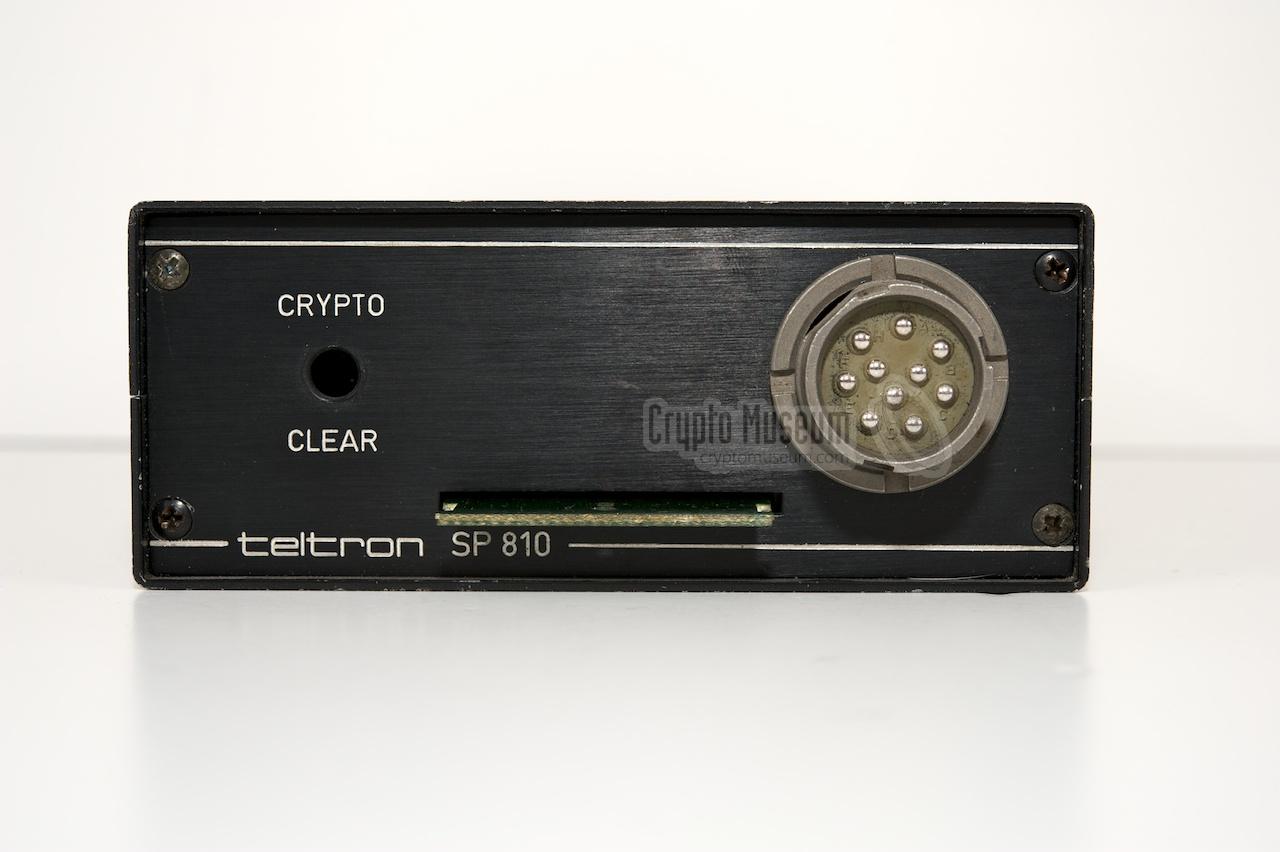
The image on the right shows the front panel of the SP-810.
The small PCB with the labyrith-style tracks is the actual cryptographic key.
Its layout is symmetric, which means that it can be inserted both ways
(upside down).
The SP-810 shows great resemblance to the
Telsy TS-500.
The key cards of both units are identical.
|
|
|
Although the design of the key card might give the impression that the SP-810
is a simple device, this is definitely not the case. The units are based on
Delta Mudulation techniques, featuring two FX-209 chips made by CML in the UK
[1].
One of these chips is used for transmission, whilst the other one is used
during receiption. The Delta Modulator is used to digitize the analogue speech,
after which is digitally encrypted, probably with a steam cipher.
|
|
|
|
Any links shown in red are currently unavailable.
If you like this website, why not make a donation?
© Copyright 2009-2013, Paul Reuvers & Marc Simons. Last changed: Wednesday, 29 February 2012 - 18:42 CET
|
 |

|
|