|
|
|
|
|

|
Ruggedized military mini-PC
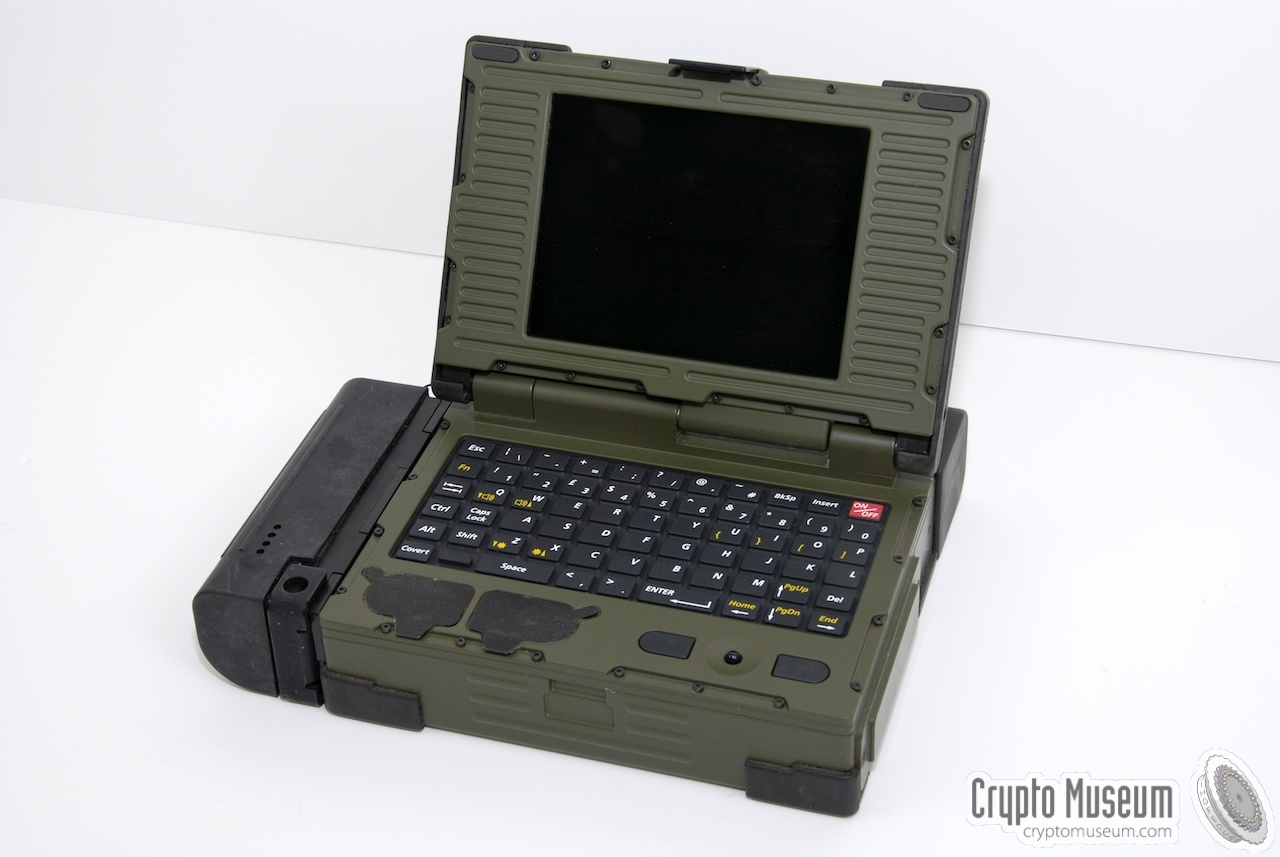
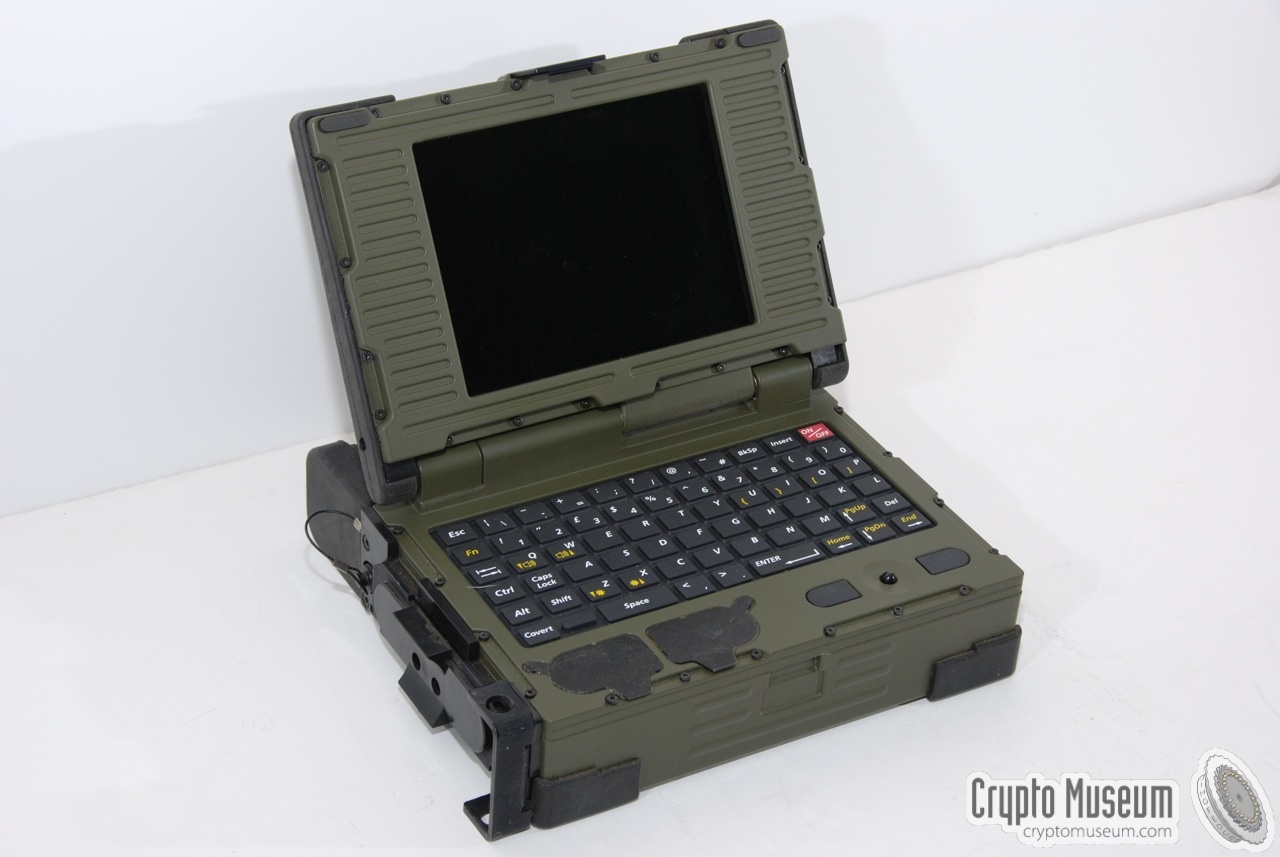
The LT-450N is a very small ruggedized personal computer (PC) for
military applications, such as secure communication and fire control.
On this site we will mainly concentrate on the use of this PC for
transmission of secure messages (crypto).
It was manufactured in the UK by EDO MBM Technology (since 2007 owned by
ITT Corporation).
EDO MBM is now part of ITT Defense Electronics and Services
[1]
.
|
At the right hand side of the PC is a small lid that can be removed.
It gives access to two PCMCIA expansion slots, allowing a variety of
industry standard expansion cards to be used.
The LT450 is fitted with a high-grade 6.1 inch VGA colour TFT LCD screen,
that is capable of displaying video in real-time, making it suitable for
tactical video systems. It was also available with a 6.3 inch XVGA screen.
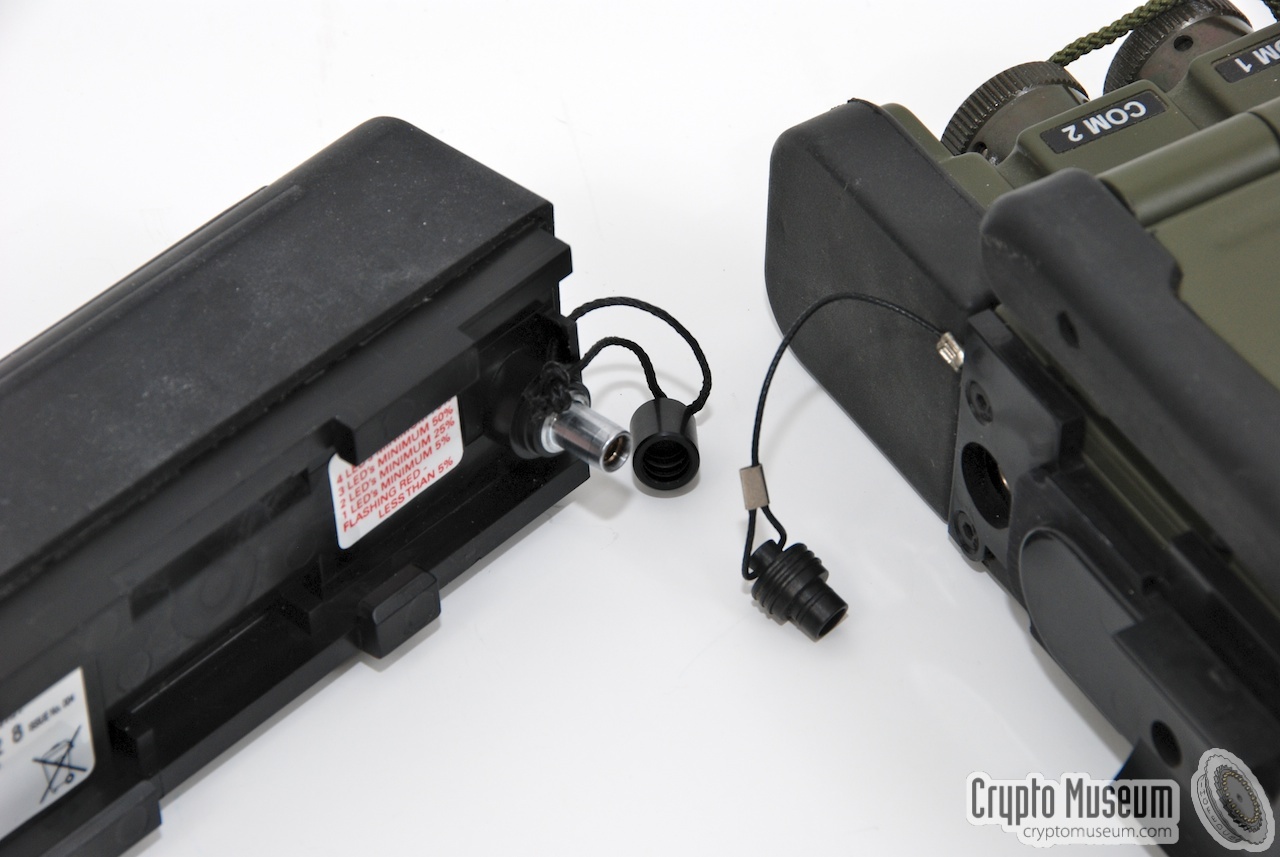
The PC is powered by an external PSU or by a battery pack fitted at the left
(see image).
|
|
|
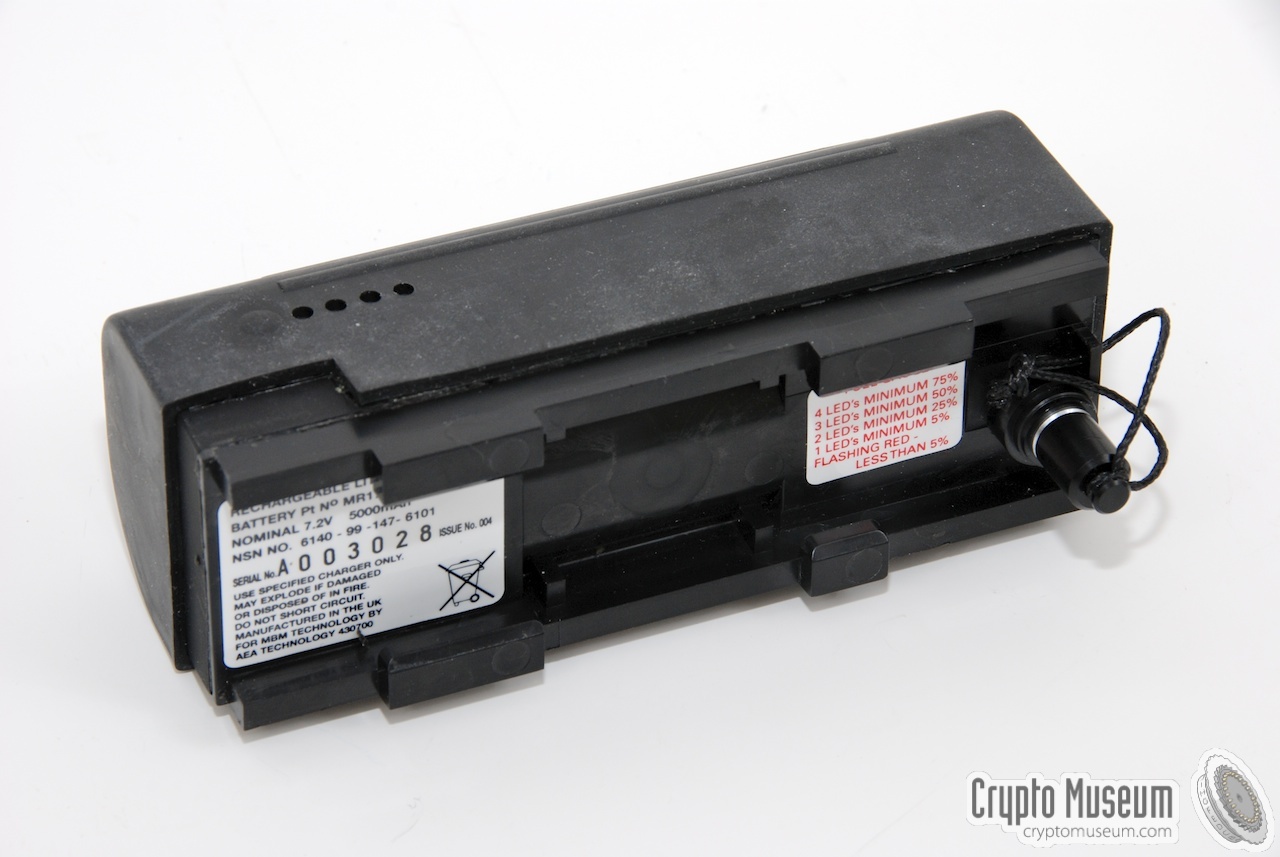
The battery pack consists of a 7.2V, 5Ah Li-ION battery in a ruggedized
rubber enclosure. It can be attached to the left side of the case and gives the
unit approx. 2.5 hours of life (or 5 hours when using power saving software).
The LT450 can also be operated from other batteries, such as the military
standard BB2800 or standard Clansman batteries, provided a suitable adapter
is used
[2]
.
The LT450 can easily be tailored to the customer's requirements.
The rubber key mat can be removed, allowing different layouts to be used.
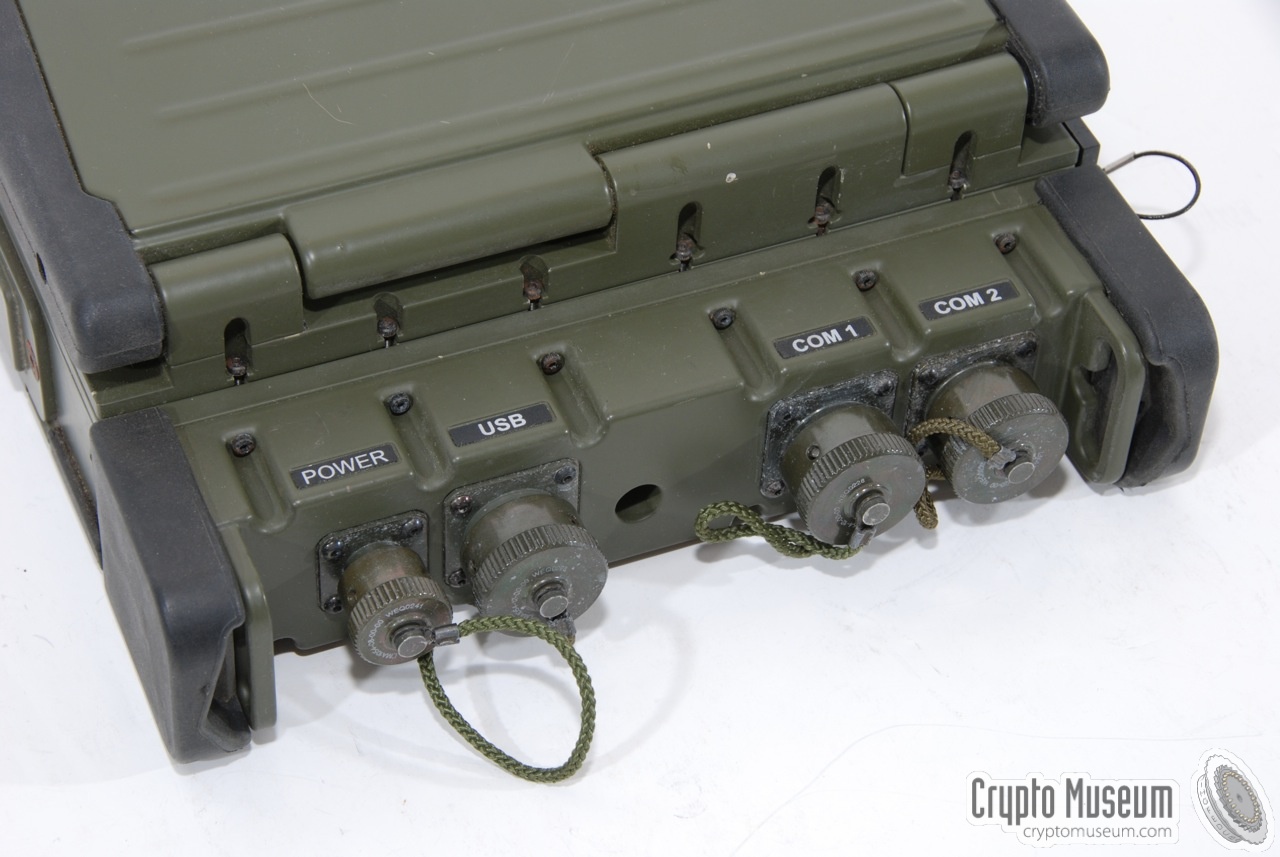
Communication with the outside world is possible via a connector block
fitted at the back. A range of different adapters was available.
The LT450 shown here has connections for power, USB and two serial COM ports
(RS232).
|
As the LT450 is suitable for secure messaging, it is equipped with tamper
switches and manual purge buttons, so that the cryptographic keys can be
deleted in the event of an enemy attack. When in use, any cryptopgraphic
material (algorithms and keys) are stored in a separate - secure - memory
unit, rather than in the PCs own memory.
|
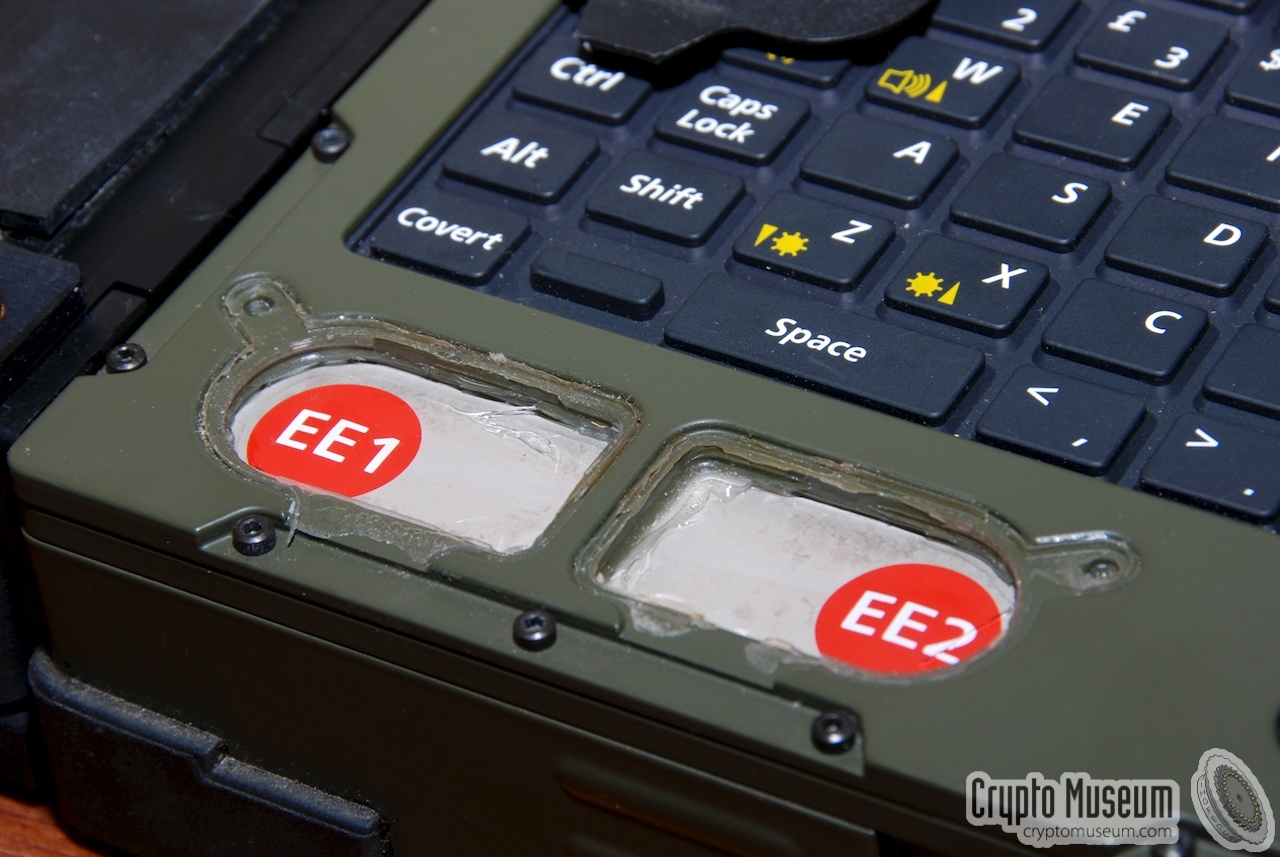
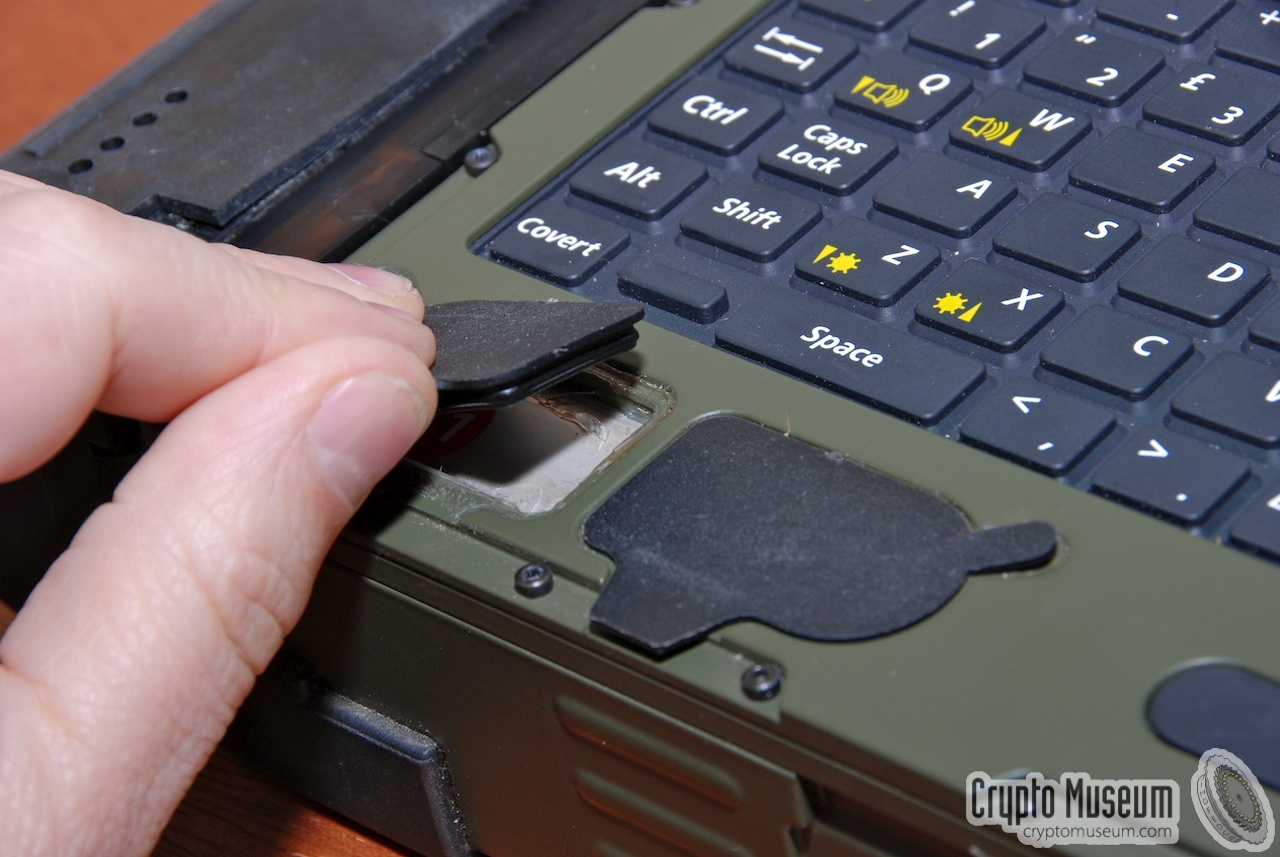
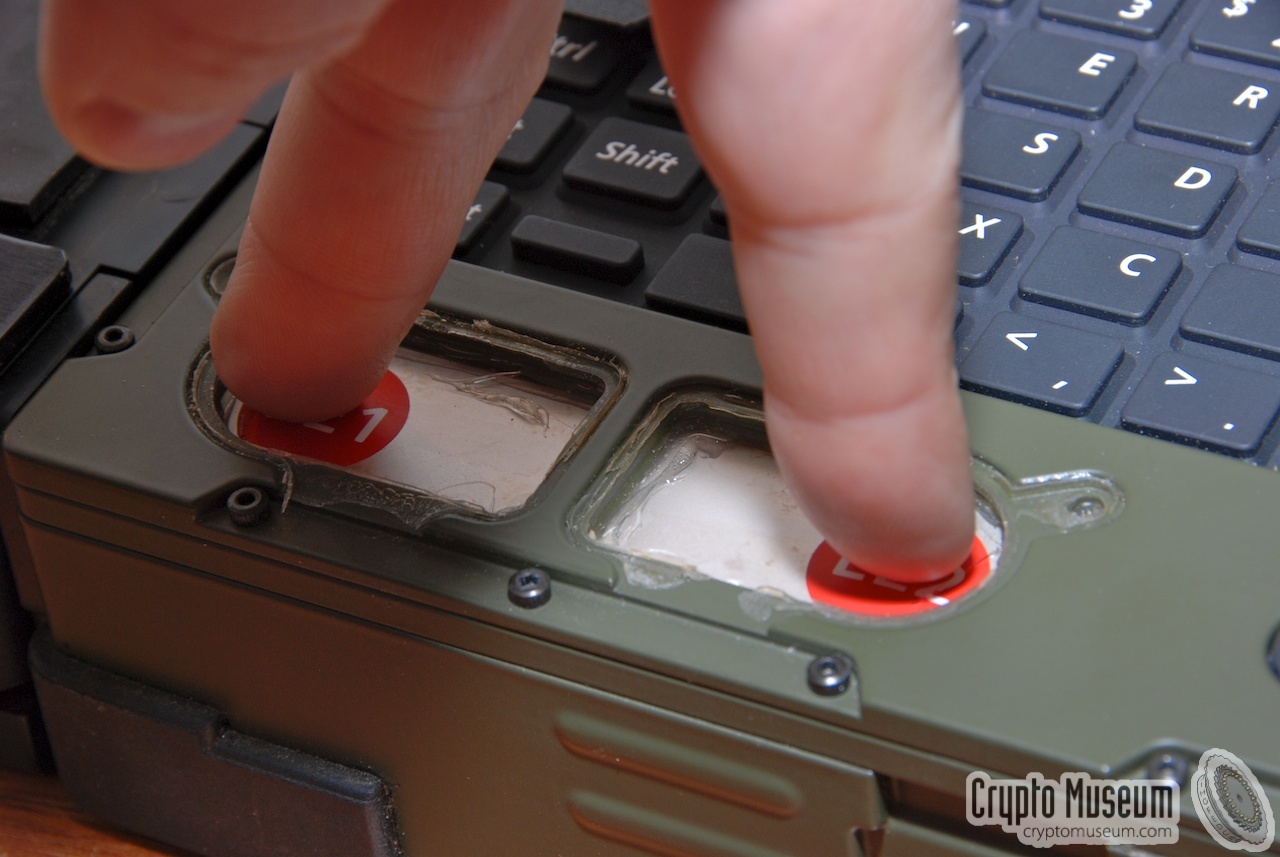
Two special recessed keys are present on the body of the LT450, just in
front of the keyboard. Both keys are protected by a plastic flap.
In case of an enemy attack, the user only has to pull away the plastic
flaps and press two red buttons (EE1 and EE2) simultaneously.
Any cryptopgraphic algorithms and keys will be deleted instantly,
even when the PC is switched off.
|
|
|
|
|
|
|
|
|
|
The LT450 was used by QinetiQ in the improved targed acquisition suite for
Forward Air Controllers (FACs).
It was sold to the US Department of Defence (DoD) and some other contractors.
In 2002, the LT450 was reported to be on trial by the US Special Operations
Command for use with the Special Mission Radio System and the
Special Operations Tactical Video System.
It was also used in the Danish FAC suite.
In August 2002, an improved version of the LT450 (the LT465) was selected
as the hand-held computer for the UK Fire Control Application (FCA).
Over 600 Termite units were delevered through 2002 and 2003.
In 2006, EDO MBM stopped the production of ruggedized computers.
Most Termite computers are still in service today (2010)
[3]
.
|
Although the LT450 can be used perfectly well for stand-alone applications,
it was often used as part of a complete setup. Many add-ons were available,
such as the series of military interfaces, produced by MASS (UK).
|
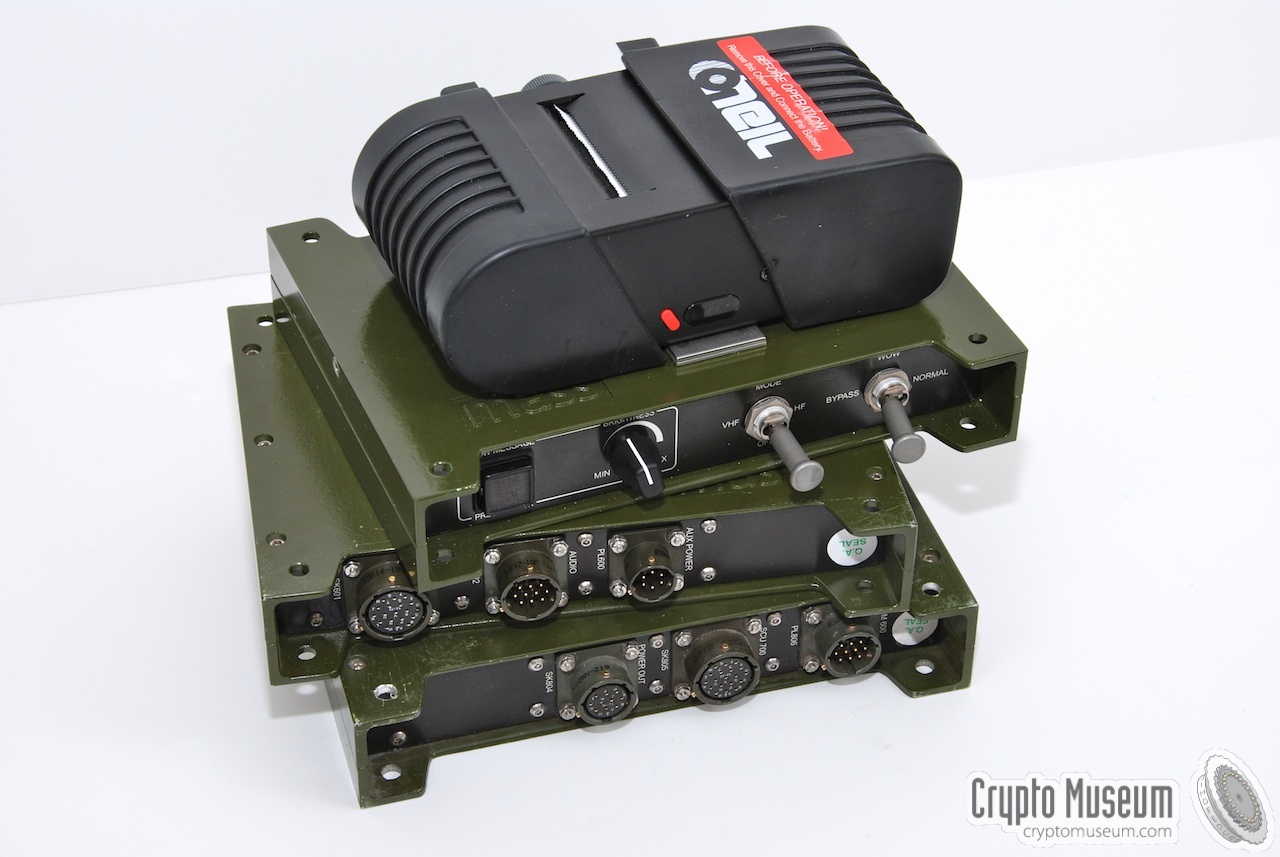
The MASS series include a Radio Data Modem (RDM-600), an Audio Switching
Unit (ASU-800) and a System Control Unit (SCU-700). The image on the right
shows all three interfaces with a printer bolted onto the SCU-700.
For secure communication, the Secure Data Transceiver (SDT-500) would also
be needed (not shown here).
It was a high-grade cipher unit that used the Pritchell-II Crypto Kernel ASIC,
a customised chip with built-in high grade efficient algorithms,
synchronisation and forward error correction.
|
|
|
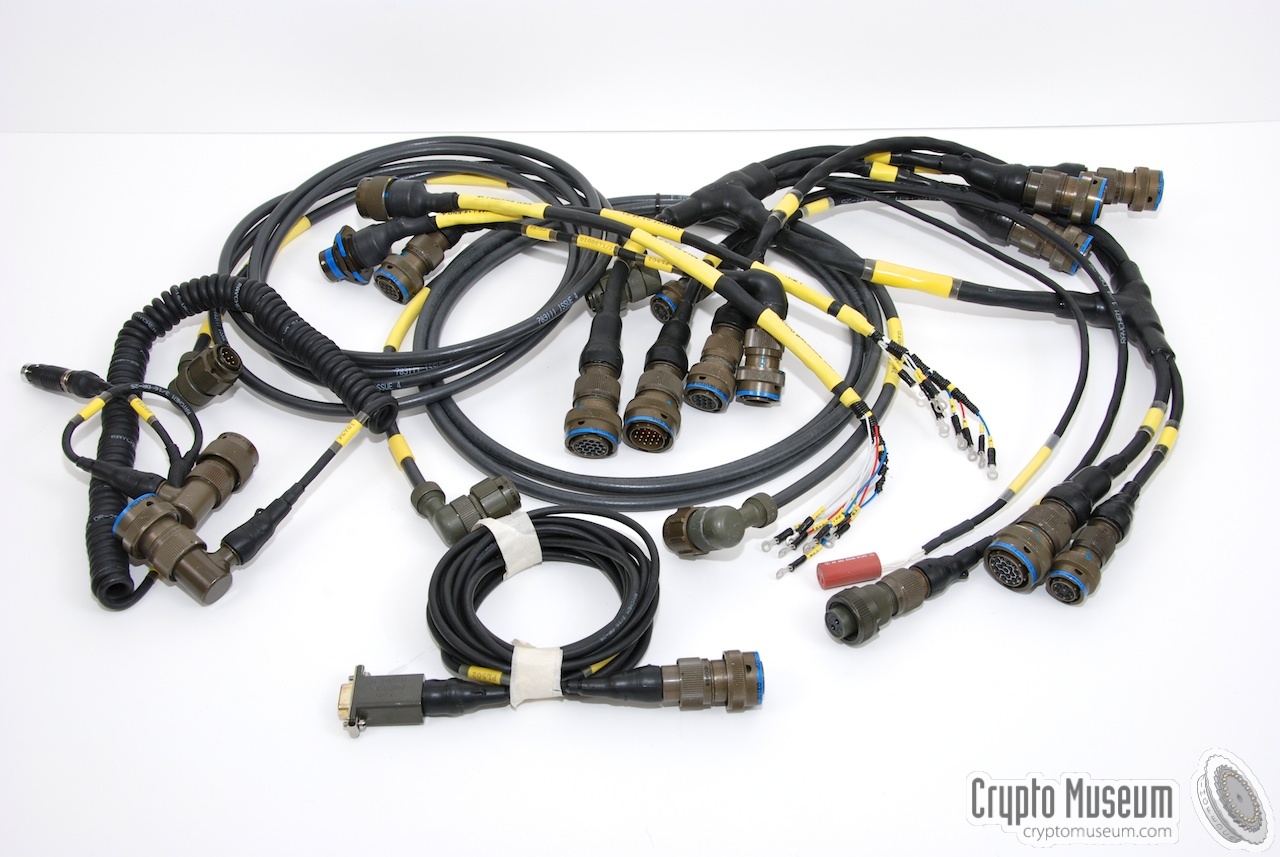
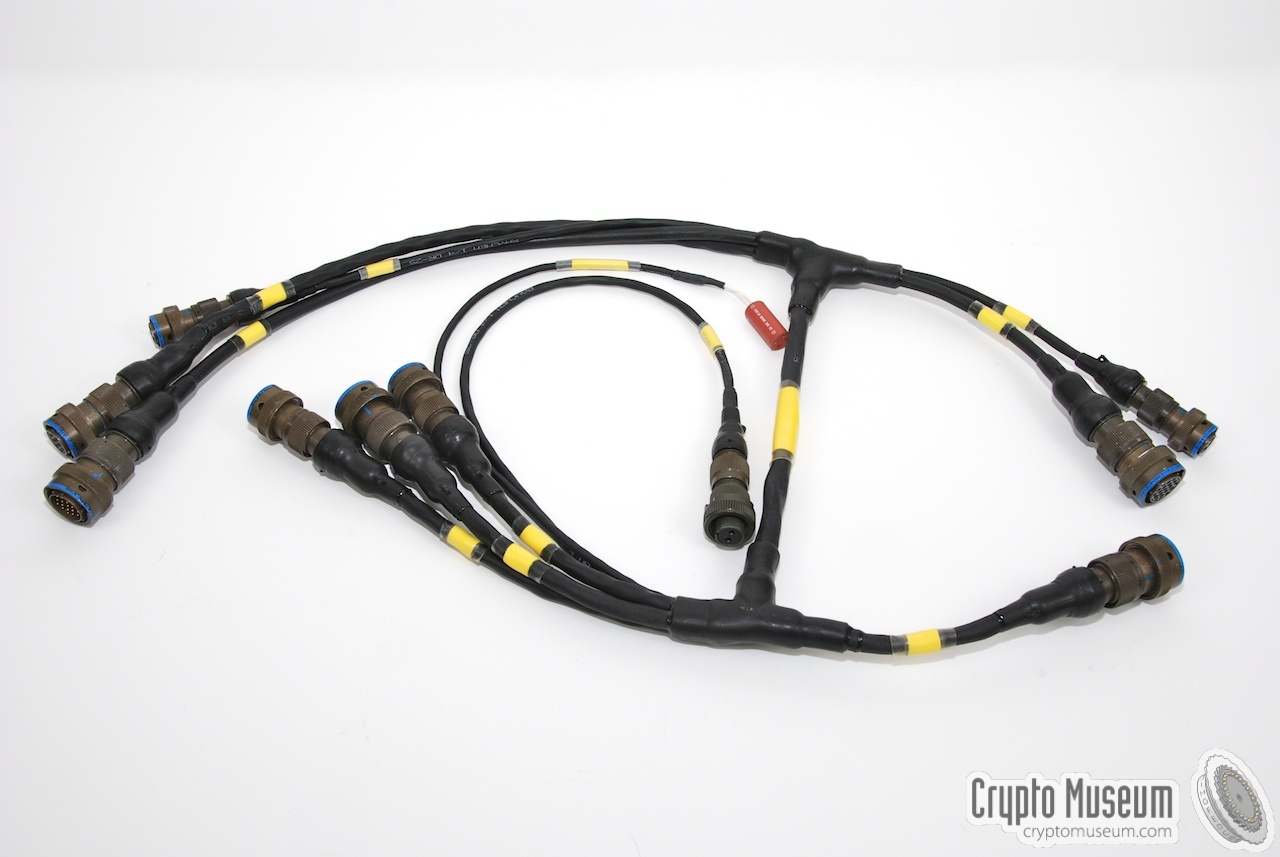
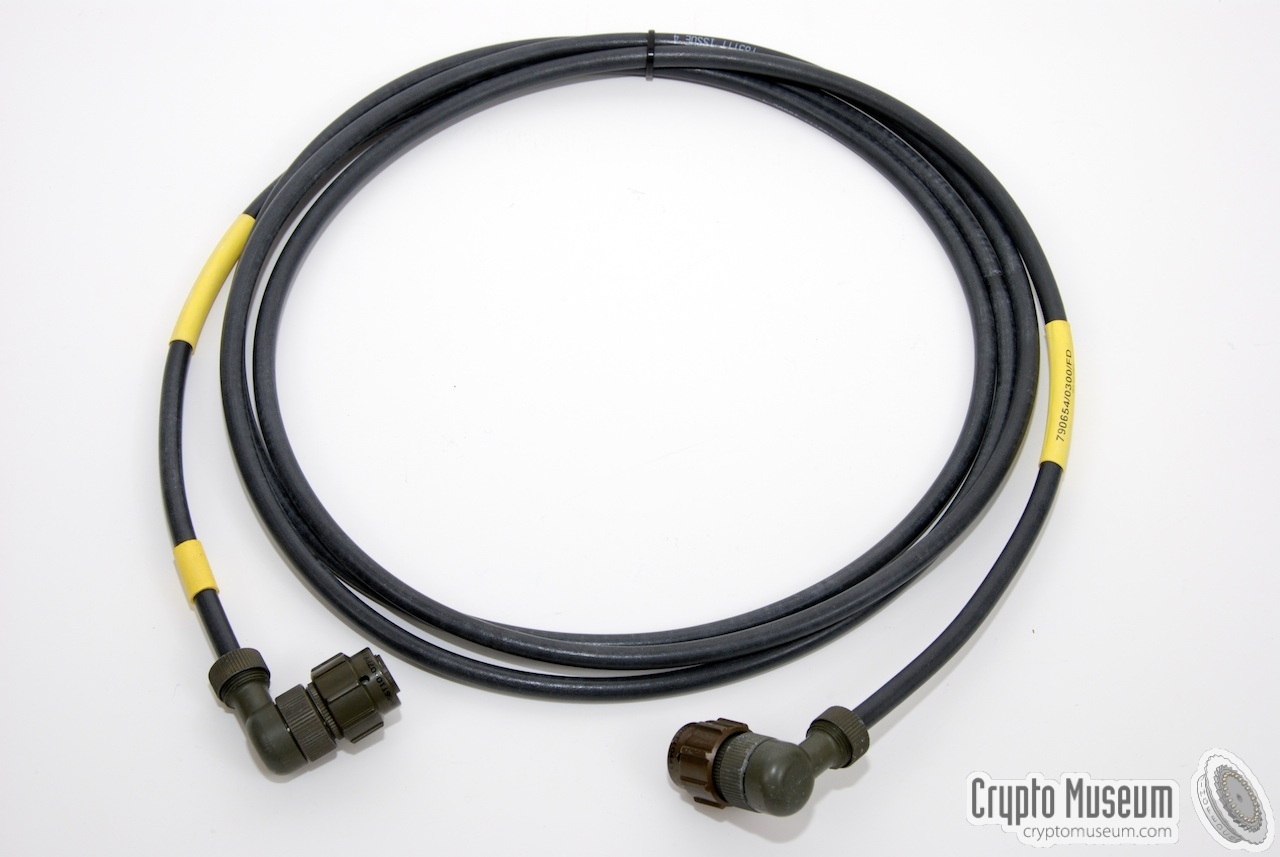
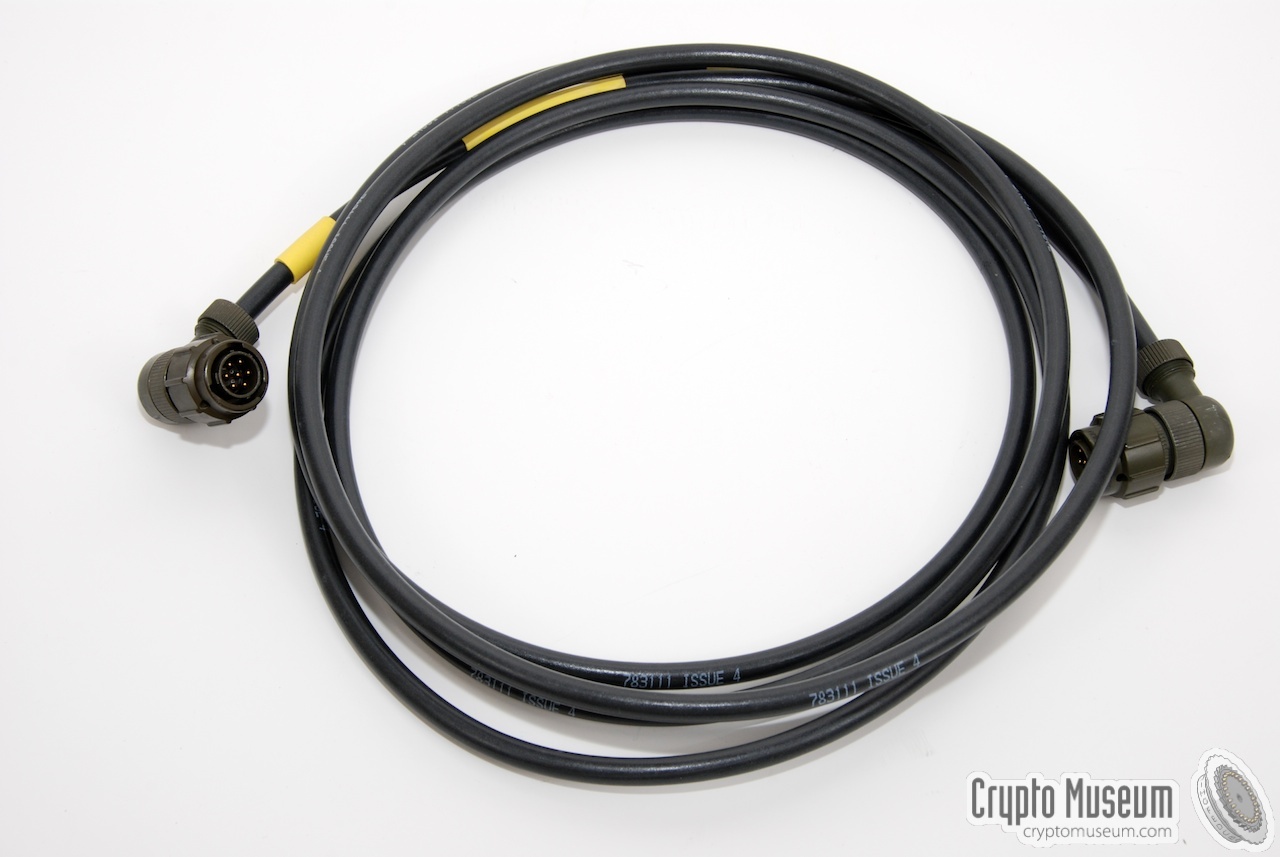
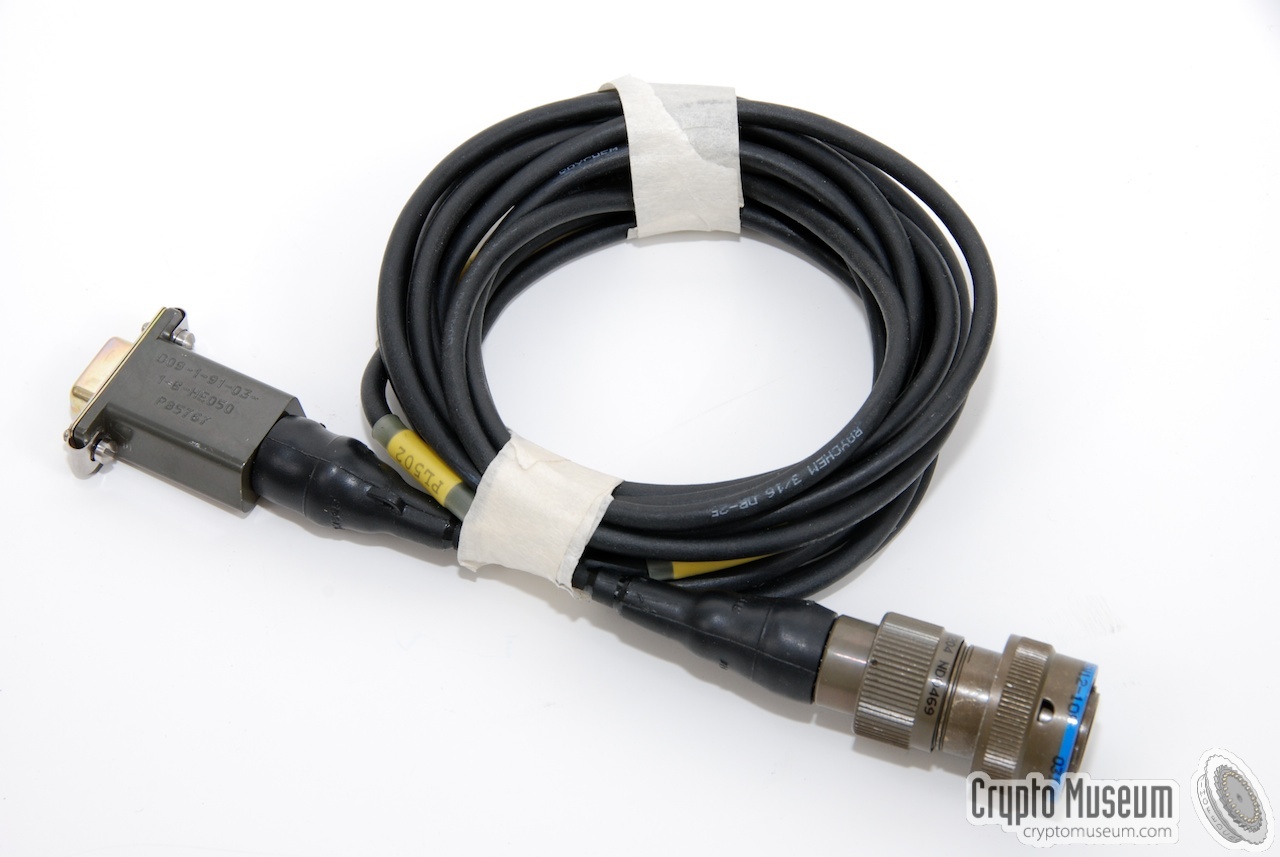
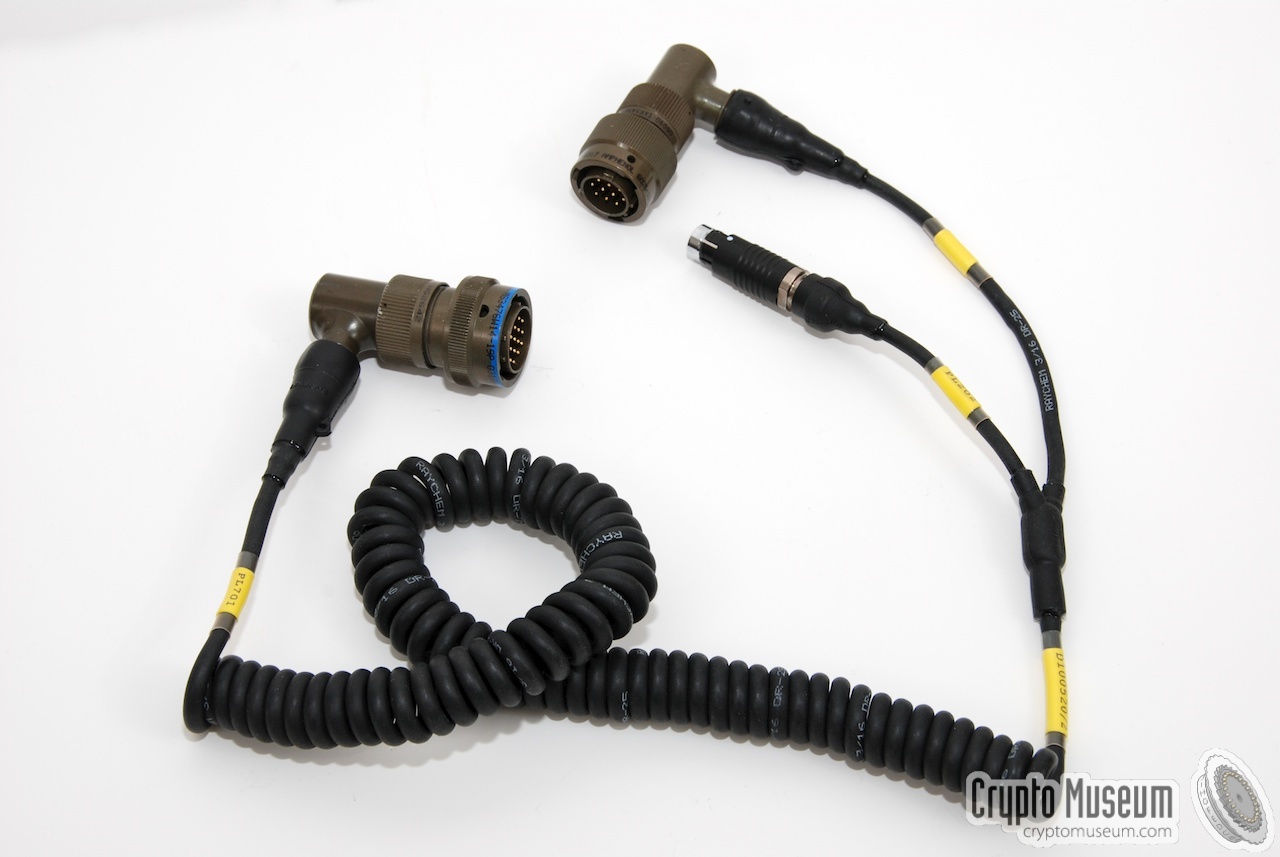
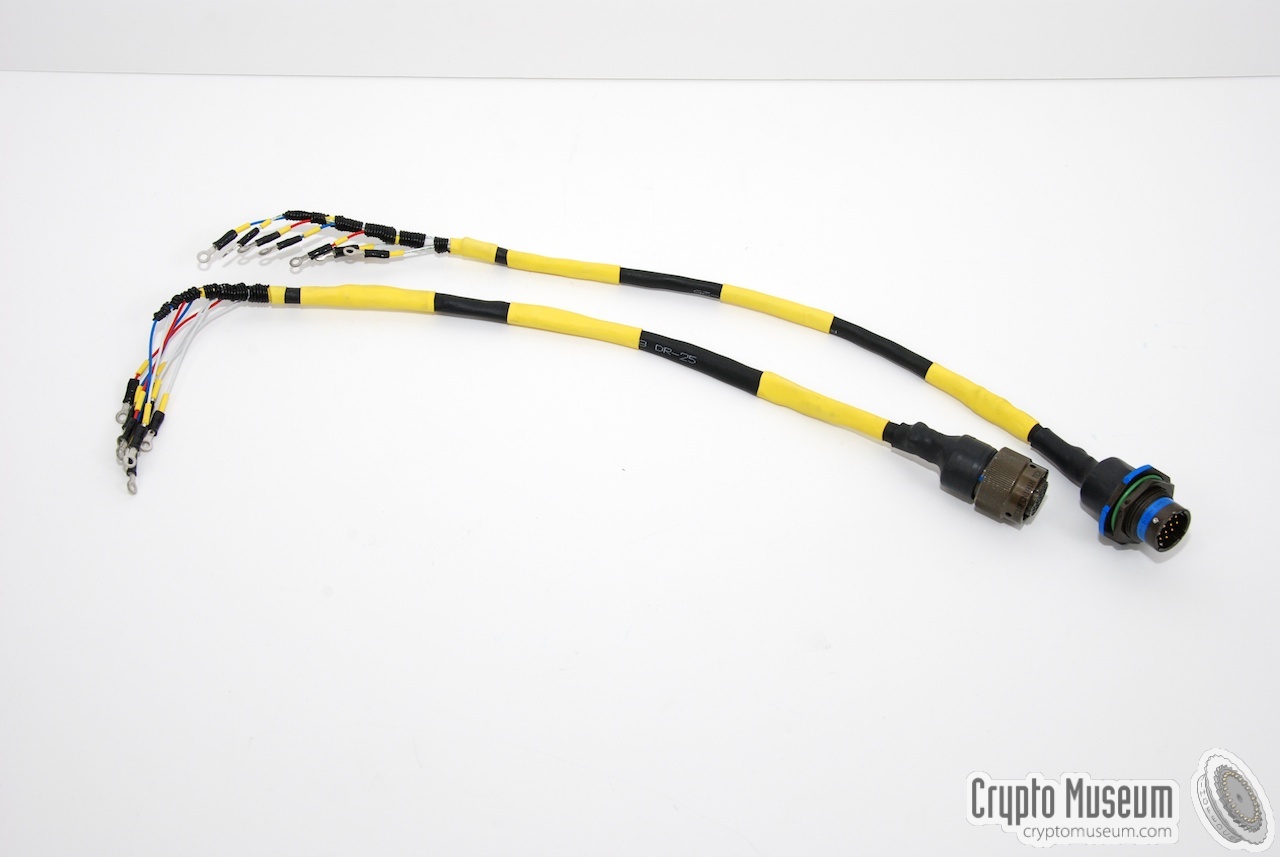
All units, including the LT450, were connected together by a complex web
of military cables, shown in the images below. The most important of these
is a complete assembly that was probably used for a complete setup in a
vehicle. It is shown in the 3rd image below.
|
|
|
SDT 500 - Secure Data Terminal
|
 |
|
|
The Secure Data Terminal (SDT) was the main crypto part of the setup.
It allowed computer data and text messages to be sent over the air using
a high-grade cipher unit based on the Pritchell-II Crypto Kernel ASIC.
The ASIC controls the algorithms, synchronisation and forward error correction.
The SDT is not shown here.
A separate CFD-900 key fill gun was needed to transfer crypographic keys
to the SDT-500. This fill gun is not shown here.
Both the SDT-500 and the CFD-900 are still in production today.
|
|
|
RDM 600 - Radio Data Modem
|
|
|
|
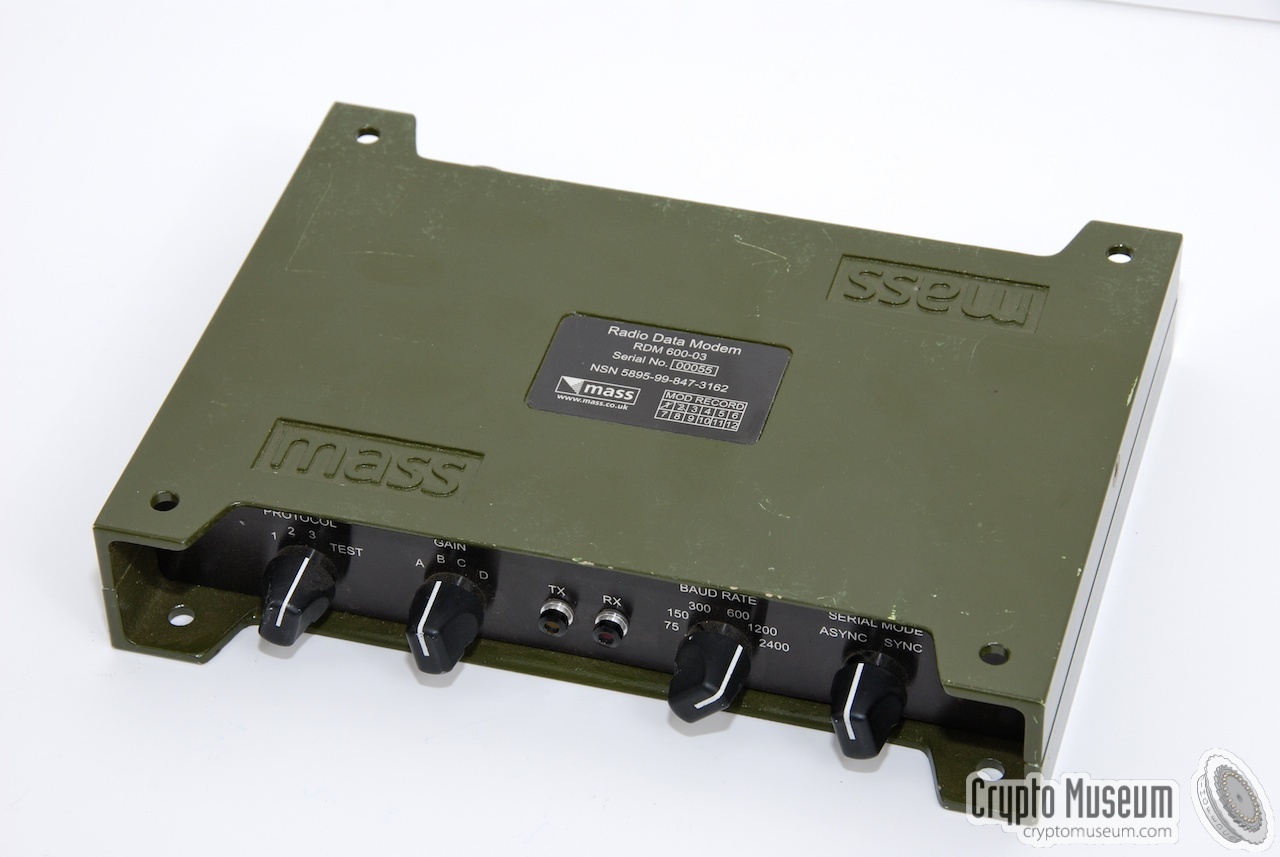
For transmission of messages and data over the air, the Radio Data Modem
(RDM) was used. It can be used on a standard voice channel of a military HF
or VHF radio and supports 3 different protocols.
Data can be transmitted at 75, 150, 300, 600, 1200 or 2400 baud
and a special synchronized mode is available for use in combination
with the SDT 500.
|
|
|
|
|
|
SCU 700 - System Control Unit
|
|
|
|
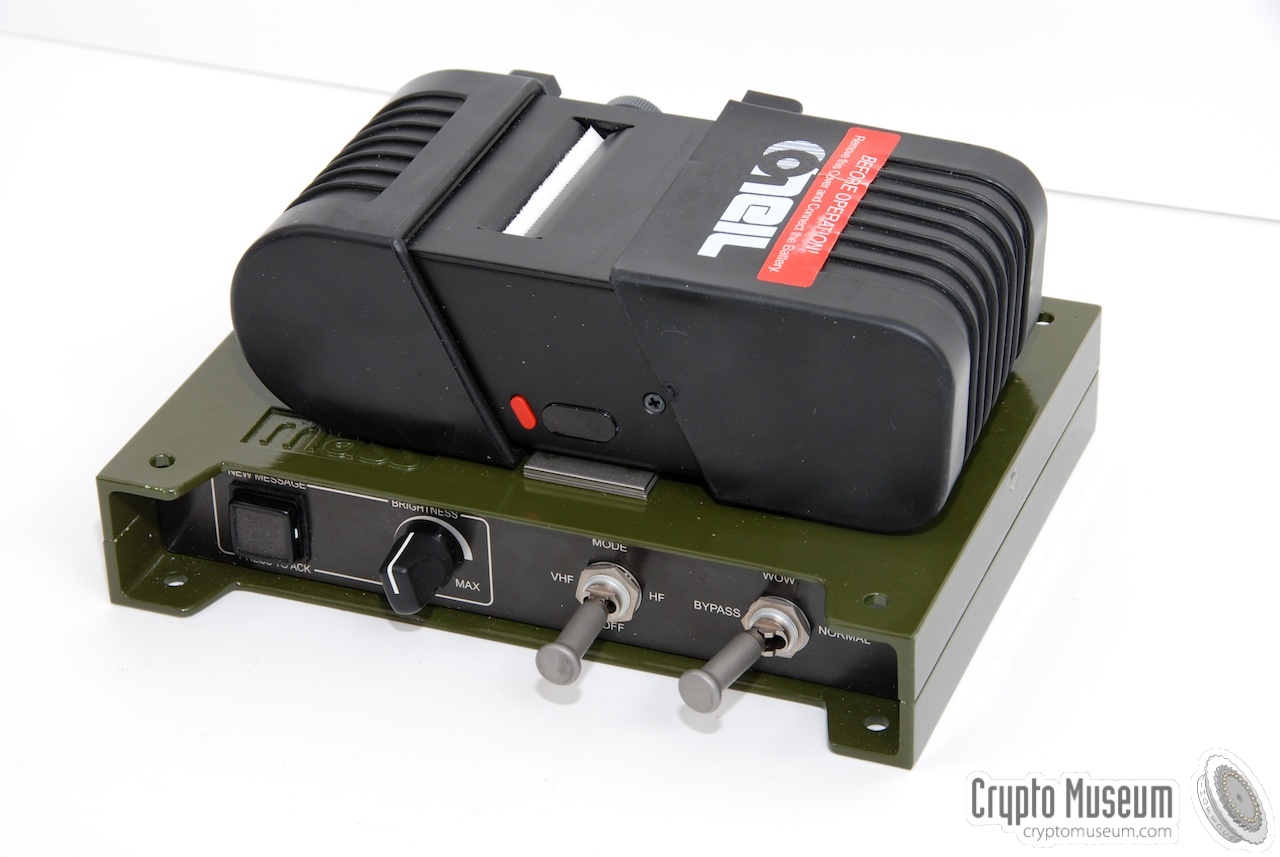
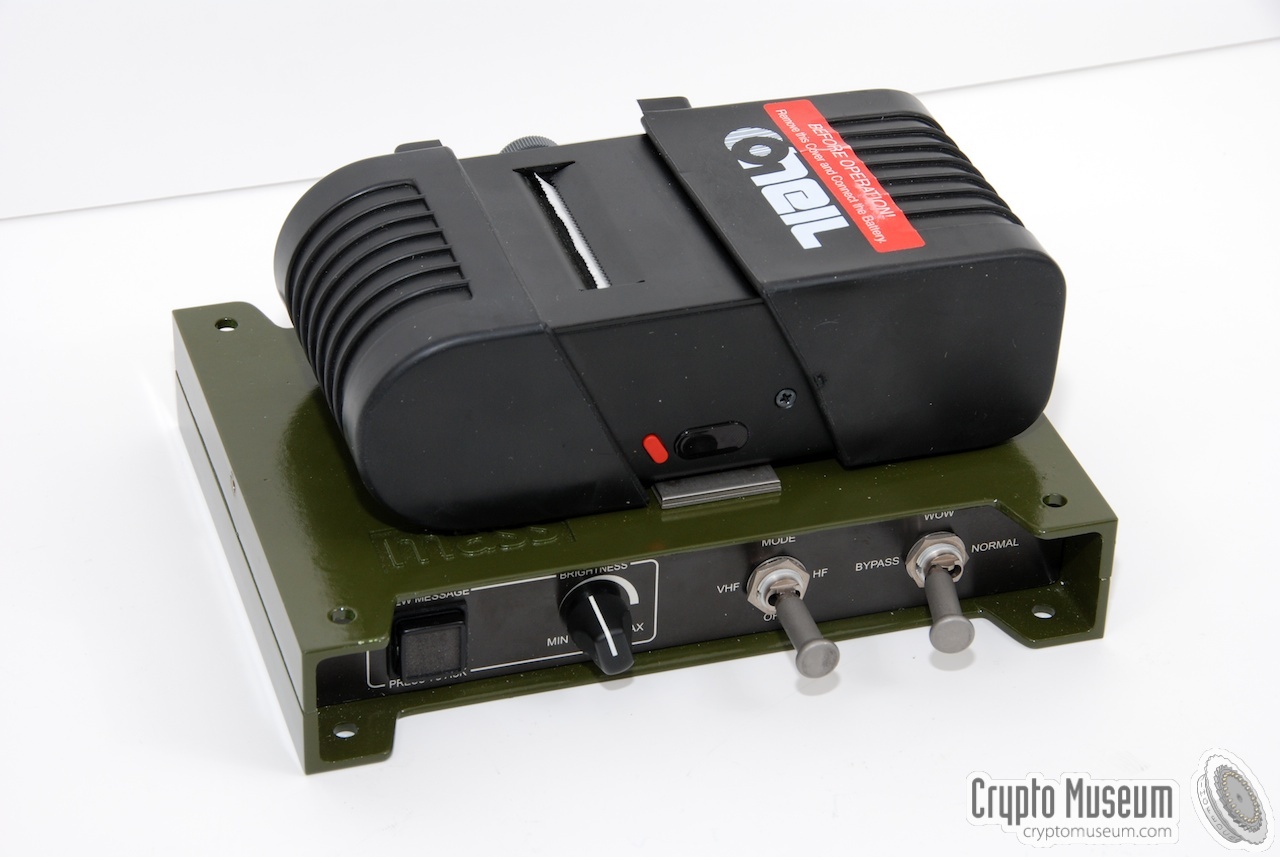
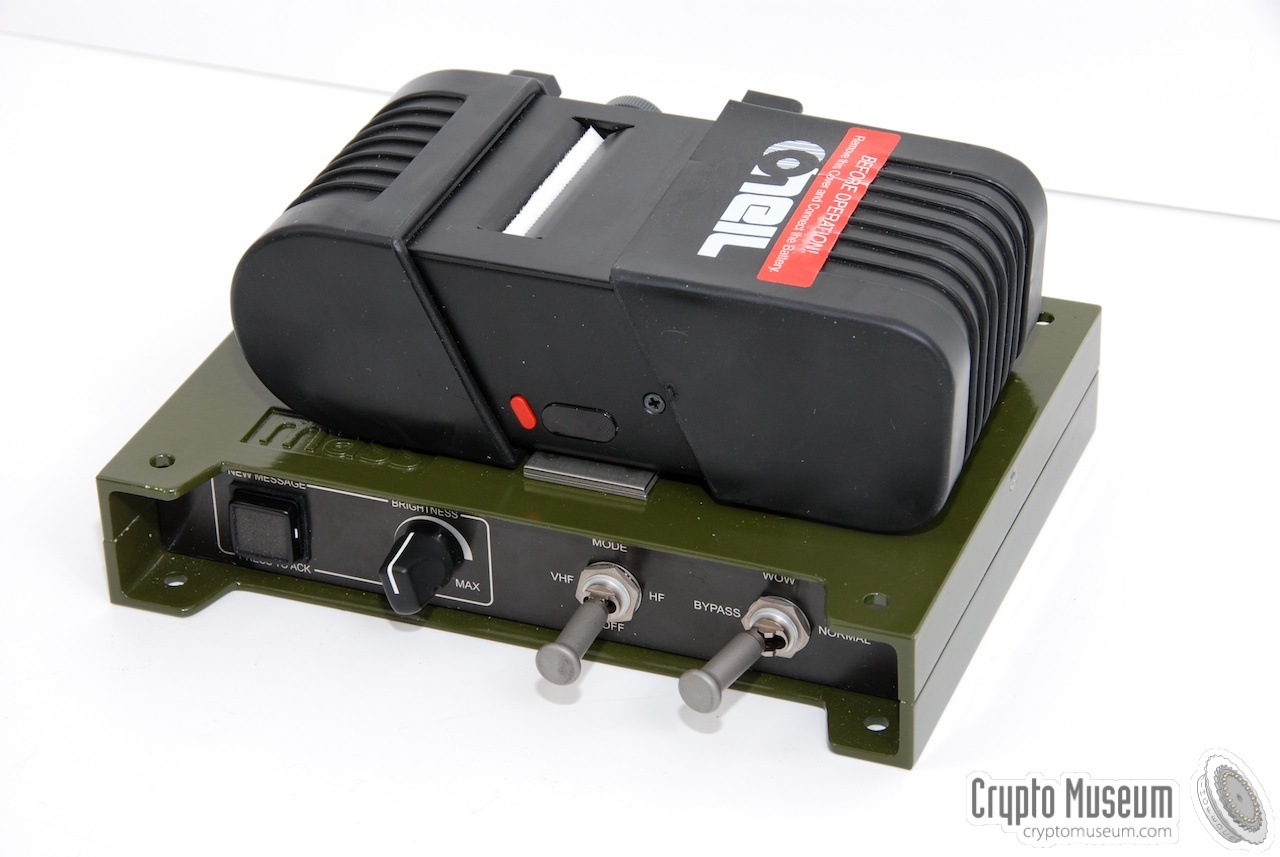
The System Control Unit (SCU) is the main user interface of the system.
It connects to the other modules via a complex web of cables.
The front panel contains only four controls that are easily accessible,
even when the operator doesn't have time to look at them.
|
The two tumble-switches are the right are self-locking and need to be
pulled-out before their state can be changed. The leftmost button should be
pressed briefly to acknowledge an incoming message.
The brightness adjustment was probably used for a visual display mounted in
the operator's helmet.
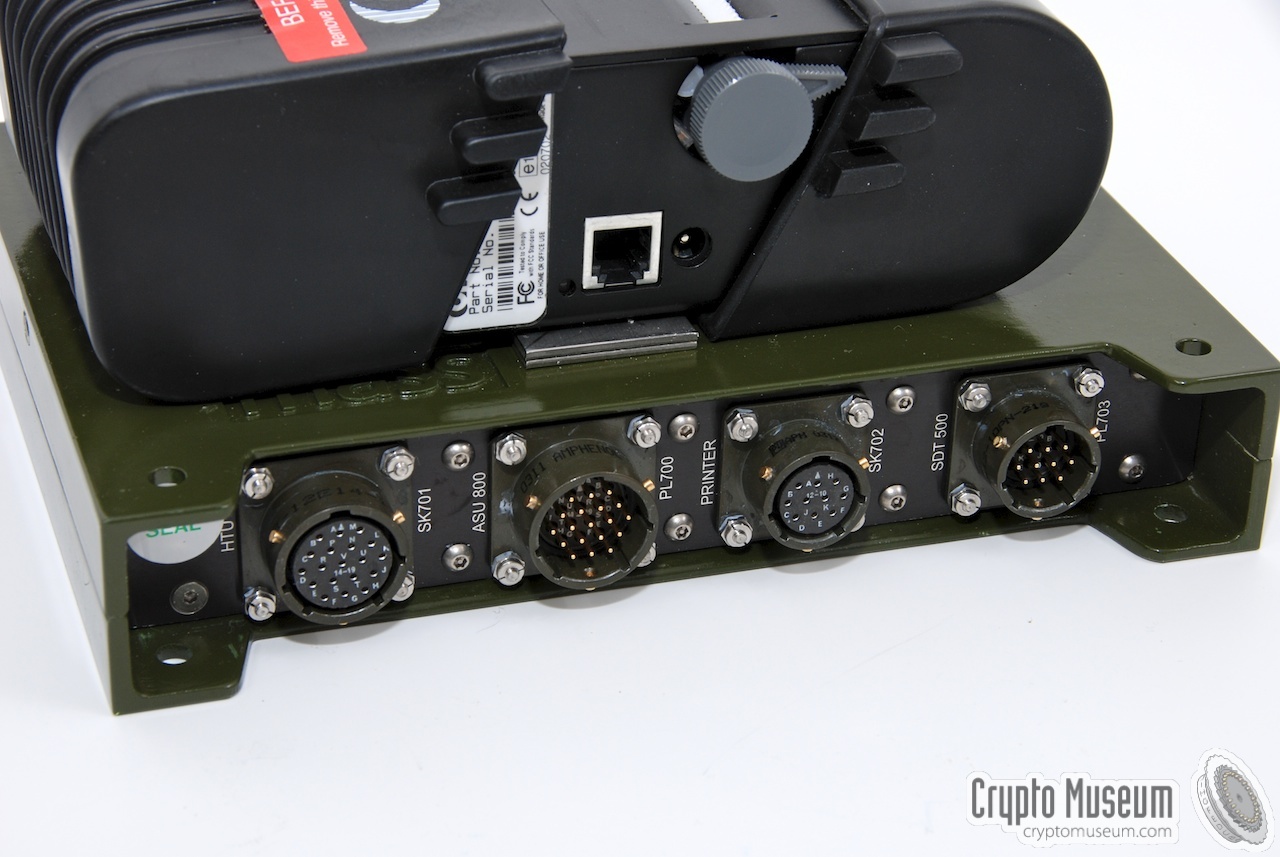
At the rear are connections for the Hand-held Terminal Unit (HTU),
the ASU 800,
the printer and the SDT 500.
A small thermal printer (see below) is bolted onto the SCU 700.
|
|
|
|
|
|
ASU 800 - Audio Switching Unit
|
|
|
|
|
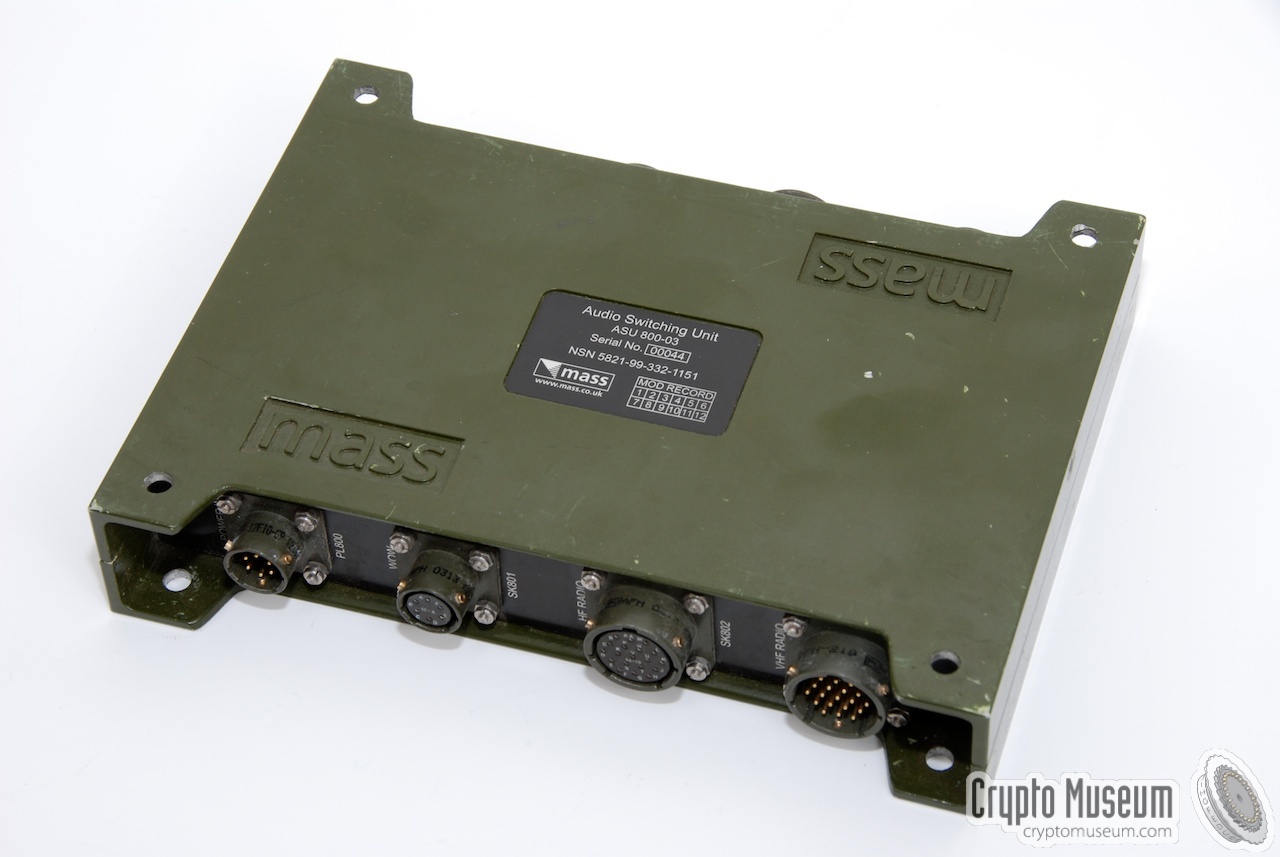
The Audio Switching Unit (ASU) is at the heart of all audio lines.
It has no controls, but has connectors at both sides. It connects to the HF
and VHF radios,
the modem (RDM 600)
and the SCU 700.
It is controlled from the SCU.
|
|
|
|
Messages from the Termite PC can be sent over radio using the
RDM 600 (Radio Data Modem), but they can also be printed
on a small rugged thermal printer that is bolted on top of the SCU 700.
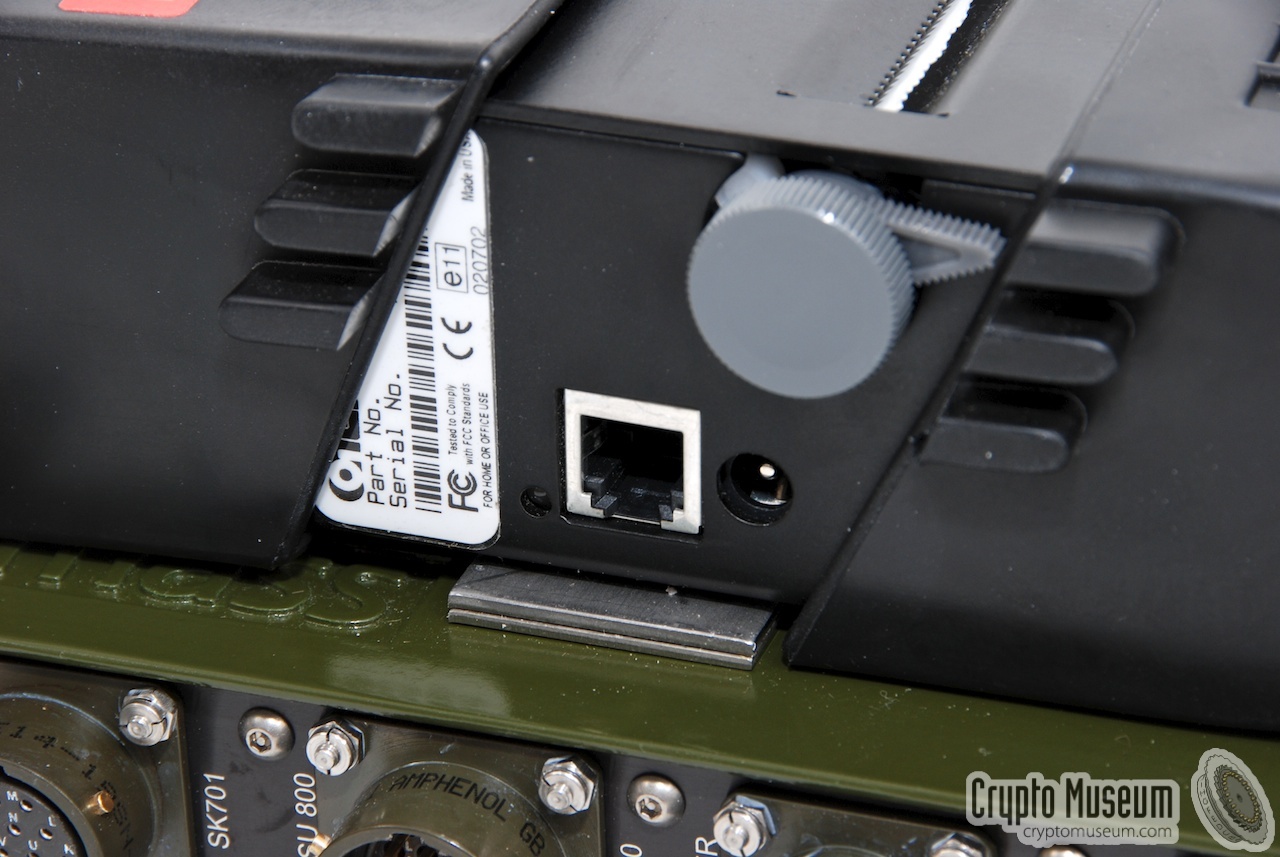
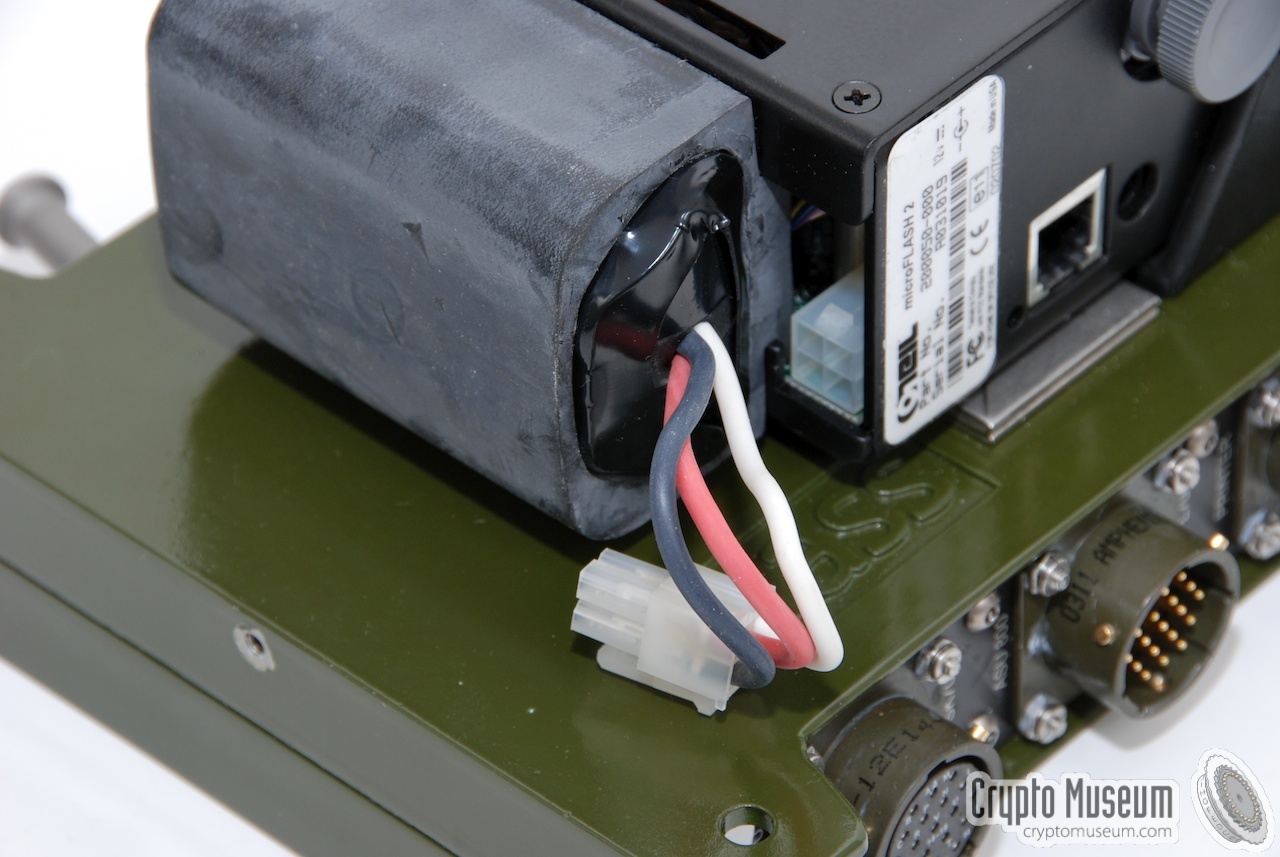
The printer has its own Li-ION rechargeable battery and can be driven via
infra-red (IrDA) or RS232. The latter is available on a 6-way RJ11 connector.
|
|
|
|
|
To allow the various components of the Termite system to be connected together,
an extensive set of customised cables is used. The image on the right shows the
complete cable set, consisting of one large assembly and various separate cables.
|
|
|
|
|
|
|
Any links shown in red are currently unavailable.
If you like this website, why not make a donation?
© Copyright 2009-2013, Paul Reuvers & Marc Simons. Last changed: Tuesday, 18 May 2010 - 20:55 CET
|
 |

|
|