|
|
|
|
|

|
Off-line cipher machine with OTT
- Wanted item
Ecolex-II was an off-line OTT
cipher machine for teletype signals, developed
by the Dutch Post Office (PTT) and built by Philips Usfa
in 1960. It was a fully transistorized
mixer machine
that was intended as the successor to the valve-based
Ecolex-I.
About 120 Ecolex-II units were built by
Philips Usfa
[2].
The machine is also known by its Philips Usfa designator Us 8011.
|
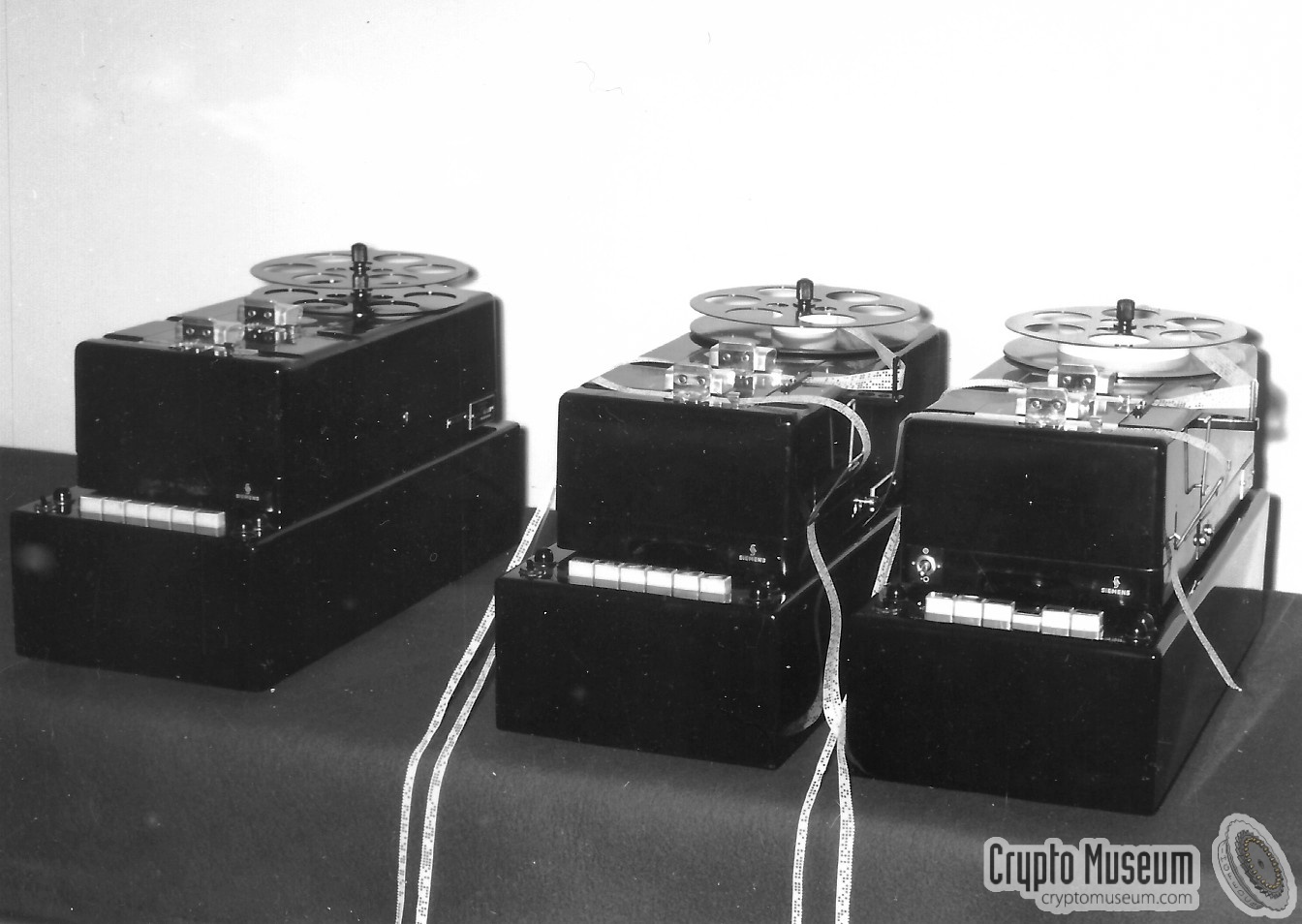
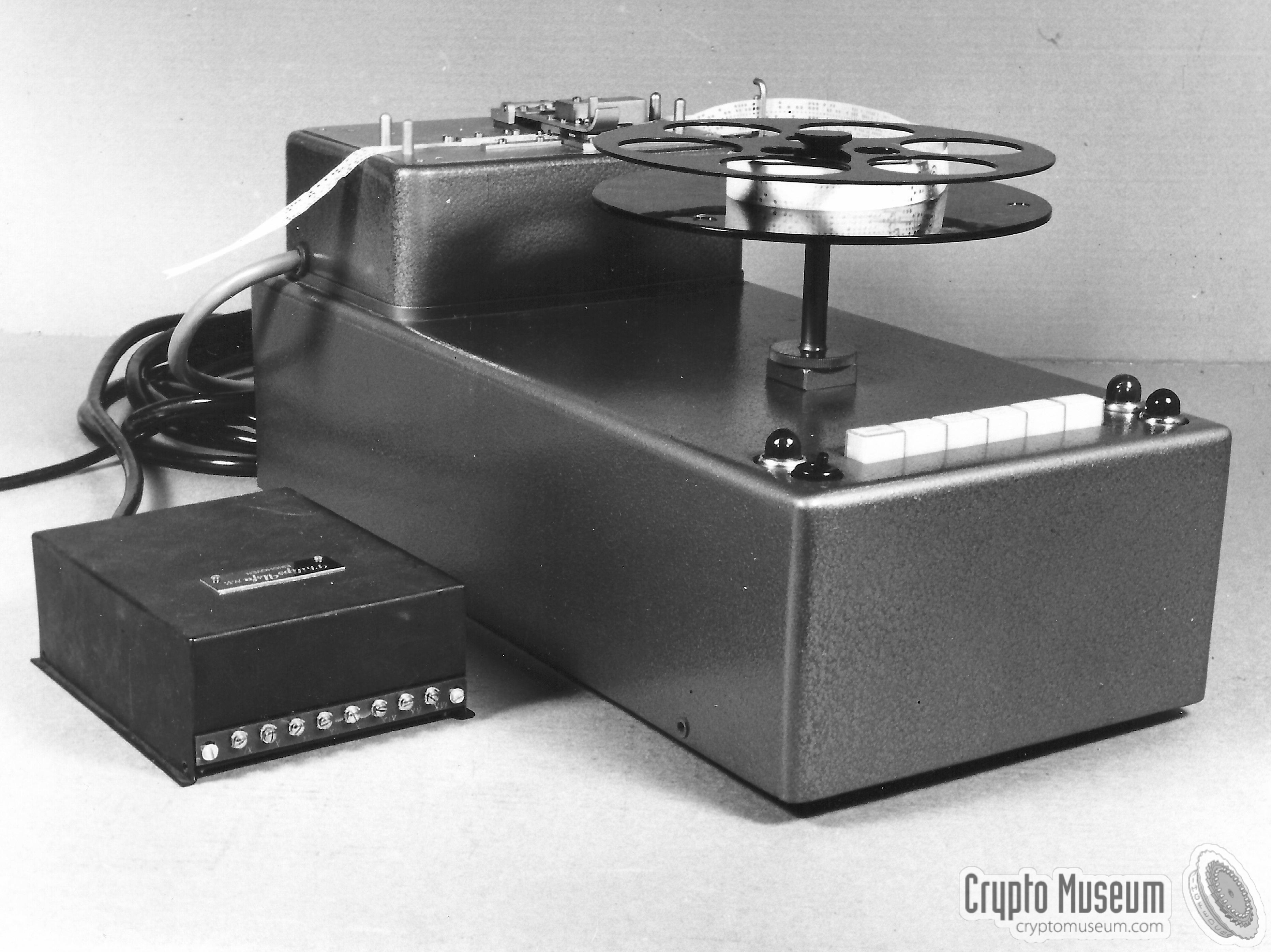
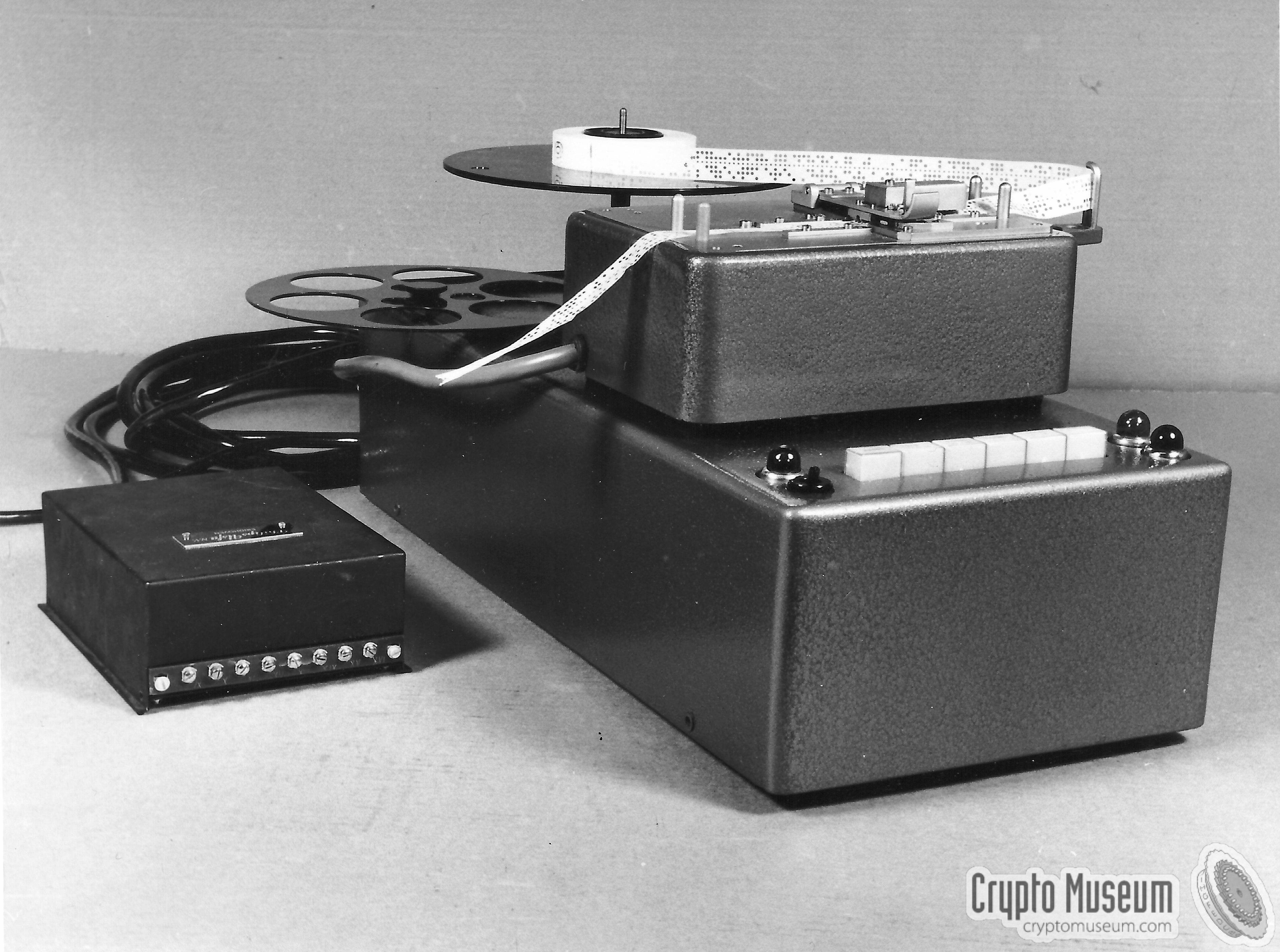
The image on the right shows three Ecolex-II units side-by-side.
The rather compact devices were based on a common Siemens paper-tape
reader of those days. The additional electronic circuitry was housed
in a black box that was bolted to the bottom of the tape reader [1].
At the front of the unit are 6 white push-buttons,
an of/off switch and three lamps: for clear, crypto and alarm).
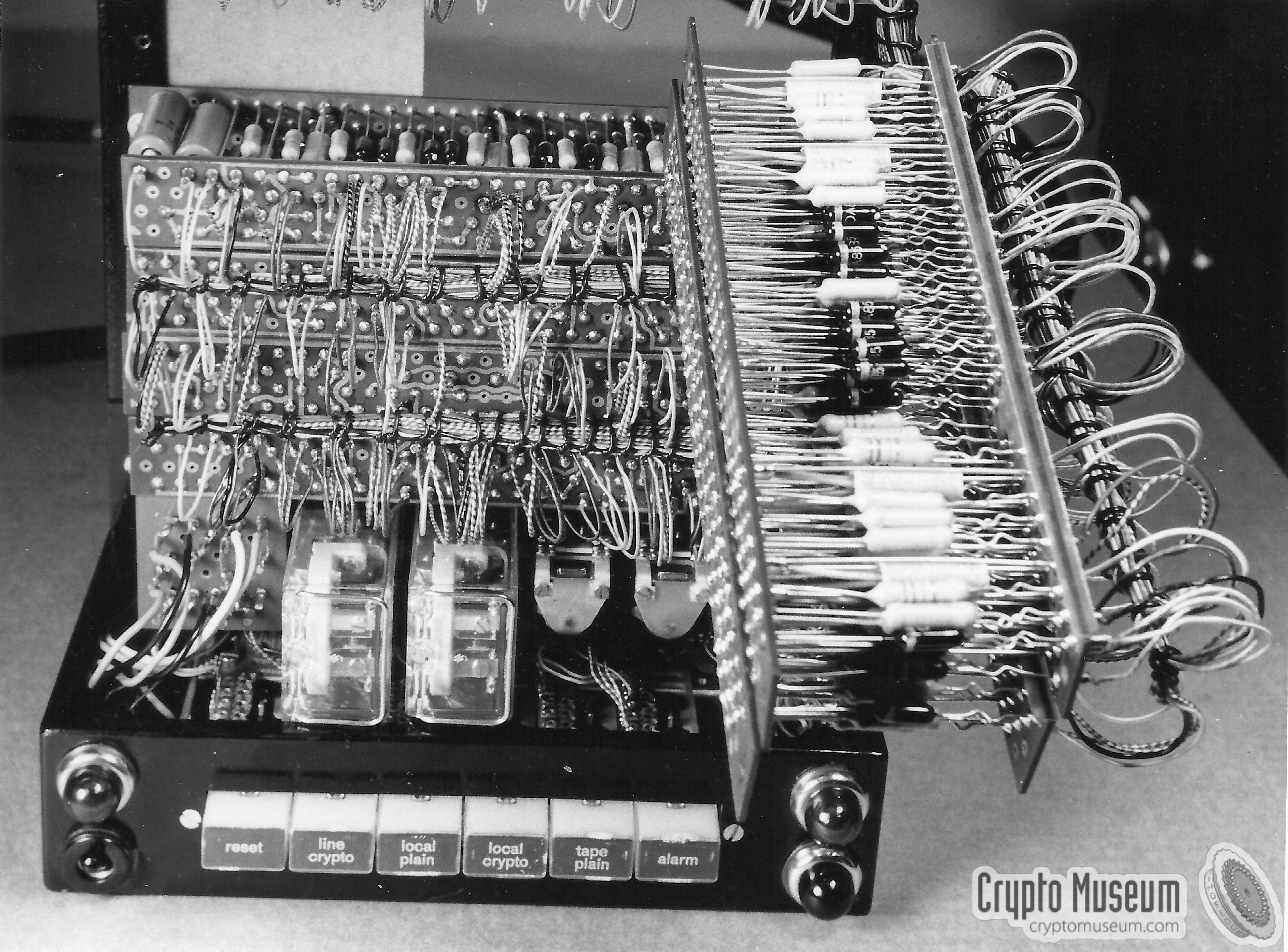
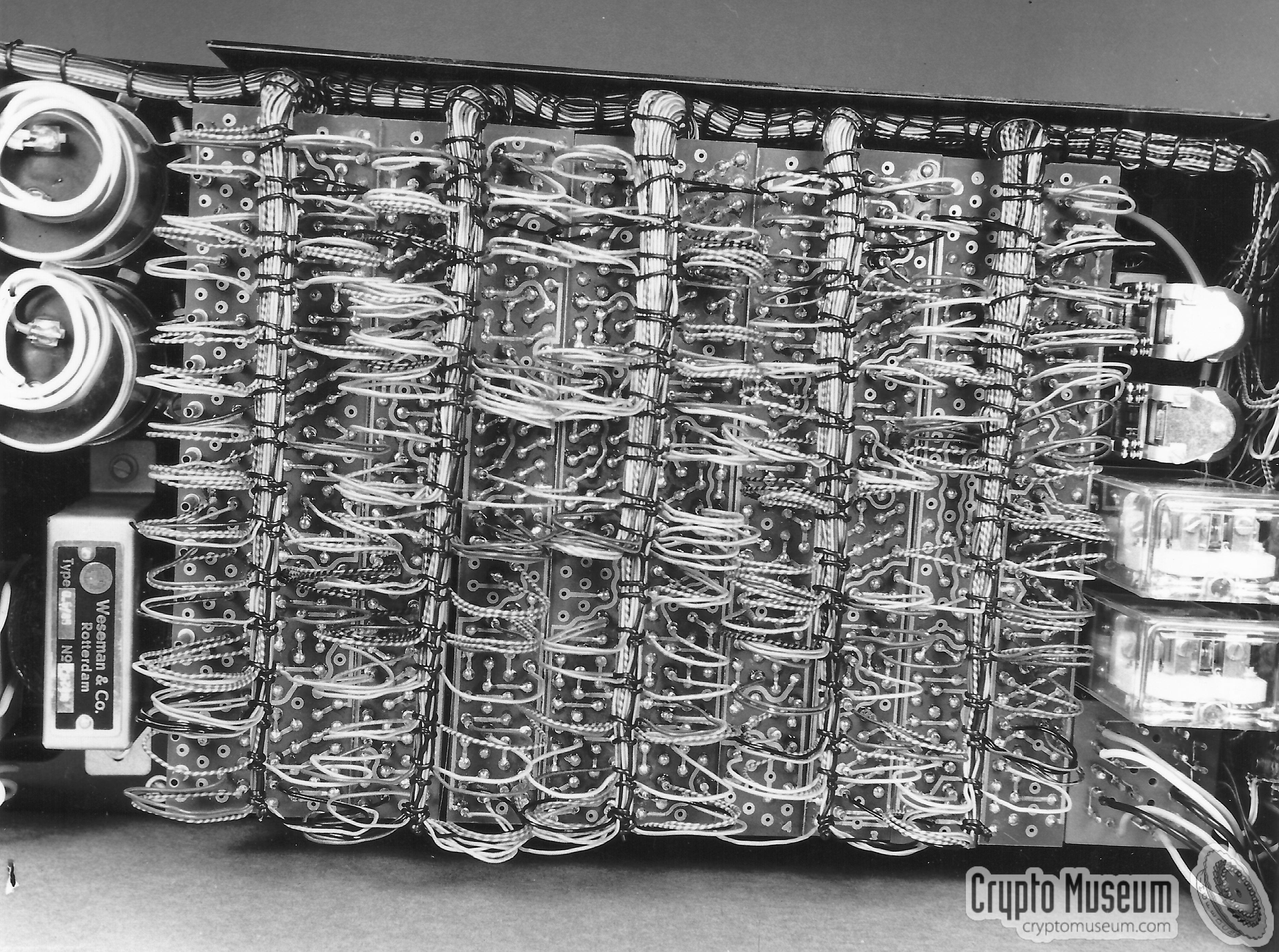
The interior
of the Ecolex-II is very robust. It contains many transistors,
a couple of relays, a lot of passive compoinents and many, many wires.
|
|
|
Like most other mixer machines, the Ecolex-II uses the
Vernam Cipher
for 'mixing' the plain text with the key tape. Each character from
the plain text tape is XOR-ed with a character from the key tape.
In this case, the key tape is a so-called
One-Time Tape (OTT).
If the key tape consists of truely random characters, and proper
cipher security is maintained, the code is unbreakable.
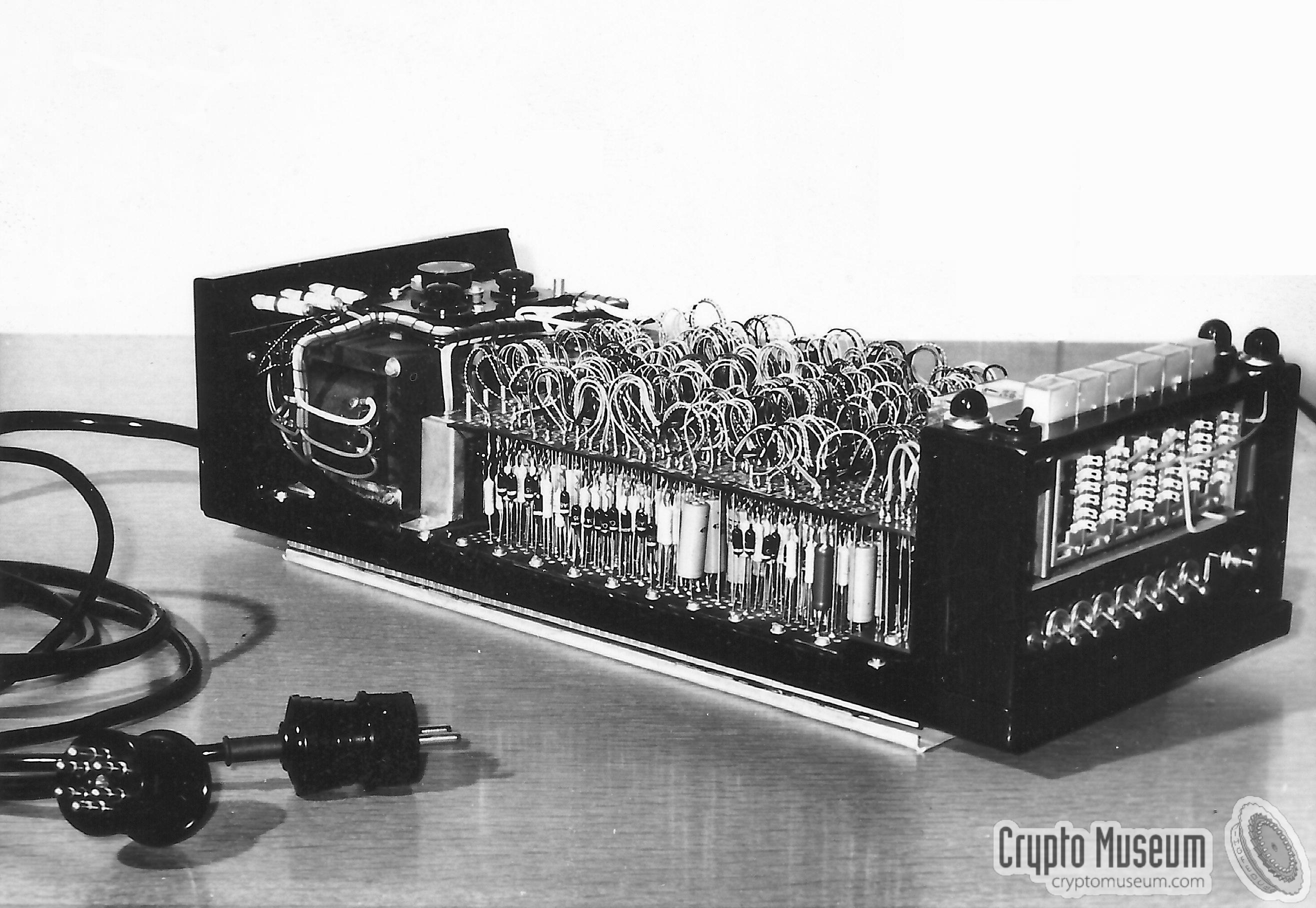
Although the Ecolex-II is built to the highest quality standards,
it must have been a real nightmare to repair them.
Most electronic components are mounted vertically
in between two PCBs.
As they are all soldered at both ends, it is extremely difficult to get
access to a component right at the center.
All transistors are located on top of the upper PCB and are connected
to the rest of the circuitry with a set of wires.
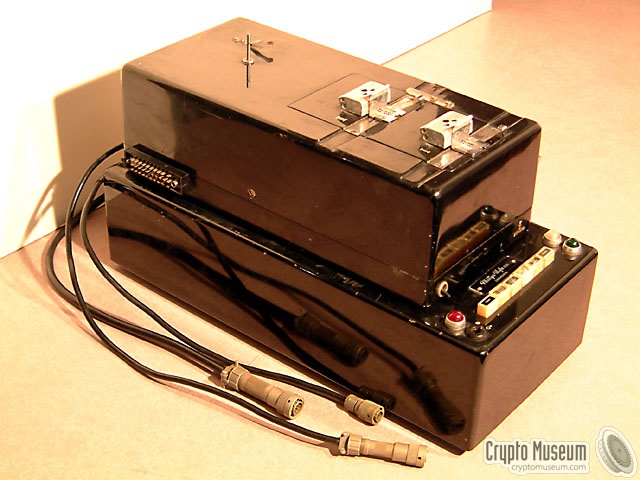
The rightmost image below is the only colour image that we currently
have of an Ecolex-II unit. It was taken by Jan Lispet in the early 2000s.
Approx. 120 Ecolex-II units were built during the early 1960s.
They were sold to the Dutch Army, the Dutch Ministry of Foreign Affairs
and to the German Ministry of Foreign Affairs [2].
|
|
|
|
|
|
|
Just before the Ecolex-II went into production in 1960, Philips had already
started its own development of an OTT cipher machine (1959).
Eventually, after a series of experiments, this would lead to the
introduction of the Ecolex-IV in 1963. It was
capable of synchronous communication over radio links.
|
At present we have no further information about the Ecolex-II.
In order to make better photographs of the unit, we are actively
looking for such a machine. If you can help in any way,
please contact us.
|
|
|
|
Any links shown in red are currently unavailable.
If you like this website, why not make a donation?
© Copyright 2009-2013, Paul Reuvers & Marc Simons. Last changed: Wednesday, 01 May 2013 - 23:24 CET
|
 |

|
|